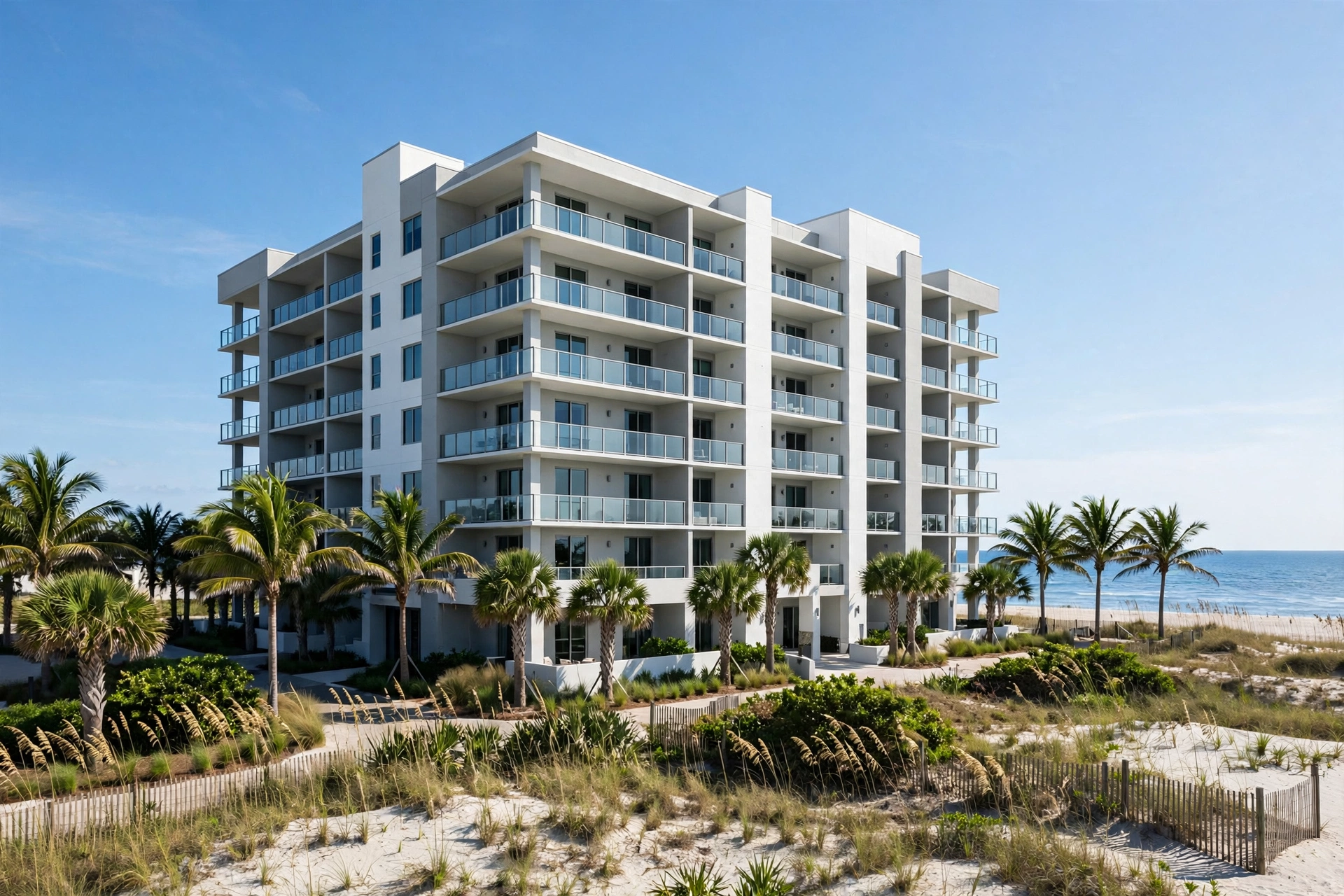
Can You Buy a Condo With an FHA Loan? Project Approval and Single-Unit Approval, Explained
Can You Buy a Condo With an FHA Loan? Project Approval and Single-Unit Approval, Explained
By Douglas Wilkerson, Mortgage Broker | Branch Manager, NMLS #1680719 — November 21, 2026
The Short Answer
Yes — but FHA underwrites the building as well as the borrower. Your unit qualifies in one of two ways: the condo project is already on FHA's approved list, or your lender gets a Single-Unit Approval for your one unit in a project that isn't approved. Since October 15, 2019, FHA has allowed single-unit approvals — the modern version of the old "spot approval" — so a building that never bothered to get FHA-approved is not automatically a dead deal. What decides it: how many units are owner-occupied, how many owners are behind on HOA dues, how healthy the association's reserves are, and how many FHA loans the building already carries. On a $295,000 Jacksonville-area condo — the Florida median — an FHA loan at 3.5% down is $10,325 down and $1,916.23 a month in principal, interest, and mortgage insurance at the November 20 FHA rate of 6.25%. Here's how each path works, what kills a deal, and how to check your building before you offer.
Why FHA Treats Condos Differently Than Houses
On a single-family home, FHA underwrites two things: you, and the house. On a condo, there's a third party in the deal — the homeowners association — and FHA knows it. When you buy a condo, you own your unit plus an undivided interest in the common areas: the roof, the elevators, the pool, the parking garage, the insurance policy that covers the building. If the association is broke, if a quarter of the owners stopped paying dues, or if half the building is investor-owned rentals, the value of your unit is at risk no matter how strong your credit is. FHA insures the lender against loss, so it checks the building's finances before it insures the loan.
That's the whole reason condo project approval exists. Under HUD Handbook 4000.1, Section II.A.8.p, FHA will insure a purchase loan on a condo unit in only three situations: the project is on FHA's approved list, the lender completes a Single-Unit Approval for that one unit, or the property meets FHA's definition of a site condominium (a detached condo — a standalone house on condo land). Everything in this post is about the first two, because that's where nearly every Jacksonville condo buyer lands.
One thing to get straight up front: condo approval is about the project, not about you. A buyer with a 780 credit score and 20% down can still be stopped cold by an unapproved building, and a buyer with a 600 score and 3.5% down can sail through in an approved one. Some lenders will run the single-unit approval for you, and some won't bother — with 200 lenders to choose from, one lender's "no" on a condo is never the last word.
Path One: The Building Is Already FHA-Approved
The easy path is a project that's already on HUD's list. When a condo project is approved, HUD or an FHA-approved lender has already reviewed the association's documents and signed off. Your lender verifies the project is on the approved list on the day your FHA case number is assigned, enters the project's FHA Condo ID, and the project-level review is essentially done.
Approval isn't permanent. Under 24 CFR 203.43b(h)(3), a project stays approved for three years from the date it goes on the list, then the association has to recertify. A building approved in 2023 may show as expired in 2026, and an expired approval is the same as no approval until the association recertifies or your lender pursues single-unit approval instead. Always check the status as of today — never take a listing agent's word that "the building is FHA-approved" without seeing the current HUD listing.
Two routes get a project onto the list. HRAP — the HUD Review and Approval Process — is HUD itself reviewing the package. DELRAP — the Direct Endorsement Lender Review and Approval Process — is an FHA-approved lender with special authority reviewing it instead. Either way, the project has to pass the same tests:
| Test | Approved-project rule | What it means |
|---|---|---|
| Owner occupancy | Generally at least 50% of units owner-occupied | At least half the building lived in by owners, not renters. A narrow exception down to 35% exists, only through HUD review (HRAP). |
| Delinquent dues | No more than 15% of units more than 60 days behind on HOA dues or special assessments | Late fees don't count — only the dues themselves. |
| One-owner concentration | One owner (or related party) may hold no more than 10% of units in a 20+ unit project; no more than one unit in a smaller project | One investor can't own the building out from under the owners. |
| FHA concentration | No more than 50% of the units can carry FHA-insured mortgages | Once the cap is hit, the next FHA buyer waits. |
| Commercial space | Non-residential space no more than 35% of the project's total floor area | Shops and offices on the ground floor are fine — up to a point. |
| Approval lifespan | Three years, then recertification | Check the current status, not the status from two years ago. |
Two transactions skip the approval requirement entirely: purchases of HUD-owned (REO) homes and FHA streamline refinances. For every purchase of a regular resale condo, it applies.
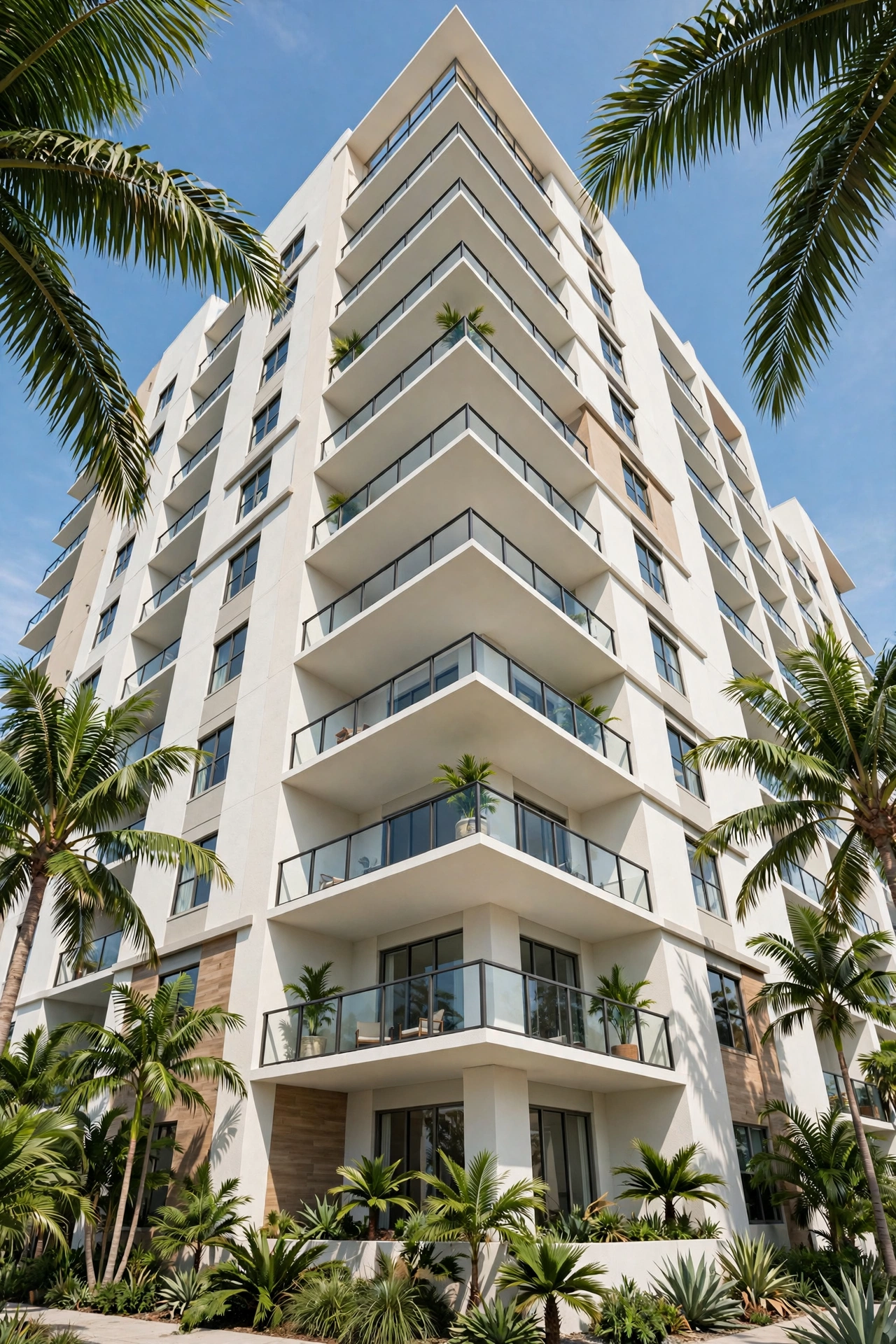
On an FHA condo purchase, the building itself has to pass — owner occupancy, dues, reserves, and concentration all get checked before your loan is insured.
Path Two: Single-Unit Approval — the One-Unit Workaround
Most condo buildings in Northeast Florida have never been through FHA project approval. The association never applied, the approval expired and nobody recertified, or the building failed one test years ago and nobody fixed it. Before 2019, that was usually the end of the story for an FHA buyer. It isn't anymore.
On August 15, 2019, FHA published its Condominium Project Approval Final Rule (Docket No. FR-5715-F-02), effective October 15, 2019. The headline change was the return of single-unit approvals — the modern version of the "spot approvals" FHA had banned in 2010. HUD estimated at the time that the change would make units in an additional 20,000 to 60,000 projects eligible for FHA financing. Instead of approving the whole project, the lender approves your one unit, checking a shorter list of project conditions at the time your loan is requested.
Here's what the lender has to show for a Single-Unit Approval, under HUD Handbook 4000.1 Section II.A.8.p.iii and HUD's own FHA Condominiums guidance:
- The project is not on FHA's approved list — and not part of a project with an approved phase. Single-unit approval is for unapproved projects, not a shortcut around an approved one.
- At least five units, complete and ready for occupancy. The building has to be finished, with a certificate of occupancy for all units. No new construction in progress, no manufactured-home condo project.
- Your loan gets an Accept from FHA's TOTAL Scorecard — the automated underwriting system — or, if the loan is manually underwritten, a maximum 90% loan-to-value. That 90% cap is the trap most buyers miss, and it's covered in detail below.
- At least 50% of the units are owner-occupied. Tighter than the approved-project standard — no 35% exception on the single-unit path.
- FHA concentration: 10% of units, or two units, whichever applies. In a project with 10 or more units, no more than 10% of the units can carry FHA-insured mortgages. In a project with fewer than 10 units, no more than two units can. A 100-unit building can hold up to 10 FHA loans; a 40-unit building, four; a 12-unit building, one (10% of 12 rounds down to one) — and a 6-unit building, two at most.
- Reserves of at least 10% of a year's assessments — or a reserve study showing the association is funding its future repairs. Post-Surfside, this is the test that fails the most Florida buildings: an association that kept dues artificially low for years and never funded reserves can't pass it.
- No more than 15% of units more than 60 days delinquent on dues or special assessments, same as the approved-project test.
- No bankruptcy, receivership, foreclosure, or deed-in-lieu involving the association in the past three years.
- No ineligible project characteristics — the deal-killers listed in the next section.
The mechanics are straightforward: your lender completes the Condominium Loan Level / Single-Unit Approval Questionnaire (Form HUD-9991) and submits it when your FHA case number is requested. The HOA usually has to supply the project information — the budget, the reserve study, the delinquency count, the owner-occupancy percentage — so an unresponsive association can slow the process even when the numbers are fine. And note the limit: single-unit approval approves your unit, not the project. The next FHA buyer in the same building goes through the same check again.
The Manual-Underwrite Trap: When Single-Unit Approval Costs You 10% Down
Here's the single-unit approval detail that catches buyers off guard. The 3.5% down payment FHA is famous for — available at a 580 credit score — is tied to the TOTAL Scorecard Accept. If your file gets an Accept, the standard 3.5%-down terms apply. But if your file is manually underwritten — no Accept, a human underwriter deciding — single-unit approval caps the loan at 90% loan-to-value. That's a 10% down payment, not 3.5%.
On a $295,000 condo, that's the difference between $10,325 down and $29,500 down — $19,175 more cash to close on the same unit, for the same buyer, on the same day. The monthly payment is actually lower on the 90% loan ($1,634.73 in principal and interest, plus $121.69 in mortgage insurance, for $1,756.42 total), because you're borrowing less — but the cash-to-close difference is what decides whether the deal works. A buyer who budgeted for 3.5% down and discovers the manual-underwrite cap at the eleventh hour has a real problem.
Two things protect you. First, get the TOTAL Scorecard read on your file early — before you write the offer, not after. If your file scores an Accept, the 90% cap never enters the picture. Second, if your file is a manual underwrite, know the number before you fall in love with the unit: 10% down on the price, and make sure the cash is there.
The Jacksonville Math: What an FHA Condo Actually Costs

The HOA questionnaire is where most FHA condo deals are won or lost — the numbers in it decide whether single-unit approval works.
Florida condos are sitting longer than houses right now, and that's the opportunity for an FHA buyer who knows the approval rules. Florida Realtors' July 2026 data showed about 7.8 months of condo and townhouse supply statewide, versus 4.5 months for single-family homes — condos took about 76 days to go under contract, versus 47 for houses — while the median condo price held at $295,000. Sellers of condos are negotiating. The question is whether your financing can clear the building.
Run the numbers on that $295,000 median condo with an FHA loan at the November 20, 2026 FHA rate of 6.25% (30-year fixed, 720+ credit; Douglas Wilkerson, NMLS #1680719):
| Line item | Amount |
|---|---|
| Purchase price | $295,000 |
| Down payment — 3.5% | $10,325 |
| Base loan amount | $284,675 |
| Upfront mortgage insurance premium — 1.75%, financed | $4,981.81 |
| Total loan amount | $289,656.81 |
| Monthly principal & interest at 6.25% | $1,783.47 |
| Monthly mortgage insurance — 0.55% annual | $132.76 |
| Monthly principal, interest & mortgage insurance | $1,916.23 |
That $1,916.23 is principal, interest, and mortgage insurance only. Taxes and homeowner's insurance ride on top in escrow, and so do HOA dues — and on a condo, the dues are the number that changes the deal. A $400-a-month HOA bill adds $400 to the payment, which is the equivalent of about $64,965 of loan amount at 6.25%. A $400 HOA due plus the $1,916.23 above is $2,316.23 before taxes and insurance. That's why the condo question is never just "can I get the loan" — it's "can I carry the building." Price the whole payment, dues included, before you offer. (For comparison, the Freddie Mac national average for a conventional 30-year fixed was 7.28% in the survey week ended November 19, 2026 — 6.66% on the 15-year — against 6.26% a year ago. The next survey is due Wednesday, November 25, 2026.)
At the top of the Duval County range, the 2026 FHA one-unit limit is $580,750 — a tier above the Florida floor of $541,287. At 3.5% down on a $580,750 condo, the base loan is $560,423.75, the financed upfront premium adds $9,807.42, the total loan is $570,231.17, and the monthly principal and interest at 6.25% is $3,511.01, plus $261.36 in monthly mortgage insurance — $3,772.37 before taxes, insurance, and HOA dues. The limit is the same for a condo as for a house; the building's approval status is what differs.
What Kills a Condo Deal Outright
Some buildings can't be fixed with a questionnaire. FHA's ineligible project types are categorical — no approval path, no single-unit workaround:
- Condo hotels (condotels) — units with hotel-style rental programs, front-desk check-in, or mandatory rental pools. Jacksonville Beach has plenty of buildings that look like condos and operate like hotels. If the unit comes with a rental-pool agreement, FHA is out.
- Timeshares and cooperatives. A co-op isn't a condo — you own shares, not real property — and FHA doesn't insure co-op purchases.
- Projects with mandatory rental pools or units with more than one dwelling.
- Houseboat projects and continuing care facilities.
- Projects in the Coastal Barrier Resources System — federal law bars federal flood insurance there, and FHA won't insure the loan.
Beyond the categorical bans, the HOA's own condition kills deals every week: reserves under 10% of annual assessments with no reserve study; more than 15% of owners 60+ days behind on dues; pending litigation the association hasn't disclosed; a special assessment in the works that nobody mentioned; an owner-occupancy rate under 50% because investors bought the building up during the last cycle. None of these is visible from the listing photos. They live in the HOA questionnaire — which is why the questionnaire gets ordered early, not after the inspection.
How to Check Your Building in Five Minutes
Before you write an offer on any condo with FHA financing, do this — in order:
- Search HUD's approved-condo list. HUD publishes a public condominium search through FHA Connection. Search by the project's name or location and check the status: Approved, Expired, Rejected, or Withdrawn. Approved with a current date is the green light. Expired usually means the association didn't recertify — fixable, but not by you, and not overnight.
- Ask your lender to run the file through TOTAL. An Accept on the scorecard keeps the standard 3.5%-down terms open on the single-unit path. A manual underwrite means the 90% loan-to-value cap — 10% down — so you need to know which one you are before you negotiate.
- Ask the listing agent for the HOA questionnaire answers early. The four numbers that matter: owner-occupancy percentage, percentage of units 60+ days delinquent, reserves as a percentage of annual assessments, and how many FHA-insured loans the building already carries. If the agent can't get them, that's information too.
- Ask the specific question: "Are you underwriting this condo to the agency guidelines, or to your own overlay?" Some lenders won't do single-unit approvals at all — it's extra work, and they'd rather you buy a house. That's an overlay, not a guideline. With 200 lenders to choose from, a lender that won't run a HUD-9991 is never the last word.
If the Building Fails, You Still Have Moves
A failed condo check is not a failed home purchase. It just changes the route:
- Get the project approved. The association — or a lender, builder, or project consultant — can submit the project for HRAP or DELRAP approval. It takes time and documents, and a seller in a hurry won't wait for it, but for a building with many FHA buyers coming, it's the permanent fix.
- Try single-unit approval anyway. A building that fails full project approval can still pass the single-unit tests. The two lists overlap but aren't identical — the 50% owner-occupancy rule and the concentration cap are the ones that usually decide it.
- Switch programs. A conventional loan on the same condo follows Fannie Mae or Freddie Mac project rules, not FHA's — and since October 5, 2026, the separate Florida condo section is gone from conventional guidelines, with maximum loan-to-value now set by the automated underwriting results. A VA buyer has yet another set of rules.
- Walk away. If the HOA is broke, the delinquency rate is high, and a special assessment is coming, the loan denial just saved you from buying into a building whose finances were going to cost you far more than the down payment.
The Jacksonville Angle: Beach Condos, Downtown Lofts, and the Buildings FHA Buyers Actually Want
Northeast Florida has a large condo inventory, and the buildings FHA buyers actually want are the ones the approval rules bite hardest on: Jacksonville Beach oceanfront buildings with high HOA dues and investor-owned units, and garden-style complexes where the association's reserves never recovered from the last insurance spike. The median Jacksonville listing was $294,750 in October 2026, per Realtor.com — right at the Florida condo median — so the $295,000 math above is the real Jacksonville math, not a hypothetical.
The practical advice is local and simple: if you're shopping condos in Jacksonville Beach, ask about FHA approval before you tour, not after you offer. Oceanfront buildings with rental programs are the most likely to be condotels in FHA's eyes, and the most likely to have owner-occupancy under 50%. Inland garden-style complexes with long-term owners are the most likely to pass — and the most likely to have an association that will actually answer the questionnaire.
Frequently Asked Questions
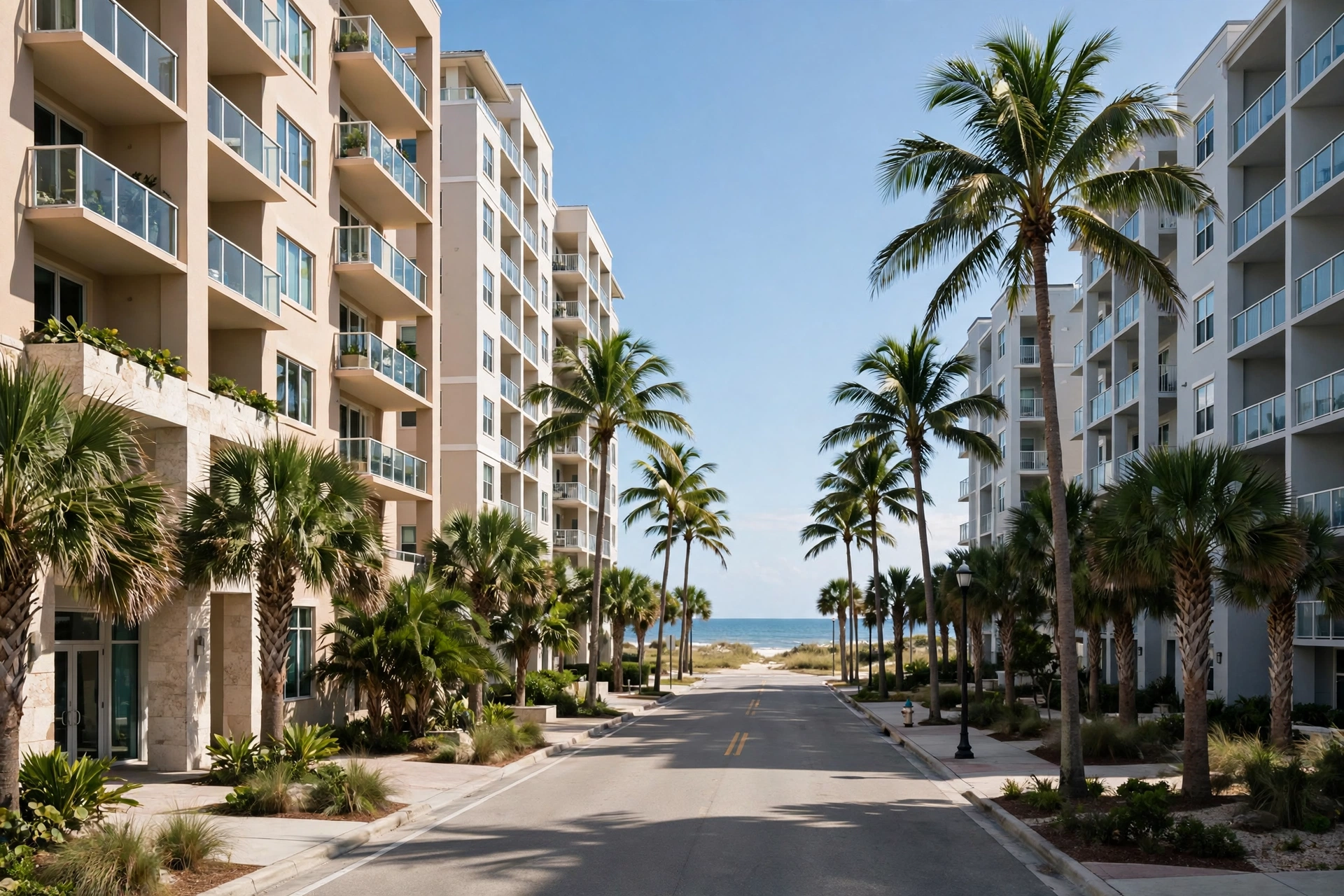
Jacksonville Beach condos are exactly where FHA approval matters most — oceanfront buildings with rental programs are the most likely to fail the tests.
Can I buy a condo with an FHA loan if the building isn't FHA-approved?
Yes, through Single-Unit Approval — your lender approves your one unit by submitting Form HUD-9991 when your FHA case number is requested. The building must have at least five units, be complete and ready for occupancy, meet the 50% owner-occupancy test, the 10%-or-two-unit FHA concentration cap, and the reserve and delinquency tests.
How do I check whether a condo project is FHA-approved?
HUD publishes a public condominium search through FHA Connection — search by project name or location. The status shows Approved, Expired, Rejected, or Withdrawn. Approvals last three years, so check the current status, not an old approval.
Does single-unit approval mean the whole building is FHA-approved?
No. It approves your unit only. The next FHA buyer in the same building goes through the same check again. A building with many FHA buyers is usually better off getting the whole project approved through HRAP or DELRAP.
Why would single-unit approval cost me 10% down instead of 3.5%?
The 3.5% down payment applies when your loan gets an Accept from FHA's TOTAL Scorecard. If your file is manually underwritten, single-unit approval caps the loan at 90% loan-to-value — a 10% down payment. On a $295,000 condo, that's $29,500 down instead of $10,325.
Can I use an FHA loan on a condo hotel or a unit in a mandatory rental pool?
No. Condotels, timeshares, cooperatives, mandatory rental pools, houseboats, continuing care facilities, and projects in the Coastal Barrier Resources System are categorically ineligible for FHA insurance.
Sources
- HUD Handbook 4000.1, Section II.A.8.p — Condominium Project Approval: approved projects (HRAP/DELRAP), Single-Unit Approval conditions, and site condominiums.
- HUD, "FHA Condominiums" (hud.gov) — Single-Unit Approval eligibility: project not FHA-approved, complete and ready for occupancy, at least five dwelling units, not a manufactured home; concentration, owner-occupancy, and financial-condition tests apply.
- HUD News Release No. 19-121 (August 14, 2019) — FHA Condominium Project Approval Final Rule: single-unit approval introduced, effective October 15, 2019; 50% owner-occupancy standard for approved projects; 10% FHA concentration for projects with 10 or more units, two units for fewer than 10; commercial space capped at 35% of floor area; HUD estimate of 20,000 to 60,000 additional eligible projects.
- Federal Register, Vol. 84, No. 158 (August 15, 2019), Docket No. FR-5715-F-02 — Project Approval for Single-Family Condominiums, Final Rule; effective October 15, 2019.
- HUD FHA Connection, Condominiums Help — Single-Unit Approval: Form HUD-9991 submitted when the FHA case number is requested; streamline refinances and HUD REO purchases exempt from the questionnaire.
- 24 CFR 203.43b(h)(3) — condominium project approvals valid for three years from the date of approval.
- Freddie Mac Primary Mortgage Market Survey, week ended November 19, 2026 — 30-year fixed 7.28%, 15-year fixed 6.66%; year ago 6.26%; next survey due Wednesday, November 25, 2026.
- Rate of the Day sheet, November 20, 2026 — FHA 30-year fixed 6.25% (720+ credit), 7.136% APR; 580 credit 6.75%, 7.666% APR (Douglas Wilkerson, NMLS #1680719).
- Florida Realtors, July 2026 — Florida condo/townhouse supply about 7.8 months vs. 4.5 months single-family; median condo price $295,000; condos about 76 days to contract vs. 47 for single-family.
- Realtor.com, October 2026 — Jacksonville median listing price $294,750.
- FHA 2026 loan limits — Duval County one-unit $580,750; Florida floor $541,287. Upfront mortgage insurance premium 1.75%; annual mortgage insurance premium 0.55% on the typical 30-year loan with less than 5% down.
Our Take
Here's what I think, after watching FHA condo deals from both sides of the table: the approval rules are not the enemy — they're the only early warning system a condo buyer gets. A single-family buyer finds out the roof is bad at the inspection. A condo buyer finds out the association is broke at the closing table, or worse, a year later when the special assessment letter arrives. FHA's project check forces that conversation before you own the problem, and that's worth more than the paperwork costs you.
The single-unit approval rule is the part most buyers — and most loan officers — still don't know exists. Since 2019, an unapproved building has not been an automatic no: it's a questionnaire, a scorecard read, and four numbers from the HOA. But it only helps if your lender will do it, and plenty won't — it's extra effort for a file that pays the same as a house. With 200 lenders pricing your file against the actual agency guidelines, a lender that won't run a HUD-9991 is never the last word. And the real lesson is the one I repeat on every post: check the building before you fall in love with the unit. The ocean view is the same whether the HOA is solvent or not — the difference shows up in your bank account, month after month, for as long as you own it.
Have you ever lost a condo you loved because the building wasn't FHA-approved — or found out about a special assessment after closing? What did the HOA questionnaire reveal, and what would you check first next time? Tell us in the comments — your story is probably the exact warning another Jacksonville condo buyer needs this week.
Your Next Step
Check Your Rate — Free — see what rate you actually qualify for across 200+ lenders. Free, no credit check, no pressure.
Want to run the numbers on a condo — price, down payment, HOA dues, and the whole monthly payment? Start here: Mortgage Calculators — Freeman Douglas.
Prefer to talk it through? Call Douglas direct: (904) 517-4049.
Douglas Wilkerson — NMLS #1680719
Direct: (904) 517-4049
[email protected] | [email protected]
1548 the Greens Way, Ste. 4, Jacksonville Beach, FL 32250
Freeman Douglas Corporation is a DBA of Edge Home Finance. This is not a promise to lend — all credit decisions are subject to approval. Douglas Wilkerson, NMLS #1680719 | Edge Home Finance, NMLS #891464. Verify licensing at nmlsconsumeraccess.org. Equal Housing Opportunity.
