Can You Get a HELOC on an Investment Property?
By Douglas Wilkerson, Mortgage Broker | Branch Manager, NMLS #1680719 — November 24, 2026
The Short Answer
Yes — but only a narrow set of lenders offer them, and the terms are tighter than a line on your own home. On a rental, expect a combined loan-to-value cap around 70%, a minimum credit score of 680 to 720, a 40% to 50% debt-to-income ratio, and six months of reserves. The rate floats off prime — 7.00% as of November 2026 — plus a margin. Most big banks simply decline rental collateral.
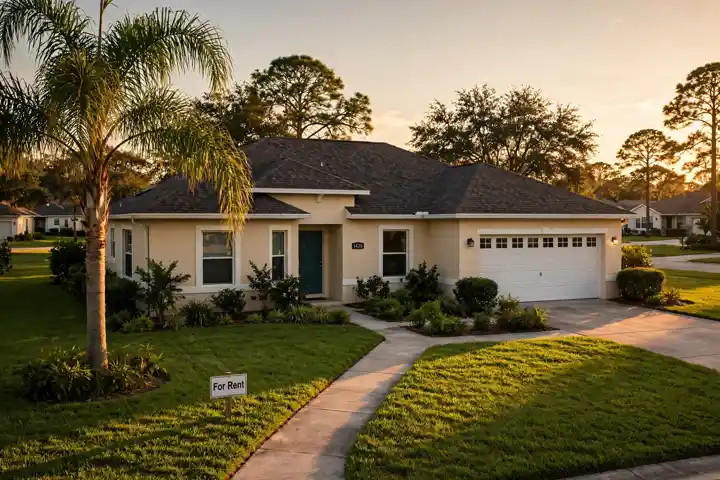
Going to check with your bank after this? Don't. Your bank has one HELOC on one shelf — and most retail banks don't offer investment-property HELOCs at all. A broker shops 200+ lenders, including the wholesale programs that actually write lines on rentals.
What one borrower told us: "Doug was thorough, knowledgeable and always set me up to succeed. His experience shined with how fast he was able to close on my VA loan. Highly recommend using his services to purchase your new home!" — Chris C., Google review, July 28, 2026
What a HELOC on a Rental Actually Is
A HELOC is a revolving line secured by a lien on a property you already own. The line is the property's value times the maximum combined loan-to-value, minus every lien already on it: 80% to 90% on a primary home, 70% in second-lien position on an investment property.
It has two phases. During the draw period — typically 10 years — you borrow up to the limit and usually make interest-only payments. Then the repayment period begins, typically 20 years, and the balance amortizes. The rate is variable: prime plus a margin. The line is sized by equity, occupancy, and credit — not by the rent, which does not drive approval. Your own credit profile does the work. If your personal debt-to-income ratio can't carry the line, the rent won't save the file. That is the job the DSCR loan exists to do.
The Requirements, Side by Side
What changes when the collateral is a rental — the typical ranges across the programs that write these lines, verified against current lender guidelines in November 2026.
| Requirement | Primary home | Investment property |
|---|---|---|
| Max combined loan-to-value | 80–90% | 70% second lien; 80% first lien |
| Minimum credit score | 620+ | 680 to 720 |
| Debt-to-income ratio | 43% or less preferred | 40% to 50% |
| Cash reserves | Often not required | Six months or more |
| Title | Individual or trust | Individual or revocable trust — not an LLC |
The 70% cap leaves only $60,000 of room on a $400,000 rental with a $220,000 mortgage — and an LLC title rules a HELOC out entirely.

Sized by equity, credit, and occupancy — not by the rent.
The Math: The Same $60,000, Three Ways
Take one real Jacksonville rental: worth $400,000, with a $220,000 first mortgage at 7.28% — the Freddie Mac 30-year average for the week ended November 19, 2026 — renting for $2,800 a month, with taxes and insurance about $650 a month. The owner wants $60,000 out.
Way 1: The HELOC
At 70% combined loan-to-value, the maximum total liens are $280,000. Subtract the $220,000 first mortgage and the line is $60,000 — exactly the amount wanted. At prime 7.00% plus a 1.00% margin, the rate is 8.00% variable, and the interest-only draw payment is $400 a month, typically with no closing costs. The catch is the float: if prime goes to 7.25%, the payment becomes $425; another quarter point and it is $450. Five years of $400 payments is $24,000 of interest — and you still owe the full $60,000.
Way 2: The Cash-Out Refinance
Fannie Mae caps a cash-out refinance on a one-unit investment property at 75% of value — $300,000 here, or $80,000 of cash before costs (Freddie Mac allows 80%). To pull the same $60,000, the new loan is $280,000. At an illustrative 8.25% fixed investment-property rate, principal and interest are $2,103.55 a month, against $1,505.27 today: $598.28 more every month, plus roughly $4,500 in closing costs. But the cash-out reprices the $220,000 you already owed from 7.28% to 8.25% — about $2,134 a year extra. Over five years, total interest on the cash-out path is $117,508 including closing costs, against $102,013 on the HELOC path, where the first mortgage keeps its 7.28% rate. The HELOC is cheaper by about $15,495 over five years — on this file, at today's prime.
Way 3: The DSCR Cash-Out
A DSCR loan qualifies on the property's rent instead of your personal income: DSCR equals gross monthly rent divided by monthly PITIA — principal, interest, taxes, insurance, and HOA dues. Most programs want a DSCR of 1.00 or better. At an illustrative 8.75% DSCR rate, a $280,000 loan costs $2,202.76 a month; add $650 of taxes and insurance and PITIA is $2,852.76. The rent is $2,800. DSCR is 0.98 — below the 1.00 floor, and the loan does not clear. To pass, the loan has to shrink to $260,000 — principal and interest $2,045.42, PITIA $2,695.42, DSCR 1.04 — and the cash out drops to $40,000. On a DSCR loan, the rent caps the loan, not the loan-to-value cap: the 75% ceiling says $80,000 is available; the rent says $40,000 is.
| HELOC (2nd lien) | Cash-out refinance | DSCR cash-out | |
|---|---|---|---|
| Cash available | $60,000 | $60,000 (max $80,000) | $40,000 — rent caps it |
| Monthly cost | $400 interest-only | $598.28 more than today | $697.49 more — if it cleared |
| 5-year interest + costs | $102,013 | $117,508 | $116,016 ($40,000 cash) |
The verdict: on this file, the HELOC is the cheapest way to tap the equity for a hold of up to five years — because repricing the whole $220,000 first mortgage is what makes the cash-out expensive. The cash-out wins for a ten-year hold with a fixed rate and a shrinking balance. The DSCR loan wins when your personal debt-to-income ratio blocks the other two, or when the property is titled in an LLC — and here it delivers $40,000, not $60,000, because the rent is the ceiling. Cheapest depends on how long you hold it and whose name is on the title — not on the headline rate.

The Tax Part Most Investors Get Wrong
The IRS does not care which property secures the loan. It cares what you spent the money on. Under the interest-tracing rules (Treasury Regulation §1.163-8T) and IRS Publications 936 and 527, HELOC interest is deductible as home mortgage interest only if the proceeds buy, build, or substantially improve the home that secures the line, and then only on up to $750,000 of qualifying home debt. But interest traced to a rental purpose is generally deductible as a rental expense on Schedule E, whether or not you itemize. That includes a HELOC on your primary home drawn to fund a rental down payment: the interest follows the money to the rental, not the collateral. If you use the rental yourself more than 14 days a year, the IRS personal-use test makes it a mixed-use home, and the lender may underwrite it as a second home — where the cap can reach 90%. Talk to your CPA — this is general information, not tax advice.
The LLC Trap
Most serious landlords hold rentals in an LLC. A HELOC cannot follow them there: the programs require title in an individual's name or a revocable living trust, and a property held in an LLC belongs on a DSCR cash-out refinance instead — no personal income documentation, the rent doing the qualifying. The workaround landlords actually use is the other direction: draw on a HELOC secured by your primary residence — where the cap is 80% to 90%, the credit floor is lower, and the line is bigger — and use the draw for the rental's down payment or renovation. The interest traces to the rental on Schedule E.
The Jacksonville Angle
Jacksonville is a landlord town — Riverside and Avondale duplexes, Southside rentals, and military families at NAS Jacksonville and Mayport who buy, PCS, and keep the first house as a rental. A $400,000 rental with a $220,000 mortgage is a normal file here. But the 70% cap bites: at 70% that owner reaches $60,000; at the 90% a primary home allows, $140,000.
Frequently Asked Questions
Can you get a HELOC on an investment property?
Yes, but only through a narrow set of lenders, with tighter terms than a primary-home line: a combined loan-to-value cap around 70%, a minimum credit score of 680 to 720, a 40% to 50% debt-to-income ratio, and six months of reserves.
Is HELOC interest tax deductible on a rental property?
Generally yes, as a rental expense on Schedule E — if the borrowed money was used for a rental purpose. The IRS allocates interest by what the money was spent on, not by which property secures the loan.
Can you get a HELOC if the rental is in an LLC?
No. Investment-property HELOC programs require title in an individual's name or a revocable living trust. A property held in an LLC belongs on a DSCR cash-out refinance instead, which qualifies on the rent and allows LLC title.
HELOC vs cash-out refinance on a rental — which is cheaper?
It depends on how long the money stays out. On the $400,000 Jacksonville example here, the HELOC costs about $15,495 less in total interest over five years than a cash-out refinance, because the cash-out reprices the entire existing first mortgage at a higher rate. The cash-out wins for a long hold; the DSCR loan wins when personal income or LLC title blocks the other two.
Sources
- Federal Reserve H.15 — bank prime loan rate 7.00%, November 2026; federal funds target range 3.75% to 4.00%, held October 28, 2026.
- Freddie Mac Primary Mortgage Market Survey — 30-year fixed 7.28%, 15-year fixed 6.66%, week ended November 19, 2026.
- Fannie Mae Selling Guide B2-1.3-03 / Eligibility Matrix (April 1, 2026) — investment cash-out capped at 75% LTV for one unit, 70% for two to four; six months reserves; 12-month seasoning; rent at 75%. Freddie Mac allows 80% for one unit.
- PRMG Lightning Equity Hybrid HELOC profile (October 8, 2026) — 70% CLTV second lien, 80% first lien, $400,000 max line, 680 minimum credit.
- The Mortgage Reports (November 11, 2026) — DSCR minimums 0.75 to 1.25, credit 620 to 680, max LTV 75% to 85%.
- IRS Publication 936; IRS Publication 527; Treasury Regulation §1.163-8T (interest tracing).
Our Take
A HELOC on a rental is a real product with a narrow door — and the narrow door is the point. The 70% cap, the credit floor, and the reserve requirement are the market telling you a rental is riskier collateral than your own front door. The mistake is picking a lane on the headline rate instead of the hold period. On the file in this post, the HELOC wins for five years and the cash-out wins for ten — and the DSCR loan is the only one that works at all when the title is in an LLC. Price all three across 200 lenders.
Here's the question for the comments: if you own a rental with real equity in it, which would you reach for first — the HELOC, the cash-out refinance, or the DSCR loan — and what would you spend the money on?
Your Next Step
Check Your Rate — Free — see what rate you actually qualify for across 200+ lenders.
Run your numbers on the mortgage calculators before you choose a lane.
Prefer to talk it through? Call Douglas direct: (904) 517-4049.
Douglas Wilkerson — NMLS #1680719
Direct: (904) 517-4049
[email protected] | [email protected]
1548 the Greens Way, Ste. 4, Jacksonville Beach, FL 32250
Freeman Douglas Corporation is a DBA of Edge Home Finance. This is not a promise to lend — all credit decisions are subject to approval. Douglas Wilkerson, NMLS #1680719 | Edge Home Finance, NMLS #891464. Verify licensing at nmlsconsumeraccess.org. Equal Housing Opportunity.
