
FHA Is Rewriting Its Property Rules for the First Time in 20+ Years — What Buyers Need to Know
Short answer: On September 22, 2026, the Federal Housing Administration (FHA) posted a draft rewrite of its property rules — the first comprehensive update in more than two decades — ending two common FHA deal-killers: required appliance observations and required crawl-space visits. It also sets a clear pass/fail line: a C4 condition rating or better, and a Q5 quality rating or better. Feedback is open through November 6, 2026. Nothing has changed yet — today's files still run under today's rules.
How an FHA appraisal has killed deals over a missing stove
Every FHA buyer in Northeast Florida has heard some version of this story. The offer is accepted, the appraisal is ordered — and then the deal stalls because the stove is missing, or the appraiser could not get into the crawl space. The lender issues repair conditions. The seller fixes something, or waits for a re-inspection, or refuses. Sometimes the closing date slides past the contract deadline. Sometimes the deal dies over an item that has nothing to do with whether the house is safe to live in.
That is the pain this draft is aimed at. FHA loans carry a reputation: sellers steer away from FHA offers because they expect appraisal conditions and re-inspections that conventional loans do not demand. HousingWire's coverage notes FHA's repair and re-inspection requirements have exceeded Fannie Mae's and Freddie Mac's, feeding seller reluctance toward FHA offers. The draft would narrow that gap — not erase it, and it is not law yet.
What minimum property requirements actually are
Here is the mechanism, because it decides whether your deal closes. FHA does not lend you money. FHA insures the loan your lender makes, against loss. Because FHA takes that risk, the property has to meet FHA's bar before FHA will insure it. That bar is currently called Minimum Property Requirements (MPR) and Minimum Property Standards (MPS), in HUD Handbook 4000.1.
In practice: your lender orders an FHA appraisal. The appraiser estimates value and reports whether the property meets FHA's standards. A flagged condition — a missing appliance, an inaccessible crawl space, peeling paint, a failing roof — becomes a lender repair condition. The seller fixes it, the deal is re-negotiated, the appraiser returns for re-inspection, or the file stalls. Every link costs days; the last can cost the deal.
What is actually in the draft
FHA announced the proposal on September 22, 2026, in FHA Info 2026-22, posting draft revisions to Handbook 4000.1 on its Single Family Drafting Table. Feedback runs through November 6, 2026. FHA's stated reason: the standards "have not been updated in over two decades and no longer reflect current industry practices," creating burdens that increase costs, discourage participation, and limit access — particularly for first-time and low- to moderate-income buyers, exactly who FHA serves most.
The draft makes four changes every FHA buyer should understand:
1. A single pass/fail condition line: C4 or better, Q5 or better. The draft retires the MPR/MPS split for one framework called Property Acceptability Criteria, adopting the same condition (C1–C6) and quality (Q1–Q6) ratings Fannie Mae and Freddie Mac use. Minimums: condition C4, quality Q5. A property rated C5, C6, or Q6 is ineligible unless every deficiency is cured before closing, with the appraisal completed subject to those repairs.
In plain English, C4 — Fannie Mae's definition — means "some minor deferred maintenance and physical deterioration due to normal wear and tear," with "only minimal repairs to building components/mechanical systems and cosmetic repairs." That is the line. A lived-in house with worn carpet and a tired faucet can be C4. A house with obvious deferred maintenance needing significant repairs is C5, and under the draft it does not close until fixed.
2. No more required appliance observations, and no more required utility operation. The draft removes the requirement that utilities be turned on and operated, plus the specific kitchen-appliance observation requirements. The appraisal becomes more observation-based: the appraiser still notes readily observable defective conditions, but the checklist exercise — run every appliance, prove every utility — goes away. A missing stove holding up a closing is exactly the condition this change retires.
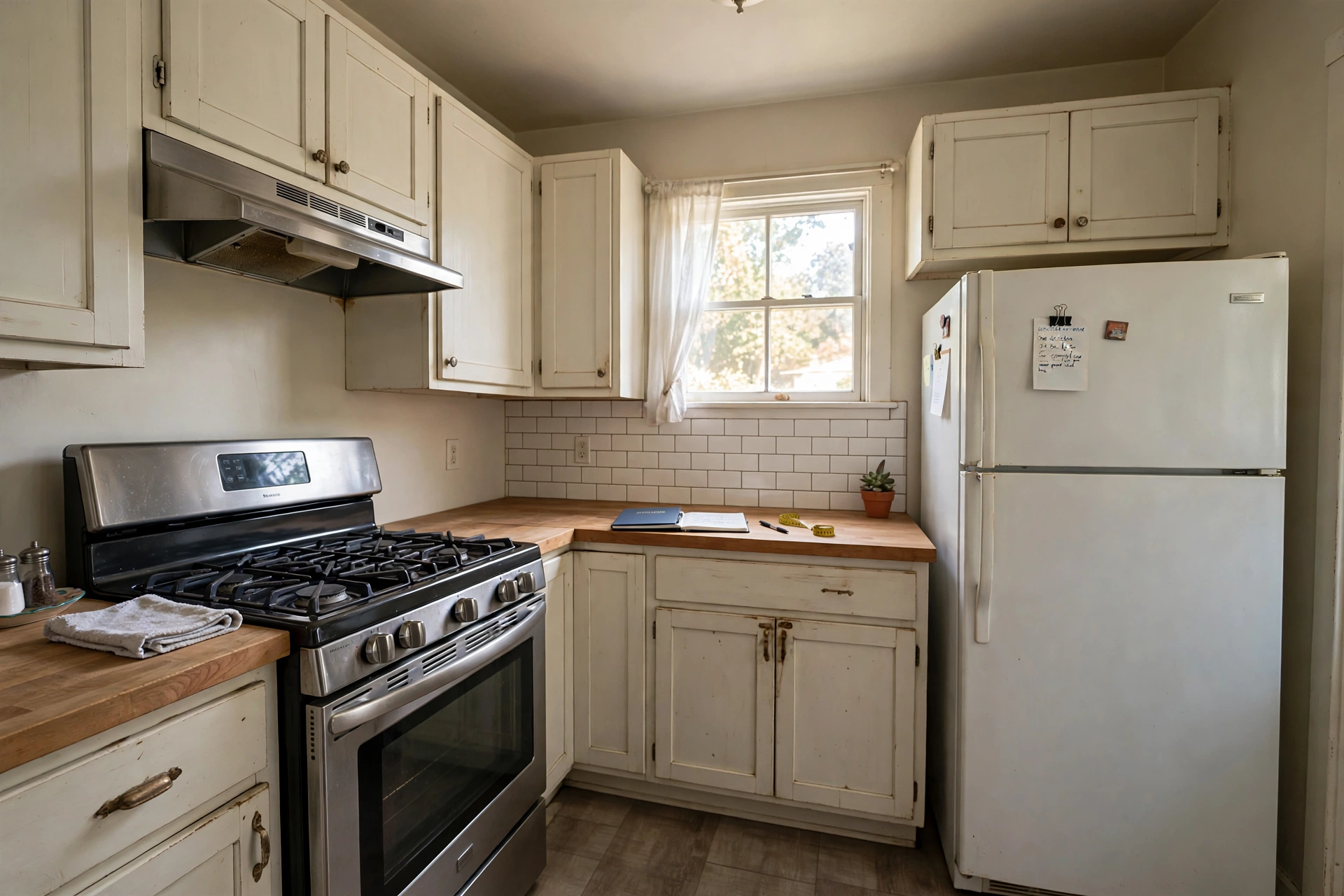
3. No more required attic and crawl-space visits. The draft removes the specific observation requirements for attics and crawl spaces, while keeping the obligation to note readily observable defective conditions. In Northeast Florida this one is personal: our housing stock sits on raised foundations, and crawl-space access has ended more FHA deals here than most buyers hear about. An inaccessible crawl space alone stops being an automatic condition — though a visible defect still gets reported.
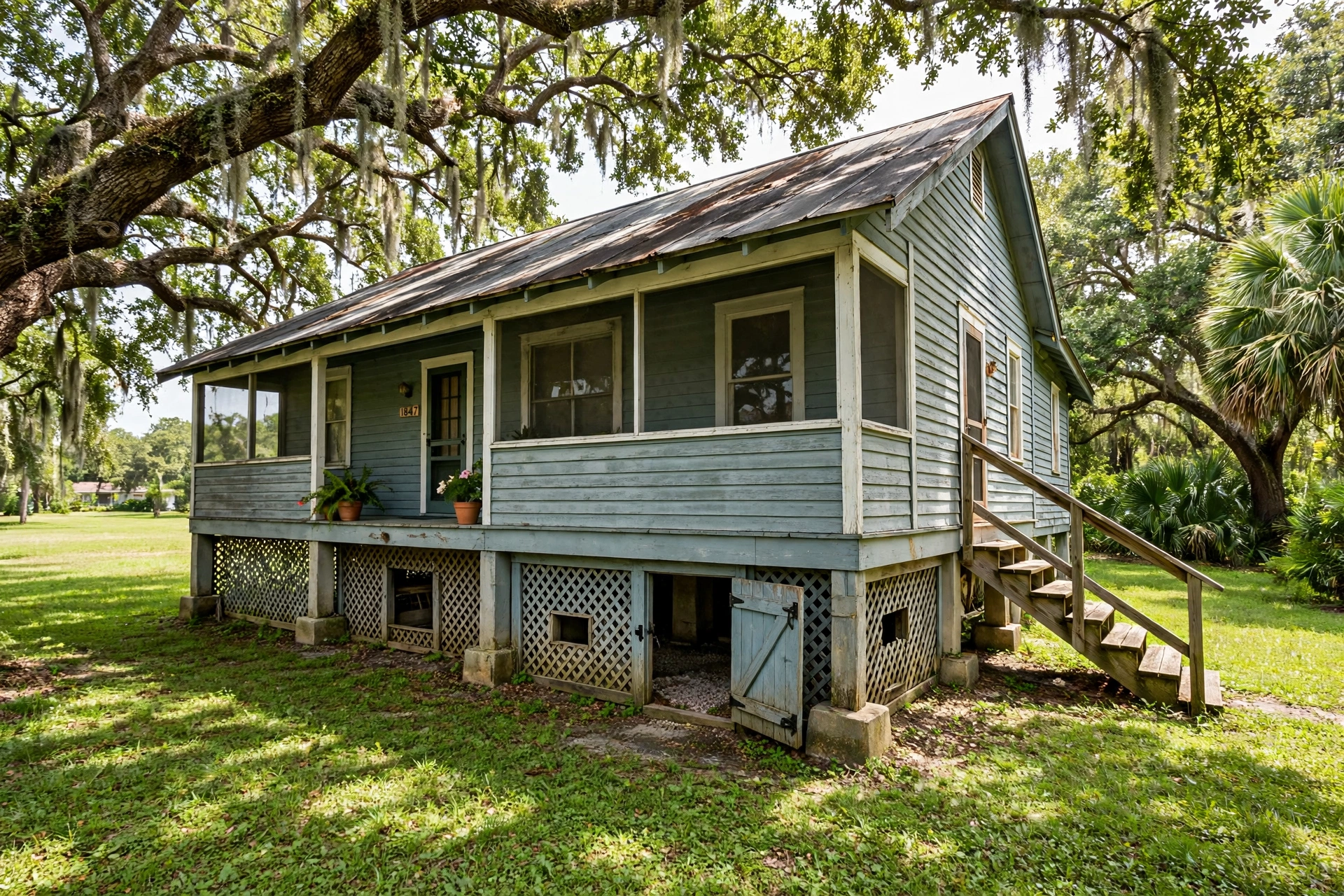
4. Lead-based paint narrowed to the dwelling itself. The draft narrows the lead-based-paint repair requirement from the entire property to the dwelling, excluding sheds, outbuildings, and other ancillary structures from that particular requirement. A peeling shed stops being a closing condition. Peeling paint on the house itself does not — that stays squarely in the safety bar.
One more detail with real consequences: ratings must reflect an absolute assessment of the property — not a comparison to neighboring homes. A house is judged on its own condition, not on whether it is the worst house on the block.
What the draft does NOT change
Read this part twice, because headlines about "loosening" will overstate it. FHA's stated aim is maintaining safe, sound, and secure housing, and the draft keeps that bar. The big three still decide files: safety, soundness, security. A roof at the end of its life, structural damage, a failed septic or water system, peeling paint on a pre-1978 home — none of that becomes acceptable because the appliance checklist went away. A C5 or C6 property still does not close until cured. Lenders can still layer overlays on top, which is why two lenders can give two different answers on the same house.
And the appraisal is still not a home inspection. HUD emphasizes that distinction, and the draft sharpens it: the appraiser judges the property for FHA insurance purposes, not the way your own inspector will. If you are buying with FHA, get the inspection anyway. The appraisal answers the lender's question. The inspection answers yours.
The Jacksonville angle: older homes, raised foundations, FHA buyers
Jacksonville's FHA story is an older-home story. In Riverside, Avondale, and Springfield, the stock first-time buyers can afford was built when lead paint was standard and crawl spaces were how every house was built — precisely the features the current rulebook punishes hardest. A first-time buyer offering on a 1950s Riverside bungalow is not buying a problem house; they are buying the normal house in that neighborhood. Under today's rules, that normal house can draw conditions a newer suburban home never would. Under the draft, it is judged on actual condition — C4 or better — not on a checklist written before the current market existed.
For sellers, an FHA offer has carried a quiet discount in the seller's mind: the risk of conditions, re-inspections, and delay. Aligning FHA's bar with Fannie Mae and Freddie Mac's does not make an FHA offer equal to cash, but it removes the two most common reasons sellers were told to fear one.
The payment math on a real FHA purchase
Property rules do not change the payment, so here is the payment, worked honestly. FHA's actual guideline: minimum 3.5% down with a credit score of 580 or higher (10% down for scores from 500 to 579). On a $300,000 purchase, 3.5% down is $10,500, leaving a base loan of $289,500. FHA's upfront mortgage insurance premium is 1.75% — $5,066.25 — and most borrowers finance it, bringing the total loan to $294,566.
For illustration only, using Freddie Mac's Primary Mortgage Market Survey average 30-year fixed rate of 7.32% for the week ended October 22, 2026 (15-year: 6.68%; a year earlier the 30-year averaged 6.19%) — Douglas Wilkerson, NMLS #1680719 — principal and interest on $294,566 over 30 years is $2,023.46 per month. Add FHA's annual mortgage insurance premium of 0.55%, or $135.01 per month. Principal, interest, and mortgage insurance: $2,158.47 per month, before taxes, homeowners insurance, and HOA dues. Note what that rate figure is: a weekly survey average for conventional, conforming loans to well-qualified borrowers — a trend marker, not your FHA quote. Your actual rate depends on your file, your lender, and the day you lock.
That is why the property rules matter to the payment conversation. A buyer who can afford $2,158.47 a month does not need a cheaper rate — they need a house that can pass the appraisal. Every deal that dies over a missing stove is a buyer who had the payment and lost the house to a checklist.
What buyers and sellers should DO right now
First, nothing changes yet. The draft is a proposal on FHA's Drafting Table, not a final rule, and FHA has announced no final effective date. If you are buying with FHA today, today's rules apply in full. Do not write an offer assuming the loosened rules are already in force.
Second, the comment window is real and it closes November 6, 2026. FHA invited feedback from the people who live with these rules — loan officers, brokers, appraisers, agents, and buyers who lost a deal to a checklist item. The draft followed a May 29, 2026 request for information, and FHA says the proposal reflects those comments. November 6 is a feedback deadline, not an implementation date, and the final rule can change from the draft.
Third, ask the overlay question on every file. FHA's guideline is the floor, not the ceiling — individual lenders add stricter rules on top. If a lender tells you a property "won't pass FHA," ask: "Are you underwriting this to FHA's actual guidelines, or to your own overlay?" With 200 lenders to shop, one lender's overlay is never the last word. That is the broker advantage on an FHA file: pricing and placement against actual agency guidelines, not one bank's checklist.
Fourth, if a house deal died over financing in the past, re-check it. The rule landscape is moving, and a property that stalled six months ago may look different under a fresh underwrite. The only way to know what your file qualifies for is to run it — so apply.

The honest caveats, all in one place
This is a proposal, not a policy. The comment window runs through November 6, 2026, and FHA has set no final effective date and has not promised the draft will survive unchanged. Lenders implement agency changes at different speeds, and overlays can keep a stricter rule alive on your file even after FHA loosens its own. The 7.32% figure above is the week ended October 22, 2026, not a forecast. None of this is a promise to lend: every credit decision is subject to approval, and the property still has to pass the safety bar.
Did an FHA appraisal ever kill or delay a deal you were part of — over a stove, a crawl space, or a checklist item that had nothing to do with the house being safe? What would you want FHA to hear before November 6?
Start Here
Run the numbers before you rule yourself out. Start with the 60-second quiz below. It takes a minute, costs nothing, and puts real numbers in front of you before any lender does.
Check Your Rate — 60-Second Quiz
Douglas Wilkerson — NMLS #1680719
Direct: (904) 517-4049 | Office: (904) 906-8869
[email protected] | [email protected]
1548 the Greens Way, Ste. 4, Jacksonville Beach, FL 32250
Freeman Douglas Corporation is a DBA of Edge Home Finance. This is not a promise to lend — all credit decisions are subject to approval. Douglas Wilkerson, NMLS #1680719 | Edge Home Finance, NMLS #891464. Verify licensing at nmlsconsumeraccess.org. Equal Housing Opportunity.
