
First-Time Homebuyer Credit: What Actually Exists in 2026 — and What's Just a Sales Pitch
The short answer: there is no federal first-time homebuyer tax credit you can claim today — not for 2026, not on any tax form the IRS accepts. The First-Time Homebuyer Tax Credit Act (H.R. 4717 / S. 2402) would create one — 10% of the purchase price, up to $15,000 — but as of November 19, 2026 it is sitting in committee in Congress. It has not passed the House, it has not passed the Senate, and the 119th Congress ends on January 3, 2027. Any advertisement telling you the $15,000 credit is yours right now is a sales pitch, not a tax fact. What does exist — a real federal tax credit worth thousands a year, real down payment help, and lender credits — is below, with the math.
What is the difference between a credit, a deduction, and a grant?
These three words get swapped around in ads because they sound alike. They are not alike:
A tax credit comes straight off your tax bill, dollar for dollar. Owe $5,000 in federal tax and hold a $4,000 credit, and you owe $1,000. It is the most valuable of the three.
A tax deduction shrinks the income you are taxed on. A $4,000 deduction in the 22% bracket saves you $880 — real money, but a fraction of the same number as a credit.
A grant or assistance is money at the closing table — help with the down payment and closing costs themselves. It does its work before you own the home, not at tax time.
Almost every "first-time homebuyer credit" headline mixes these up on purpose. Keep them separate and the pitches sort themselves out.
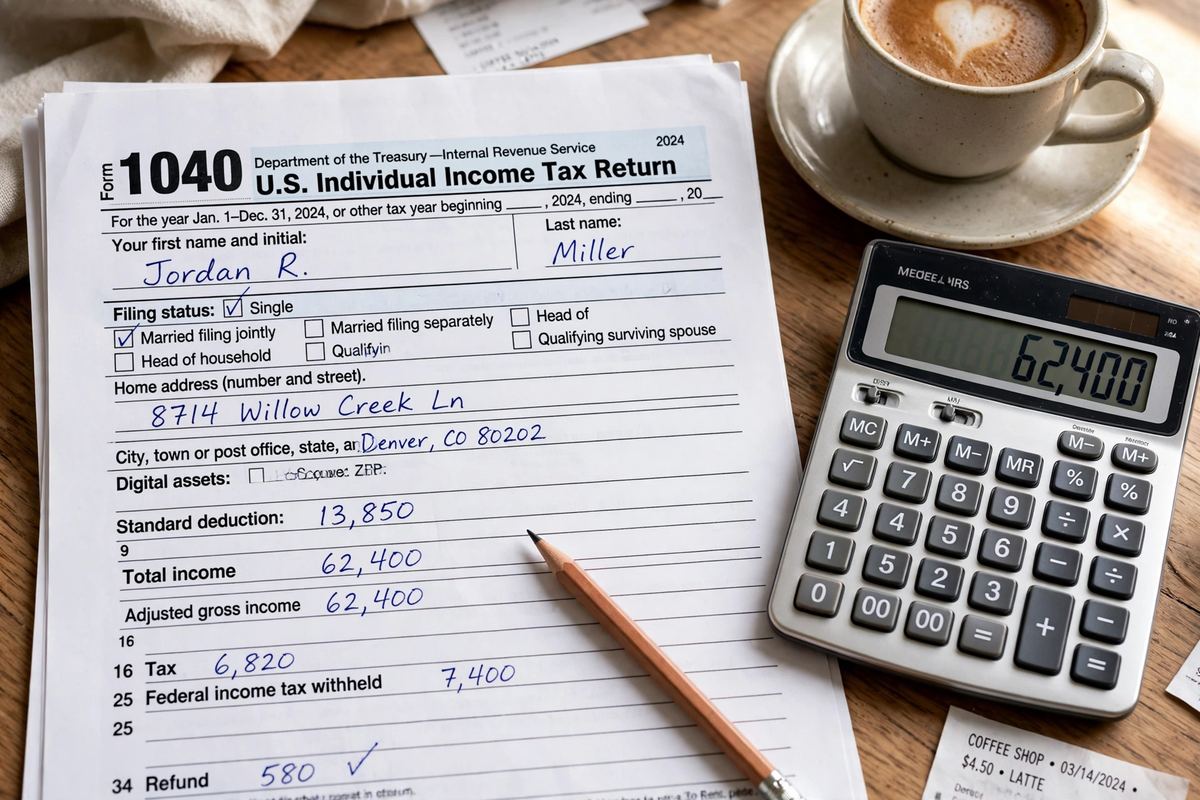
A credit and a deduction with the same dollar figure are not the same benefit — one cuts the tax bill itself, the other only shrinks taxable income.
What credit actually exists? The Mortgage Credit Certificate
The Mortgage Credit Certificate — MCC — is a real federal tax credit that exists right now, issued locally. In Duval County it is run by the Jacksonville Housing Finance Authority (JHFA), and it works like this: the certificate converts 20% of the mortgage interest you pay each year into a federal tax credit — dollar for dollar off your tax bill, every year you hold the loan and live in the home. The other 80% of your interest can still be deducted if you itemize. It is for first-time buyers (the requirement is waived in targeted areas), it carries income and purchase-price limits, and — this is the rule that burns people — it must be set up before you close, through a participating lender. You cannot add it after the fact.
Here is what it is worth, on a real example. Take a $289,500 loan at 7.28% (30-year fixed, Freddie Mac survey average for the week ended November 19, 2026). The first year's interest on that loan is $20,984. Twenty percent of it — the MCC credit — is $4,197 back at tax time, in year one, and a similar amount every year after, shrinking slowly as the interest portion of your payment shrinks. Compare the shapes: that same $4,197 as a mere deduction would save about $923 in the 22% bracket. The MCC is the deduction's stronger sibling, it repeats annually, and almost nobody claims it — because nobody told them it had to be arranged before closing.

The MCC is a certificate issued with your loan — arranged before closing, claimed on IRS Form 8396 every year you hold the loan.
What help works like money at closing?
Down payment assistance is the second real thing. Florida Housing's programs (Hometown Heroes, FL Assist, and their siblings) and Jacksonville's own Headstart to Homeownership put actual dollars toward your down payment and closing costs — structured as second mortgages with their own terms, not as tax credits. I broke down every current program, amount, and rule in "First-Time Home Buyer Grants in Florida", and the Down Payment Assistance page is where to start a file. The point for this post is the distinction: assistance money solves the cash-to-close problem; the MCC solves the every-year-after problem. Plenty of buyers qualify for both, and stacking them is a structuring decision — one more reason the conversation has to happen before you are under contract, not after.
Can my lender give me a credit?
Yes — a lender credit, and it is a trade, not a gift. You accept a slightly higher rate and the lender hands you a credit toward closing costs. On a $300,000 loan at the November 19, 2026 survey pricing, moving from 7.28% to 7.53% raises the payment by $51.17 a month — and buys roughly a $3,000 credit at closing. That trade is smart when cash-to-close is the wall between you and the home, and expensive if you hold the loan for 30 years without ever revisiting it. A lender who quotes you a "credit" without showing you the rate you paid for it is doing the same trick as the $15,000 ads: naming the benefit and hiding the price.
What should I watch out for?
Three pitches, specifically. First: any ad, post, or salesperson promising the federal $15,000 first-time buyer credit as something you can claim now — the bill (H.R. 4717 / S. 2402) is in committee; there is no form, no claim, no credit. Second: "credits" that turn out to be rate markups — a lender credit is real, but only when the trade is shown to you in numbers. Third: anyone who tells you the MCC can be sorted out after closing. It cannot. If a program has a before-closing deadline, the time to hear about it is at pre-approval — which is exactly when most buyers are instead being rushed past the details.
The help that exists is real — it just has deadlines. Most of them pass before buyers ever hear the programs' names.
Why borrowers check in before they buy
Every real benefit in this post has a clock on it: the MCC must be arranged before closing, assistance funds run on program cycles, and lender credits only help if the trade is priced honestly. Buyers who land these benefits are not luckier — they had the conversation earlier. In a client's own words, from a Google review:
"If you're a veteran looking to buy a home, I can't recommend Douglas highly enough. As a fellow Marine veteran, he truly understands every aspect of the VA home loan process and knows how to navigate it from start to finish. His knowledge, professionalism, and commitment to serving veterans are second to none. What really sets Douglas apart is that he's much more than just a mortgage loan officer. He works seamlessly with your real estate agent to make sure everyone is aligned and the entire process runs smoothly. You never feel like you're just another transaction. The best part is that once you become part of Douglas's ecosystem, you never really leave it. He continues to be a trusted resource long after closing, providing guidance, connections, and support whenever you need it. It's not just a mortgage—it's a lifelong relationship and an incredible asset to have in your corner. If you're looking for someone who genuinely cares about your success and has the expertise to get the job done right, Douglas is the person to call. Semper Fi!" — Jason Haglund, July 31, 2026 (Google review)
Frequently asked questions
Is there a first-time homebuyer tax credit in 2026?
No federal one you can claim. The First-Time Homebuyer Tax Credit Act (H.R. 4717 / S. 2402) proposes a credit of 10% of the purchase price up to $15,000, but as of November 19, 2026 it remains in committee — it is not law, and the IRS accepts no claim for it. The federal credit that does exist for first-time buyers today is the Mortgage Credit Certificate.
What is a Mortgage Credit Certificate?
A certificate, issued through a local housing finance authority — in Duval County, the Jacksonville Housing Finance Authority — that converts 20% of the mortgage interest you pay each year into a dollar-for-dollar federal tax credit, for as long as you hold the loan and live in the home. The remaining 80% of the interest can still be deducted if you itemize. You claim it annually on IRS Form 8396.
How much is the MCC worth?
On a $289,500 loan at 7.28% (30-year fixed, November 19, 2026 survey average), first-year interest is $20,984 — so the credit is $4,197 in year one, repeating every year in a slowly declining amount. As a deduction instead, that same $4,197 would be worth only about $923 in the 22% bracket.
Can I get the MCC after I close?
No. The certificate must be set up before closing, through a participating lender, and it carries first-time-buyer, income, and purchase-price rules. If you have already closed without one, that door is closed on this home — which is why it belongs in the pre-approval conversation.
Sources
Congress.gov — First-Time Homebuyer Tax Credit Act, H.R. 4717 / S. 2402 (119th Congress): status "in committee" as of November 19, 2026; proposed credit 10% of purchase price, capped at $15,000; 119th Congress ends January 3, 2027. Jacksonville Housing Finance Authority — Mortgage Credit Certificate program: federal income tax credit of 20% of mortgage interest paid, Duval County first-time buyers (waived in targeted areas), income and purchase-price limits, arranged through participating lenders before closing. IRS Form 8396, Mortgage Interest Credit — the annual claim form for certificate holders. Freddie Mac Primary Mortgage Market Survey, week ended November 19, 2026 — 30-year fixed 7.28% (the rate used in the worked example). Florida Housing Finance Corporation — Hometown Heroes / FL Assist program terms are detailed in the linked grants post.
Our Take
The cruelest pitch in this market is a real bill quoted as a real benefit. The $15,000 credit may pass someday — and if it does, my buyers will hear it from me the week it becomes law, with the form attached. Until then, selling it is selling vapor, and buyers who budget around vapor make real decisions badly. What exists today is less flashy and more valuable: a certificate worth roughly $4,197 a year to a typical Jacksonville first-time buyer, assistance programs that solve the cash-to-close problem, and lender credits that help when they are priced honestly. Every one of them rewards the buyer who asks early. That is the whole game — and it is a conversation I am happy to have before you ever sign a contract.
Before today, had anyone told you the MCC exists — or were you only hearing about the $15,000 credit that doesn't? Which one were you budgeting around?
Your Next Step
Check Your Rate — Free — see what rate you actually qualify for across 200+ lenders, free, no credit check, no pressure.
See what help you may qualify for on the Down Payment Assistance page — state, city, and lender programs in one place.
Prefer to talk it through? Call Douglas direct: (904) 517-4049.
Douglas Wilkerson — NMLS #1680719
Direct: (904) 517-4049
[email protected] | [email protected]
1548 the Greens Way, Ste. 4, Jacksonville Beach, FL 32250
Freeman Douglas Corporation is a DBA of Edge Home Finance. This is not a promise to lend — all credit decisions are subject to approval. Douglas Wilkerson, NMLS #1680719 | Edge Home Finance, NMLS #891464. Verify licensing at nmlsconsumeraccess.org. Equal Housing Opportunity.
