
A 6% Rate in a 7.32% Market: How One Real Scenario Gets There With No Money Down, $0 Cash to Close — and Money Back at Closing
The Short Answer
Yes — in this market, a buyer can close with $0 down, $0 cash to close, money back at the table, and an effective rate near 6% for the first two years — without builder incentives and without new construction. The mechanism is loan structuring, not a rate special: a 2-1 temporary rate buydown funded by a seller concession, lender credits trading a slightly higher note rate for cash, and a loan program whose rules were built for exactly this stack. This post walks the full dollar-by-dollar math on a realistic $300,000 Jacksonville purchase, on today's rate environment (30-year fixed, 7.32%, week ended October 22, 2026 — Freddie Mac PMMS; Douglas Wilkerson, NMLS #1680719). Nothing here is a promised rate. Every assumption is labeled.
Who This Is For
A veteran buyer in Jacksonville who assumed homeownership was off the table. The payment at today's rates looked like $2,100 a month on a $300,000 home — and the budget said no. What this buyer never got was a broker who structures the deal instead of just quoting the rate. If that's you, keep reading — the education below is the part your lender skipped.
What a Rate Buydown Actually Is
A buydown is prepaid interest. Somebody puts money into an escrow account at closing, and that account subsidizes your monthly payment for a set period. There are two fundamentally different kinds, and confusing them is the most common mistake buyers make:
Temporary buydowns (the kind in this scenario)
A 2-1 buydown drops your effective rate 2% below the note rate in year one, 1% below it in year two, and returns to the full note rate in year three. The seller (or builder — not used here) funds the buydown account at closing; the lender administers it. If you refinance or sell before the two years are up, the unused balance typically comes back to you. The benefit is real but time-limited — years three through thirty are the note rate. That's not fine print; it's the design, and any honest version of this structure says so up front.
Permanent buydowns (discount points)
Paying points buys your rate down for the entire life of the loan — the classic rule of thumb is that one point (1% of the loan amount) lowers the rate roughly 0.25% to 0.375%, and it takes on the order of three points to knock a full percentage point off permanently. Expensive, and it only pays for itself if you keep the loan long enough. In this scenario we use a temporary buydown instead: cheaper to fund, and the two-year window is the bridge to a potential refinance if rates fall.
What Seller Concessions Are Allowed to Cover
A seller concession is money the seller contributes toward the buyer's costs at closing — closing costs, prepaid items, discount points, and (where the program allows) a buydown. It is not a blank check. Every agency caps it, and the caps are the actual guidelines, not one bank's overlay:
- VA: up to 4% of the price in VA-defined concessions (buydowns, prepaids, paying off the buyer's debts). Separately, the seller may pay the buyer's normal closing costs with no cap — title, lender fees, recording — because those aren't counted as concessions. This is why VA is the most concession-friendly structure in the market, and it matters in a military town that serves NAS Jacksonville and Naval Station Mayport. Source: VA home loan rules.
- FHA: up to 6% of the sales price toward closing costs, prepaids, points, and buydowns. Source: HUD Handbook 4000.1.
- Conventional (Fannie Mae): on a primary residence, 3% with less than 10% down, 6% with 10–25% down, 9% with 25%+ down — calculated on the lower of sales price or appraised value. Investment property: 2%. Source: Fannie Mae Selling Guide B3-4.1-02.
- USDA: up to 6% of the sales price.
Two rules that never bend: concessions cannot fund the buyer's down payment or reserves, and any concession beyond the buyer's actual costs doesn't come back as cash — the excess is reclassified as a price reduction. Structure to the caps, not past them.

What Lender Credits Are (and the Trade Nobody Explains)
A lender credit is the mirror image of paying points. Instead of paying cash to buy the rate down, you accept a slightly higher rate and the lender pays you cash toward closing costs. In this scenario, the note rate is 7.50% instead of the ~7.375% par quote — and that 0.125% trade generates roughly a $2,000 lender credit. You're renting a higher rate to buy cash at closing. The math to watch: the higher rate only costs you the payment difference over the time you actually keep the loan, while the credit is cash on day one. For a buyer who expects to refinance inside two or three years, the trade almost always wins.
The Scenario, Dollar by Dollar
Assumptions, stated plainly: $300,000 purchase in Jacksonville, VA loan, $0 down, 30-year fixed, note rate 7.50% (the par market quote on October 22, 2026 sits near 7.32–7.375% for the Freddie Mac profile — 30-year fixed, week ended October 22, 2026; we're pricing an eighth above par for the lender credit). The buyer is a veteran with a service-connected disability, so the VA funding fee is $0. If you're not exempt, the 2.15% first-use fee on a $0-down loan (~$6,450) is typically financed into the loan — same structure, slightly different numbers.
The buydown
- Note rate P&I on $300,000 at 7.50%: $2,097.64/month
- Year 1 effective rate 5.50%: $1,703.37/month — saves $394.27/month, $4,731.32 for the year
- Year 2 effective rate 6.50%: $1,896.20/month — saves $201.44/month, $2,417.27 for the year
- Buydown escrow funded at closing: ~$7,149 — paid by the seller's concession
The full stack
- Seller concession — 4% of $300,000 = $12,000 (VA cap): $7,149 funds the buydown escrow; the remaining $4,851 covers prepaid items and escrow reserves
- Seller-paid normal closing costs — ~$4,500 (title, lender fees, recording): VA allows this outside the 4% concession cap
- Lender credit — ~$2,000 (for pricing at 7.50% instead of ~7.375% par): covers the remaining prepaid items
- Prepaid items and escrows: first-year homeowners insurance ~$4,200 (estimate — the Florida average runs $8,471/year per Insurance.com, with Jacksonville typically below that), escrow reserves ~$1,800, prepaid interest ~$800 — total ~$6,800
The closing table
Total buyer costs: $7,149 + $4,500 + $6,800 = $18,449. Total sources: $12,000 concession + $4,500 seller-paid costs + $2,000 lender credit = $18,500. The $51 surplus is applied to costs, never paid as cash. The buyer brings $0 at closing — and the $2,000 earnest money deposit put down with the offer is credited back at the table. That's the money back at closing: your own deposit, returned, because every cost was covered by somebody else's money.
Why This Works in Jacksonville Right Now
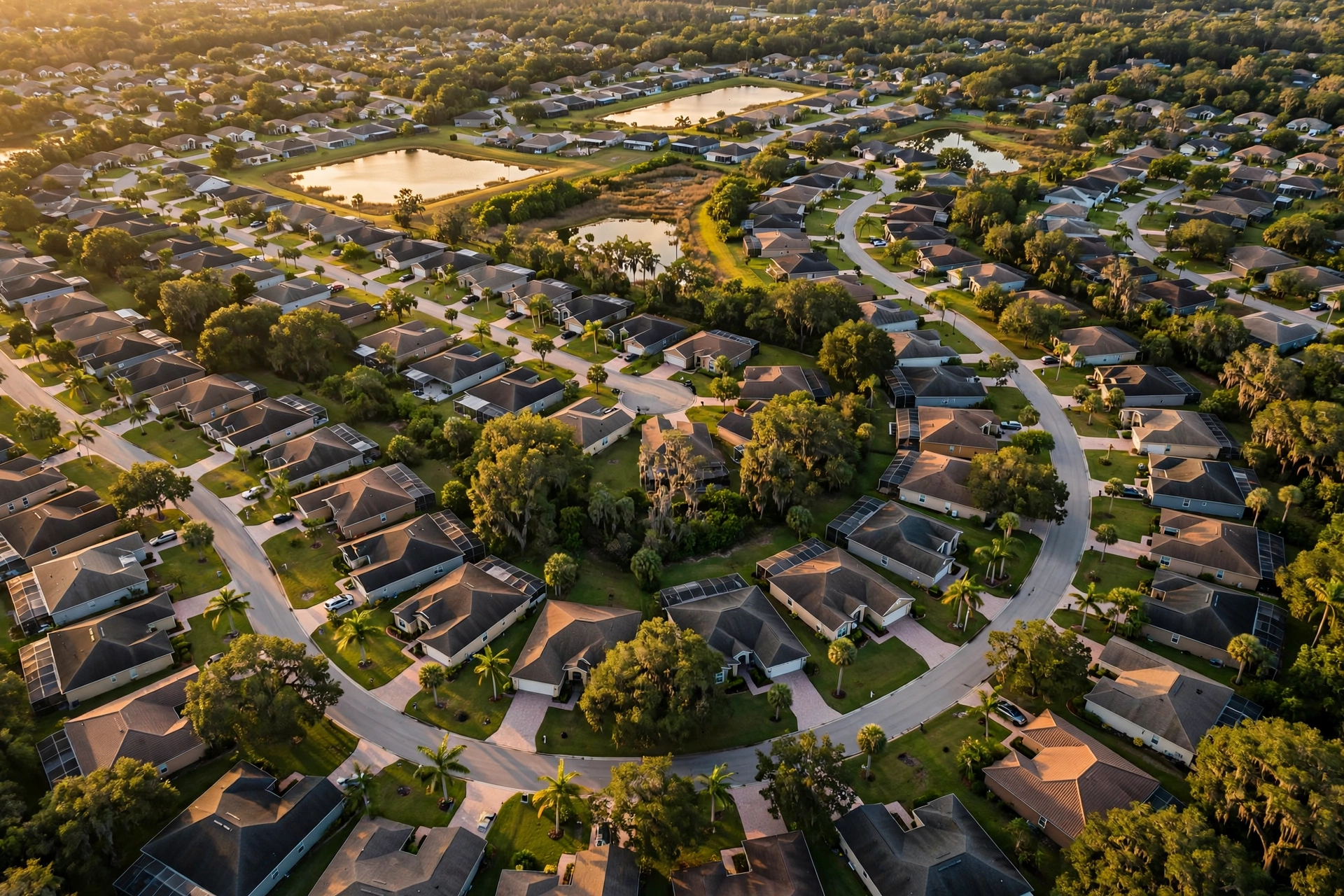
Concessions only exist when sellers need buyers more than buyers need sellers. Jacksonville is in that moment: the median sold price sits around $300,000, homes are sitting roughly 60 days, and sellers who listed in the summer are carrying mortgages into the fall. A seller at day 70 with two house payments is doing different math than a seller at day 12 — and a 4% concession on a $300,000 home ($12,000) is often cheaper for that seller than another price cut or another month of double payments. The structure above is the buyer's side of that same math.
What This Does NOT Do — Honest Caveats
- The buydown is temporary. Years three through thirty are the 7.50% note rate — about $2,098/month P&I. Budget for the real rate, not the teaser. The two-year window is a bridge, not a permanent discount.
- The appraisal must support the price. If the home appraises at $292,000, the deal is a $292,000 deal — concessions are calculated on value, and the structure shrinks with it.
- The seller has to agree. A concession is negotiated, not guaranteed. It works best on listings sitting 60+ days with motivated sellers — not on day-one listings with competing offers.
- Nobody can promise you a rate. Note rates move daily with the bond market. The 7.50% note rate and the lender credit in this scenario are illustrative of October 22, 2026 conditions — your quote is your quote, on the day you lock.
- This is one structure, not the only one. A permanent buydown, a bigger concession on an FHA file, or a straight price reduction can beat this setup depending on the house and the seller. With 200 lenders and the actual agency guidelines, the structure should be chosen per file — never pasted from a template.
What You Should Do With This
Run your full payment before you rule a home out — not just P&I, but taxes, insurance, and the buydown-adjusted years. If a listing has been sitting, ask your agent to test a 4% (VA) or 6% (FHA) concession ask before you walk away over the payment. And ask any lender quoting you a rate two questions: "What's the base rate before any buydown, and who's funding it?" and "Are you pricing me to the agency guidelines, or to your own overlay?" Then talk to a broker who structures files for a living — one lender's "no" is never the last word when there are 200 of them.
Start Here
Check Your Rate — 60-Second Quiz: Find out what structure fits your file
Douglas Wilkerson — Mortgage Broker, NMLS #1680719
Direct: (904) 517-4049 | Office: (904) 906-8869
[email protected] | [email protected]
1548 the Greens Way, Ste. 4, Jacksonville Beach, FL 32250
Discussion question: If you could buy with a 5.50% payment for year one but knew years 3–30 were the full note rate, would you take the deal — or would you rather negotiate the same $12,000 off the price? Why?
Freeman Douglas Corporation is a DBA of Edge Home Finance. This is not a promise to lend — all credit decisions are subject to approval. Douglas Wilkerson, NMLS #1680719 | Edge Home Finance, NMLS #891464. Verify licensing at nmlsconsumeraccess.org. Equal Housing Opportunity.
