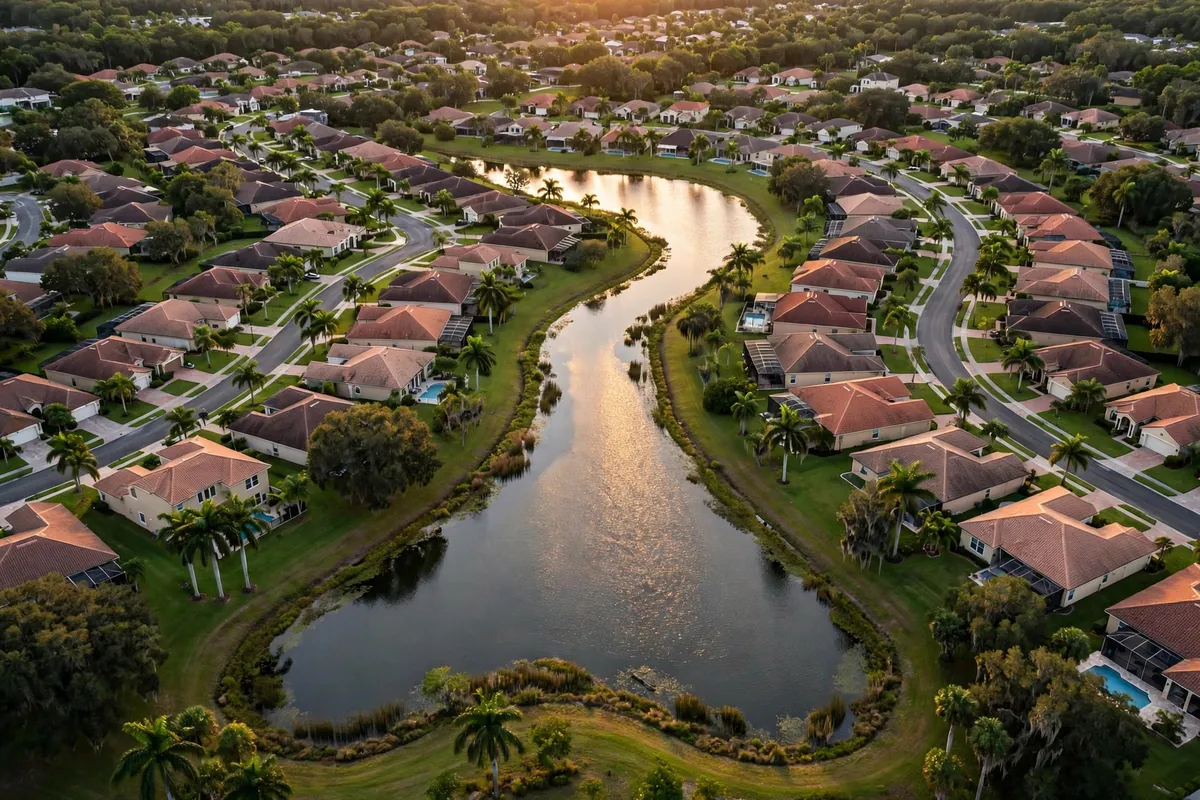
The Second Payment Nobody Budgets: HOA Dues, Flood Insurance, and CDD Fees in Northeast Florida
You got pre-approved for the payment you expected. Then the real number showed up — and it was hundreds of dollars a month higher. Not because your rate changed. Because of the second payment nobody put in the listing: HOA dues, flood insurance, and the CDD assessment that ride along with the house itself.
This is the part of Northeast Florida affordability no rate headline covers. For a huge share of Jacksonville-area buyers, the HOA dues, flood premium, and CDD assessment are what decide whether a house actually fits the budget. Here is how each one works, how lenders count it, and how to price it before you fall in love with a house.
Short answers
What is the "second payment"? The monthly costs beyond principal and interest that come with a specific property: HOA dues, flood insurance (where required or chosen), and CDD assessments. They are property-specific: two houses at the same price can carry wildly different second payments.
Do lenders count them? Yes. Fannie Mae's guidelines put HOA dues inside the monthly housing expense used for your debt-to-income ratio, and flood insurance and CDD assessments flow through escrow and the tax bill into that same housing expense.
How much can they add? In this post's worked example, HOA dues, a CDD assessment, and flood insurance add $598 a month — money that buys no house at all, and at today's rates services roughly $87,000 of loan amount.
Can you avoid them? Sometimes, by choosing a different property. You cannot negotiate them away on a house that has them — price them in before you offer, not at the closing table.
What your lender actually counts as your housing payment
Most buyers think of their monthly payment as principal and interest. Your lender thinks of it as the full monthly housing expense. Under Fannie Mae's Selling Guide, that expense includes principal and interest, hazard insurance, real estate taxes, mortgage insurance when it applies, homeowners association dues, and any subordinate financing. Flood insurance premiums paid through escrow land in the same stack, and a CDD assessment shows up on your county tax bill, which is collected through that same escrow.
That is why the second payment matters twice: once to your wallet, and once to your approval. Every dollar of HOA dues, flood premium, or CDD assessment uses up room in your debt-to-income ratio — the same ratio your loan amount is sized against. A house with a $600 second payment can mean qualifying for tens of thousands of dollars less house than the identical-priced home across town with no HOA, no flood zone, and no CDD.
HOA dues: the bill for the neighborhood itself
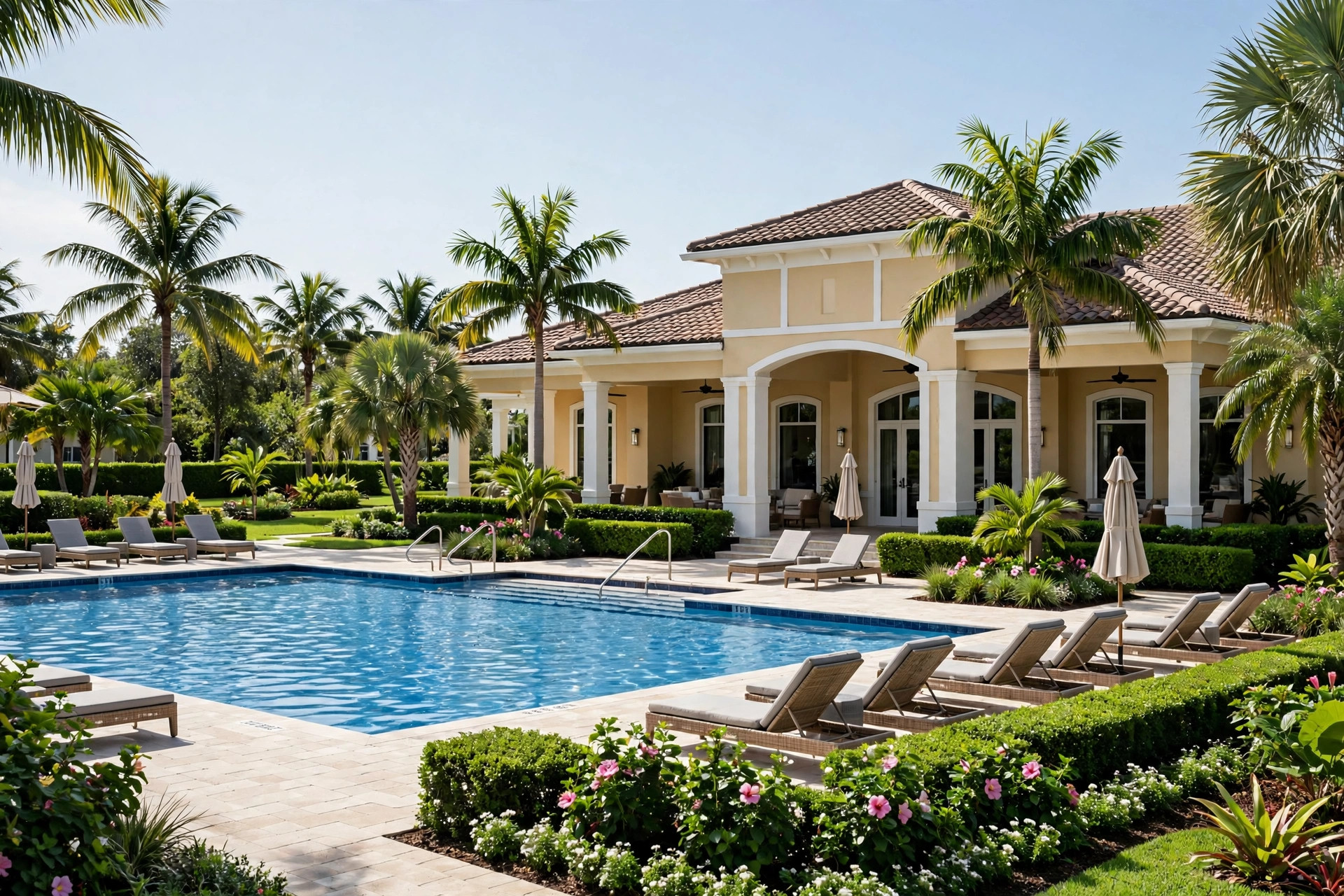
Homeowners association dues pay for what the neighborhood shares: common-area landscaping, the pool and clubhouse, the entrance, the management company, insurance on common property, and a reserve fund for future repairs. Dues are usually billed monthly or quarterly, set by the association's budget — which means they can rise, and a big repair can arrive as a special assessment on top.
What to check before you offer: the current dues amount and what it covers — not the listing's number, which may be stale; whether a special assessment is pending or recently levied (a roof, a seawall, or a parking lot can arrive as a lump sum or a temporary dues increase); and the association's reserves and delinquency picture, because a broke association is a future dues increase in disguise. Your lender verifies dues during underwriting either way — the question is whether you find out before or after you have paid for an appraisal.
Flood insurance: required in some zones, wise in more than you'd think
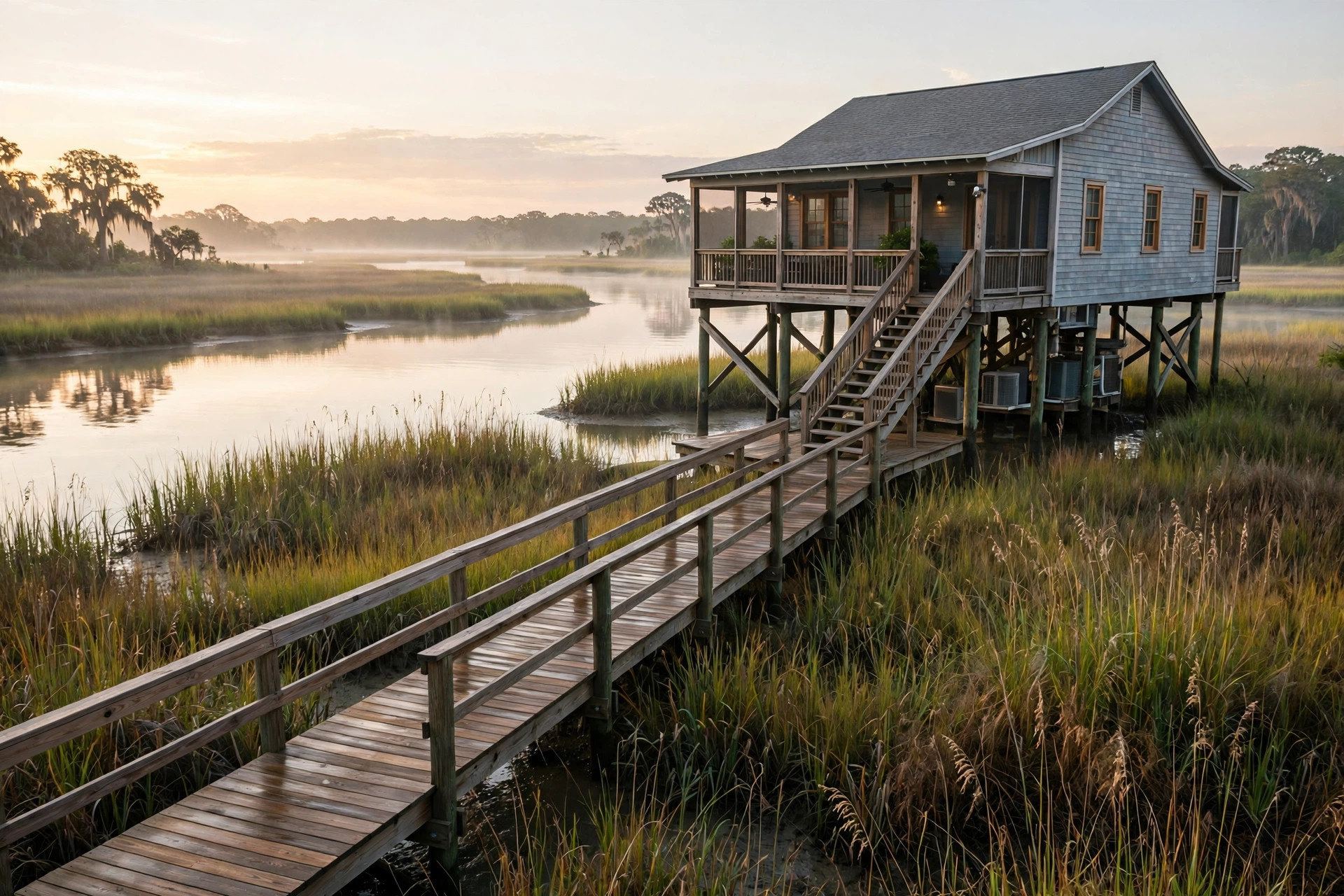
Flood insurance is the second payment with the sharpest edge, because in some places it is not optional at all. If your home sits in a FEMA Special Flood Hazard Area — zones beginning with A or V — and your mortgage is federally backed (FHA, VA, USDA, or a loan sold to Fannie Mae or Freddie Mac), federal law requires flood insurance before closing and for the life of the loan. Let it lapse and the lender must force-place a policy, which typically costs far more and protects the lender, not your belongings.
What does it cost? Under FEMA's Risk Rating 2.0 system, each property is priced on its own characteristics — distance to water, elevation relative to base flood elevation, flood frequency and type, and rebuilding cost — so there is no honest statewide flat number. Recent FEMA-based figures put Florida's average NFIP policy at roughly $1,177 a year, but the range is enormous: a few hundred dollars a year in a low-risk Zone X, several thousand in a high-risk AE zone at or below base flood elevation, and far more in a coastal VE zone. NFIP coverage caps at $250,000 for the building and $100,000 for contents, which is why higher-value coastal homes often add a private or excess policy.
Three facts to hold onto. First, annual increases on an existing primary-residence NFIP policy are capped at 18% a year, so a property still climbing toward its full-risk rate keeps getting more expensive on a plannable schedule. Second, roughly a quarter of flood claims come from outside high-risk zones — Zone X does not mean no risk, and Zone X premiums are often cheap. Third, an elevation certificate matters: a home above base flood elevation prices very differently from the identical home a foot below it. Get a real quote for the exact address before you offer.
CDD fees: the tax-bill line that is not a tax
Now the one that surprises out-of-state buyers most. A Community Development District is a special-purpose unit of local government created under Florida Statutes Chapter 190. When a large planned community is built, the roads, drainage, utilities, and amenity infrastructure are financed with tax-exempt municipal bonds — and the bonds are repaid by the homeowners, through an annual assessment that appears on the county property tax bill as a non-ad-valorem line item. It looks like a tax. It is not a tax, and the homestead exemption does not reduce it.
Every CDD assessment is really two charges bundled into one number. The bond, or debt-service, portion repays the infrastructure bonds over a fixed term, commonly 20 to 30 years — and when the bonds are paid off, that portion goes away. The operations and maintenance portion pays for ongoing upkeep and continues for as long as the district exists. Market guides put typical combined CDD assessments in newer Florida planned communities at roughly $1,500 to $3,000 or more a year — ranges, not quotes. The only number that counts is the non-ad-valorem line on that parcel's actual tax bill, readable on the county's TRIM notice and the November bill.
Two practical consequences. First, a CDD assessment runs with the land, not the owner — it transfers at every resale, and unpaid assessments become a lien just like unpaid taxes. Second, because it rides the tax bill, it flows straight into your escrow and your lender's housing-expense calculation. A $350,000 home in a CDD community and a $350,000 home in an older Jacksonville neighborhood without one are not two $350,000 houses. They are two different monthly payments.
The worked example: what $598 a month really costs you
Take an illustrative Jacksonville-area purchase: a $350,000 home, 10% down, a $315,000 loan. At the Freddie Mac Primary Mortgage Market Survey rate for the week ended October 22, 2026 — 7.32% for a 30-year fixed mortgage (Douglas Wilkerson, NMLS #1680719) — principal and interest run $2,163.83 a month. Add: property taxes $375, hazard insurance $225, HOA dues $300, a CDD assessment $200, and flood insurance $98 a month (the roughly $1,177-a-year Florida average). Total: about $3,362 a month.
Now isolate the second payment: $300 of HOA dues plus $200 of CDD assessment plus $98 of flood insurance equals $598 a month. That $598 buys no house. At 7.32%, every $100 a month services roughly $14,558 of loan — so $598 services about $87,000 of loan amount. In plain English: the buyer carrying this second payment qualifies for roughly $87,000 less house than the same buyer on a property without it.
And the rate itself has already moved the goalposts. A year ago, the same survey's 30-year rate was 6.19%. On a $300,000 loan, that is $1,835.46 a month in principal and interest, versus $2,060.79 at 7.32% — $225.33 a month more before a single tax, insurance, HOA, CDD, or flood dollar is added. The rate move and the second payment compound each other. That is why "what's the rate?" is the wrong first question. The right one is "what's the whole payment, on this address?"
What this does not mean
None of this means you should rule out a home with HOA dues, flood insurance, or a CDD assessment. Amenities, waterfront, and planned-community infrastructure are real value, and plenty of buyers choose them happily. What it means is that the listing price is not the comparison. Two homes at the same price with different second payments are two different purchases.
What to do before you offer
Before you write an offer on any Northeast Florida home, get four numbers for that exact address. One: the current HOA dues, what they cover, and whether any special assessment is pending — from the association, not the listing. Two: the flood zone determination and a real flood insurance quote, NFIP and private, for that property. Three: the non-ad-valorem lines on the parcel's actual tax bill, so a CDD assessment never surprises you at closing. Four: the full monthly payment with all of it included, run by a broker who works the actual agency guidelines — with 200 lenders to shop, one lender's answer about your file is never the last word.
If you are already under contract and the second payment just showed up, do not panic and do not walk away on instinct. Get the full payment rerun and check whether a different loan program changes the math. And if you are still shopping, make the second payment part of the search itself: ask for the dues, the flood quote, and the tax bill on every serious contender. The cheapest house on the list is not always the cheapest house to own.

Here's the question worth arguing about: when you bought — or when you shop now — did anyone show you the full monthly payment, HOA dues, flood insurance, and CDD assessment included, before you fell in love with the house? Or did the second payment show up later? Tell us what it cost you.
Start Here
Want your real number on a real address — the full payment, second payment included? Start with the 60-second quiz: Check Your VA Eligibility — 60-Second Quiz. Ready to talk through a specific house? Apply Now — bring the HOA dues, the flood quote, and the tax bill, and we will run the whole payment, not just the rate.
Douglas Wilkerson — NMLS #1680719
Mortgage Broker | Branch Manager
Direct: (904) 517-4049 | Office: (904) 906-8869
[email protected] | [email protected]
1548 the Greens Way, Ste. 4, Jacksonville Beach, FL 32250
Freeman Douglas Corporation is a DBA of Edge Home Finance. This is not a promise to lend — all credit decisions are subject to approval. Douglas Wilkerson, NMLS #1680719 | Edge Home Finance, NMLS #891464. Verify licensing at nmlsconsumeraccess.org. Equal Housing Opportunity.
