
VA Assumable Loans: Strategy and Risks Explained
VA Loans, Assumable Mortgages, Veteran Strategy
VA Assumable Loans: Opportunity, Risk, and the Power of Structure
A VA assumable loan can be a serious advantage in today’s 5.5%–6.5% rate market—but only when buyers, sellers, and realtors treat it like a real strategy, not a magic shortcut. This guide breaks down how VA assumptions actually work, where the real opportunity lives, and how to avoid the traps that cost veterans time, money, and future benefits.
What a VA Assumable Loan Really Is (And What It Isn’t)
A VA assumable loan is a VA-backed mortgage that an eligible buyer can take over—same loan, same rate, same remaining term—subject to approval by the servicer and in line with VA rules. For most loans originated after March 1, 1988, that means a full review of the buyer’s credit, income, debts, and occupancy plans, not just a handshake and a form.
In a world where 30‑year VA rates commonly run in the mid‑5% to mid‑6% range as of mid‑2026, taking over a seller’s older 2.5%–3.5% VA loan can be a massive payment win. But powerful does not mean automatic. The assumption still has to be approved, the numbers still have to work, and the veteran’s future benefit still has to be protected.
Buyer Qualification: No, You Don’t Get to Skip the Hard Part
One of the biggest myths in the market is that an assumable loan lets the buyer “slide in” without real underwriting. That is wrong, and it is dangerous thinking. The servicer still has to approve the buyer. Expect a review of:
Credit profile (many servicers look for scores in the 620+ range)
Debt-to-income ratio (often around 41%, with residual income tests still in play)
Stable income and documentation—pay stubs, W‑2s, tax returns, and more
Occupancy as a primary residence, not an investment property
The VA doesn’t require the buyer to be a veteran. Civilians can assume a VA loan if they qualify. But the file still has to support the deal, and the servicer still has to sign off. If your entire strategy depends on an assumption and you have not walked through the qualification standards, you are gambling, not planning.
💡 No‑Nonsense Tip: Before you write an offer around an assumption, have a VA‑savvy pro at Freeman Douglas' Edge Home Finance review your income, credit, and DTI against real servicer expectations.
The Purchase Price Gap: The Part Everyone Forgets Until It Blows Up the Deal
The assumable loan only covers the remaining balance, not the entire purchase price. That difference—the purchase price gap—is where many “great assumption opportunities” die on the table.
Example: The seller owes $300,000 on a VA loan at 2.75%. The home is under contract at $450,000. The buyer assumes the $300,000 loan. That leaves a $150,000 gap that must be covered by:
Cash at closing, or
A second (junior) mortgage that stays behind the VA loan, or
Seller financing in a subordinate lien, if allowed and structured correctly
VA guidance allows secondary financing, but it must keep the VA loan in first position and cannot be used to hand the buyer cash back at closing [VA Circular 26‑24‑17]. The payment on that second loan still counts in the buyer’s DTI. So yes—the low VA rate can be a win, but only if the gap solution is realistic and underwritten into the plan from day one.
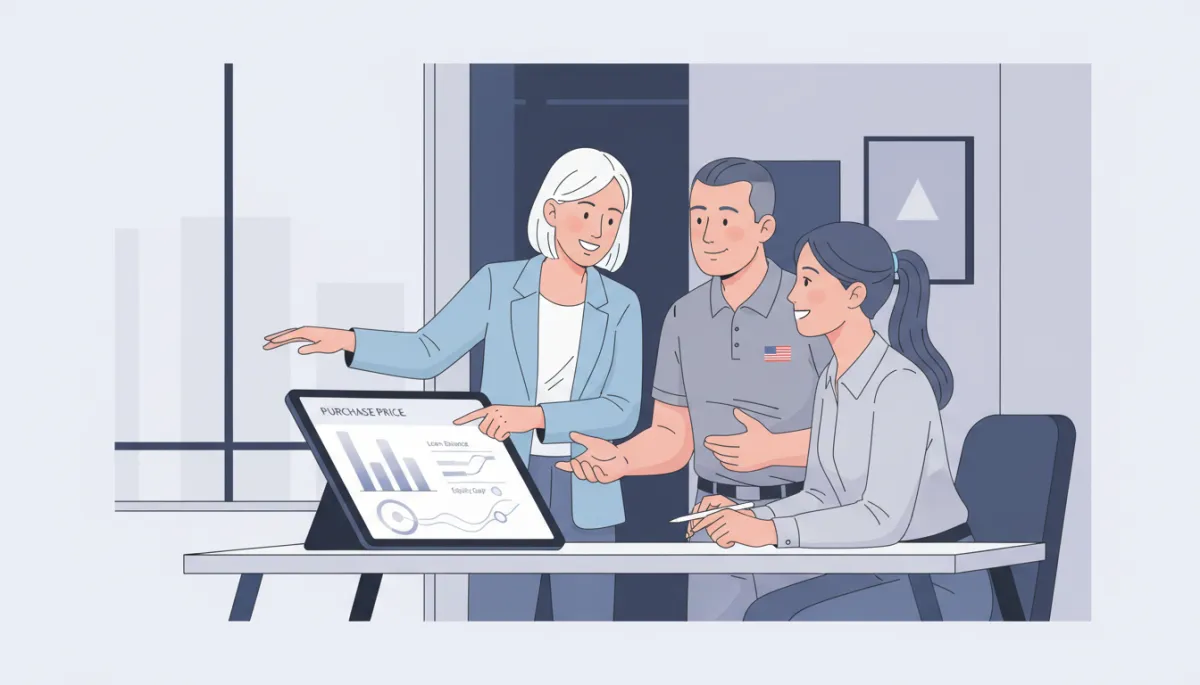
Most failed assumptions collapse at the gap between loan balance and purchase price.
The Veteran Seller’s Future VA Benefit: Protect It First, Market It Second
For the veteran seller, a VA assumption is not just about getting the home sold. It is about what happens to their VA entitlement and their ability to use the benefit again. There are two big questions that must be answered before anyone slaps “assumable” on a listing:
Will the seller be released from liability on the existing loan?
Will the seller’s entitlement be restored, or will it stay tied to that property?
A formal release of liability protects the veteran’s credit if the buyer later defaults, but by itself it does not restore entitlement [vet-legacy.com]. If a non‑veteran buyer assumes the loan, the seller’s entitlement usually remains locked in that property until the loan is paid off or refinanced. That can severely limit the veteran’s next move.
Entitlement Substitution: The Key Move Most People Never Hear About
If the buyer is also VA‑eligible, there is a powerful option on the table: substitution of entitlement. In this scenario, the veteran buyer uses their own VA entitlement to replace the seller’s entitlement tied to the existing loan. When done correctly and approved, the seller’s entitlement is restored, freeing them up to use their VA benefit again right away [VA Form 26‑10291].
This is why veteran sellers should not treat assumptions casually. The difference between a civilian buyer and a VA‑eligible buyer with entitlement substitution can be the difference between:
Being stuck with entitlement tied up in an old property for years, or
Walking into the next purchase with full VA power back on the table.
📌 Veteran Standard: At Freeman Douglas' Edge Home Finance, the first question is not “Can we market this as assumable?” It is “How does this affect your entitlement and your next move?”
Realtor Marketing Strategies: Attention Is Cheap, Structure Is Not
“Assumable VA loan” on a listing will get clicks. It will get calls. But attention without structure is a liability. Before any realtor leans on assumability as a headline, the team should have clear answers to a few non‑negotiables:
Is the loan actually assumable under current servicer and VA rules?
What is the current loan balance, rate, and payment—and how does that compare to today’s market rates (often 5.5%–6.5%+)?
What will the purchase price gap look like at realistic list and contract prices?
How will the veteran seller’s entitlement and release of liability be handled?
A strong listing does not just shout “assumable.” It explains the opportunity in plain language: estimated remaining balance, approximate payment, who the ideal buyer is (VA‑eligible vs. civilian), and what kind of cash or secondary financing might be needed. That is how you move from curiosity to qualified conversations.
Opportunity, Risk, and Why Structure Wins
A VA assumable loan can absolutely change the math for the right buyer and the right seller. Locking in a sub‑4% rate in a 6% world can mean hundreds of dollars a month in savings. For a veteran seller, a properly structured assumption with entitlement substitution can unlock their next zero‑down purchase without waiting for a payoff. The tool is real. So are the risks when it is misused or misunderstood.
Here is the bottom line:
The buyer still has to qualify—credit, income, DTI, and occupancy all matter.
The purchase price gap must be solved with real money and compliant secondary financing, not wishful thinking.
The veteran seller’s entitlement and liability position must be mapped out before the property ever hits the market as “assumable.”
Realtors need more than a headline; they need a clear, structured story they can explain in under two minutes.
🚀 Call to Action: If you’re a veteran, buyer, or realtor looking at a VA assumable loan, do not guess. Call or text (904) 906-8869 or book directly to my calendar to get a free, no‑obligation personalized mortgage strategy review. Check out www.vet-legacy.com for info regarding the VA loan and the VA Loan Field Manual. Freeman Douglas' Edge Home Finance will walk you through qualification, the purchase price gap, entitlement, and servicer requirements so you can execute with clarity and speed.
Veteran Legacy and Douglas Wilkerson are not affiliated with, endorsed by, or acting on behalf of the Department of Veterans Affairs or any government agency. Not a guarantee to lend. Credit and collateral are subject to approval. Not all who apply will qualify. VA loan assumptions, entitlement, substitution of entitlement, servicer approval, loan approval, and investor requirements must be reviewed on a case‑by‑case basis.
