
VA Entitlement Restoration Guide for Veterans
VA Entitlement, Veterans Benefits, VA Loan Eligibility, Benefit Restoration, Veteran Assistance, Entitlement Reinstatement
VA Entitlement Restoration: How Veterans Can Use the Benefit Again
You earned your VA home loan benefit. If you’ve used it before and think you’re done, you’re leaving serious buying power on the table. The truth is, VA Entitlement restoration is one of the most underrated veterans benefits out there — and it can be the key to your next home, your first rental, or a full-on real estate strategy. This guide breaks it down in plain English so you know exactly how to get your VA loan eligibility back and use it again with confidence.
What VA Entitlement Really Is — And Why It Matters
Let’s strip away the jargon. VA Entitlement is simply the amount the Department of Veterans Affairs is willing to guarantee on your home loan. It’s the backbone of your VA loan eligibility. The VA doesn’t lend you money directly; it backs a portion of your loan so lenders can offer you better terms — usually no down payment, no PMI, and competitive interest rates.
There are two main pieces to VA Entitlement:
Basic entitlement – Traditionally $36,000, which translates into a much larger loan amount because lenders typically allow you to borrow up to four times that guaranteed amount without a down payment, subject to your income and credit.
Bonus (or tier 2) entitlement – Additional backing from the VA that supports higher-priced homes, especially in markets where prices have climbed.
When you use a VA loan, part or all of that entitlement gets tied up in the property you financed. Benefit restoration is the process of getting that entitlement back so you can use your veterans benefits again — for another home, a move, or an investment play.
Key Veterans Benefits Built into the VA Home Loan Program
Before we zoom in on entitlement reinstatement, it’s worth remembering why the VA loan is such a powerful veteran assistance tool in the first place. When used right — and reused strategically — it can be a serious edge in your real estate game. Core advantages include:
No down payment in most cases, which means you keep your cash working elsewhere instead of locking it all into the property.
No private mortgage insurance (PMI), even with 0% down — that alone can save hundreds per month compared to conventional loans.
Flexible credit standards compared with many conventional lenders, helping more veterans qualify or secure better terms.
Limits on closing costs and the ability to roll certain costs into the loan, preserving your cash.
Assumable loans, which can be a major advantage when rates rise — a future buyer may be able to take over your VA loan and its lower rate.
These veterans benefits don’t disappear after one use. With the right moves, you can tap into them again and again — that’s where VA entitlement restoration comes in.
When Do You Need VA Entitlement Restoration?
You need benefit restoration any time your existing VA-backed loan is tying up entitlement you want to use on a new purchase. Here are the most common scenarios veterans run into:
You sold your previous home that had a VA loan and want to use a VA loan again for your next place.
You paid off a VA loan in full but still own the property, and now you want to buy another home with a VA loan.
You had a foreclosure or short sale on a previous VA loan and want to know if you still have any remaining VA entitlement.
You want to keep your current VA-financed home as a rental and buy another primary residence using remaining or restored entitlement.
Each of these situations has different rules and options. The bottom line: if you’re a veteran and you’re moving, upgrading, or investing, it’s worth asking whether entitlement reinstatement can unlock a smarter financing path.
Full vs. Partial VA Entitlement: How Much Benefit Do You Really Have?
Not all entitlement is all-or-nothing. You may have:
Full entitlement – You either never used a VA loan, or you used one in the past but sold that home and fully restored your benefit. In this case, the usual county loan limits don’t cap you the way they used to. Your ceiling is driven mainly by your income, debts, and the lender’s guidelines.
Partial entitlement – Some of your entitlement is still tied up in another property, so you have a limited amount left to use. You may still qualify for no down payment, but the numbers get more technical and depend heavily on the local loan limit and how much entitlement is already used.
This is where a sharp mortgage strategist matters. At Freeman Douglas' Edge Home Finance, we don’t guess. We pull your Certificate of Eligibility (COE), calculate your remaining VA Entitlement, and map out exactly what purchase price and structure will work — whether that means zero down, a small down payment, or pairing your VA benefit with another creative financing tool.
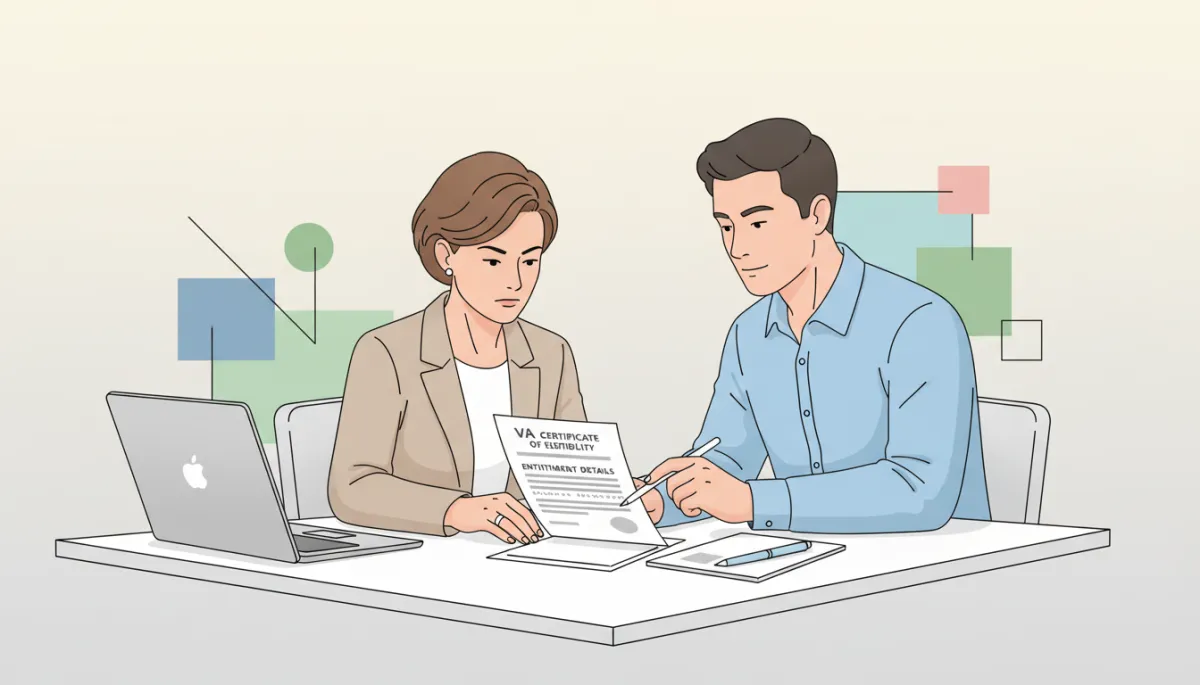
A clear COE review shows exactly how much VA entitlement you can still deploy.
The Core Paths to VA Entitlement Restoration
Let’s get tactical. There are several main ways to achieve benefit restoration and reset your VA loan eligibility so you can use the program again. Here’s how they break down.
1. Restoration After Selling Your VA-Financed Home
This is the cleanest scenario. You used a VA loan to buy a home, you’ve now sold that property, and the VA loan has been paid off in full from the sale proceeds. Once that happens, you can request entitlement reinstatement and regain full entitlement for your next purchase.
The steps look like this:
Confirm the previous VA loan is fully paid and closed out.
Work with your lender to submit a VA Form 26-1880 or request restoration through the VA’s online system.
Obtain your updated Certificate of Eligibility showing restored entitlement.
At Freeman Douglas' Edge Home Finance, we handle this veteran assistance step for you. You don’t need to fight through VA portals alone — we push the paperwork, confirm payoff, and make sure your COE reflects the restored benefit before we structure your next loan.
2. One-Time Restoration Without Selling the Property
Here’s a powerful but often overlooked option. In certain cases, you can get a one-time VA entitlement restoration even if you still own the property you bought with a VA loan — as long as that VA loan has been paid off in full. This might happen if you refinanced into a conventional loan or paid the mortgage off completely over time.
The catch: this is generally a one-time benefit restoration if you keep that property. You can’t keep stacking this move over and over while holding multiple VA-paid properties. But used smartly, it can allow you to:
Keep your first home as a rental or second home, and
Restore your entitlement to buy a new primary residence with a VA loan.
💡 No-Nonsense Tip: If you’re planning to build a portfolio — live in one home, turn it into a rental, then move and repeat — you need a clear strategy for when to use this one-time entitlement reinstatement and when to switch to conventional or other creative structures. That’s exactly the kind of blueprint we build at Freeman Douglas' Edge Home Finance.
3. Using Remaining Entitlement to Own Two VA Properties at Once
In some situations, you don’t need full VA Entitlement restoration to move forward. You may still have partial entitlement available, enough to buy another property with little or no down payment while keeping your existing VA-financed home. This usually comes into play when:
You’re receiving Permanent Change of Station (PCS) orders and need to move but want to keep your current home as a rental.
You bought a modest home with your first VA loan and local loan limits plus remaining entitlement allow you to buy again.
This is highly numbers-driven. The VA looks at how much entitlement is already in use and how much is left relative to the county loan limit. It’s not something to guess on. We run the math, show you the exact price ranges that work, and build a plan that respects the VA rules and your long-term goals.
4. Restoration After Foreclosure, Short Sale, or Default
Many veterans assume that a previous foreclosure or short sale on a VA loan means their VA loan eligibility is dead. That’s not automatically true. If the VA took a loss on your previous loan, some of your entitlement is likely permanently charged against that loss — but you may still have remaining entitlement available for a future purchase, especially if home prices and loan limits have risen since then.
The key is to:
Pull your COE and confirm how much entitlement was charged to the loss.
Check your credit, income, and waiting-period requirements after the event.
Calculate whether your remaining entitlement plus local loan limits can support another VA loan — with or without a down payment.
This is where veteran assistance should be straight, not sugar-coated. We’ll tell you exactly where you stand. If VA is still your best play, we’ll engineer it. If another loan type makes more sense, we’ll pivot. The mission is simple: get you back in the game with the right tool, not just the familiar one.
Step-by-Step: How to Restore Your VA Entitlement and Use It Again
If you’re ready to move from theory to action, here’s the streamlined path to VA entitlement restoration and your next loan:
Confirm your service eligibility. If you’ve already used a VA loan, you’ve done this before. Still, it’s worth verifying your current status and any changes since your last loan.
Pull your Certificate of Eligibility (COE). This document shows your available VA Entitlement, any entitlement charged to prior loans, and your funding fee status (including disability-related exemptions). At Freeman Douglas' Edge Home Finance, we pull this directly through the VA portal for you as part of our intake process.
Identify which restoration path applies. Did you sell the previous home? Did you refinance out of the VA loan? Are you keeping the home as a rental? Each path has slightly different paperwork and strategy.
Submit the restoration request. Usually this means completing VA Form 26-1880 or having your lender request restoration electronically. You’ll need proof that the prior VA loan is paid in full and, if applicable, documentation of the sale.
Lock in your new strategy. Once your entitlement reinstatement is confirmed, you can move fast: get pre-approved, identify your price range, and structure your offer with confidence, knowing exactly how your veterans benefits are working for you this time around.
How VA Loan Eligibility Fits into a Bigger Real Estate Plan
Using your VA loan once to buy a home is good. Using VA loan eligibility multiple times, at the right moments, is how you turn a single benefit into a long-term advantage. A few ways we see veterans deploy this strategically:
Stepping up over time: Start with a smaller starter home using VA. Later, restore entitlement, upgrade to a larger home, and potentially keep the first as a rental if the numbers work.
PCS and relocation plays: Use VA to buy near one duty station, convert to a rental when you move, then use remaining or restored entitlement to buy at the next location — building a small portfolio as your career moves you around.
Retirement positioning: Use your final VA loan to lock in a low-cost, long-term residence in your retirement location, after using the benefit earlier in life to build equity and experience as an owner.
The point is simple: VA Entitlement is not a one-and-done coupon. It’s a reusable asset. With the right guidance, you can align benefit restoration, entitlement reinstatement, and other financing tools to support your bigger goals — not just your next address.
Common Myths About VA Entitlement and Benefit Restoration
Too many veterans talk themselves out of using their benefits again because of bad information. Let’s clear up a few myths:
Myth: “I used my VA loan once, so I’m done.”
Reality: In many cases, you can restore and reuse your entitlement multiple times, as long as you meet the VA’s conditions and the prior loan is handled correctly.Myth: “If I had trouble with a VA loan before, I can’t get another.”
Reality: A past foreclosure or short sale doesn’t automatically kill your VA loan eligibility. It may reduce your entitlement, but you might still qualify with remaining entitlement, the right waiting period, and improved finances.Myth: “Restoring entitlement is a nightmare of red tape.”
Reality: Yes, there’s paperwork. No, it doesn’t have to be a nightmare. With the right team handling your veteran assistance, most of the heavy lifting happens behind the scenes while you focus on your next move.
Why Work with a VA-Savvy Mortgage Strategist, Not Just Any Lender
The VA handbook is thick. You don’t need to memorize it — but your lending team should know how to weaponize it in your favor. At Freeman Douglas' Edge Home Finance, our stance is simple: we don’t just close loans; we engineer wins. That means:
Walking you through every angle of your VA Entitlement — what’s used, what’s left, and what’s possible.
Designing a clear, no-fluff plan for benefit restoration and your next purchase or refinance.
Pairing your VA loan with other creative financing options when that gives you a stronger position — instead of forcing everything into one box.
Moving fast and communicating clearly so you’re never guessing where things stand or what comes next.
📌 Key Takeaway: Your VA benefits are too valuable to underuse or misuse. The right partner will protect your entitlement, restore it when possible, and align it with a bigger real estate strategy — not just a single transaction.
Ready to Restore Your VA Entitlement and Move Again?
If you’ve served, you’ve already done the hard part. Navigating VA Entitlement, benefit restoration, and entitlement reinstatement shouldn’t feel like another deployment. Whether you’re planning your first move in years, eyeing an upgrade, or building a small portfolio, your veterans benefits can still work hard for you — if you know how to use them again.
At Freeman Douglas' Edge Home Finance, we bring a bold, no-nonsense approach to veteran assistance in the mortgage world. We take the time to match the conversation to your current knowledge, explain every lever in the VA system in plain language, and then move quickly to execute the best possible strategy for you and your family.
If you’re wondering:
“Can I still use my VA loan after I sold my last house?”
“Do I have any entitlement left after that old VA loan?”
“What’s the smartest way to use my benefit this time around?”
— then it’s time to get straight answers and a tailored plan.
💬 Your Next Move: Call or text (904) 906-8869 or book directly to my calendar to get a free, no-obligation personalized mortgage rate quote or refinance analysis. We’ll review your VA Entitlement, map out your VA loan eligibility, and design a fast, custom mortgage strategy so you can use your benefit again — confidently and without the guesswork.
