VA Appraisal Property Rules: The Minimum Property Requirements That Decide Whether Your VA Deal Closes
VA Appraisal Property Rules: The Minimum Property Requirements That Decide Whether Your VA Deal Closes
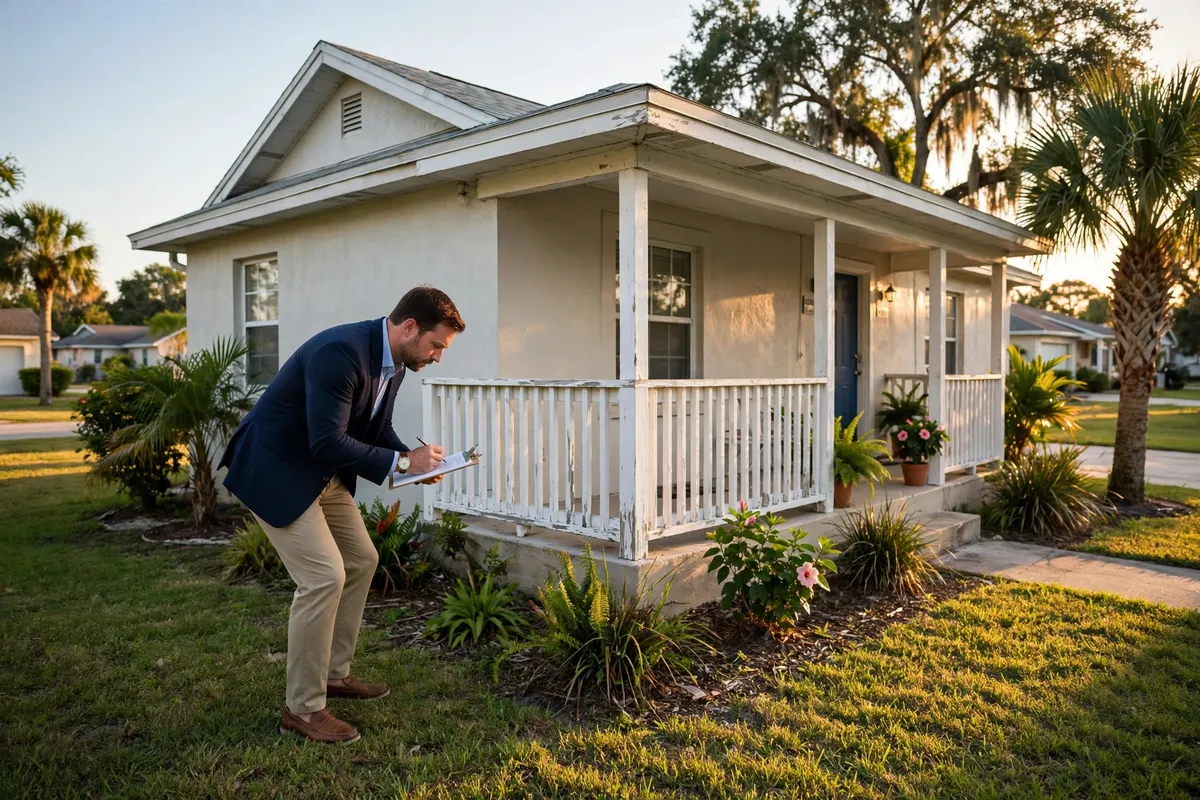
A veteran buyer in Jacksonville finds the house. The offer is accepted. The VA appraisal comes back at value — and the deal still dies. Peeling paint on the porch railings. A missing handrail on the front steps. An attic the appraiser couldn't access. None of it has anything to do with what the home is worth, and every bit of it decides whether the VA will guarantee the loan.
Most VA buyers know the appraisal protects them on price. Fewer know it also enforces a second, separate test: the VA's Minimum Property Requirements — the condition standards in Chapter 12 of VA Pamphlet 26-7. If the property doesn't meet them, the loan can't close until the problems are fixed. The good news: the rules are narrower than most people think, and a 2026 update actually loosened several of them.
The short answers
- What are VA Minimum Property Requirements? The condition standards a home must meet before the VA will guarantee the loan — the property must be safe, structurally sound, and sanitary. The VA fee appraiser checks them during the appraisal.
- Does the VA require cosmetic repairs? No. The handbook tells appraisers not to recommend repairs of cosmetic items, minor deferred maintenance, or normal wear and tear.
- Does Florida require a VA termite inspection? Yes — statewide, in all 67 counties, for VA purchases and cash-out refinances. The inspection uses the NPMA-33 form and is valid for 90 days.
- Can repair money be escrowed on a VA loan? Yes. The lender can hold 1.5 times the repair cost from the seller's proceeds at closing, with completion in roughly 90–120 days — no prior VA approval needed.
What the Minimum Property Requirements actually are
The MPRs are the VA's quality floor. They're written to protect veterans, lenders, servicers, and the VA itself — a home securing a VA-guaranteed loan has to be a sound place to live, not just a number on a spreadsheet. Three things shape everything about how they work in practice:
First, the appraisal is not a home inspection. The VA-assigned fee appraiser estimates market value and flags readily apparent conditions that don't meet MPRs. The appraiser does not perform operational checks of mechanical systems or appliances — no flipping every light switch, no running the furnace through a cycle. That distinction is the source of most confusion in VA transactions.
Second, the appraiser recommends repairs, not inspections. If something doesn't appear to meet MPRs, the appraiser tells the lender what repair is needed — the appraisal doesn't get kicked to a parade of specialty inspectors. And when the appraisal is prepared "subject to" MPR repairs, the estimated value includes the contributory value of those repairs once completed.
Third, a home inspection is recommended, not required. After the appraisal, the VA's Notice of Value tells the veteran they "may wish to obtain a home inspection." It is optional — but it is the buyer's best friend, because it catches the condition problems the appraiser isn't obligated to test for.

The MPR checklist, in plain English
Chapter 12 walks through every requirement by topic. Here's what it means on a real house:
Access and the site. The property needs safe, adequate access from a public or private street with an all-weather surface. If it's a private road, there must be a permanent easement and a maintenance agreement. Drainage must run away from the foundation — standing water and negative grading get flagged. A home in a FEMA Special Flood Hazard Area needs flood insurance, and property subject to regular flooding is ineligible.
Structure and roof. The foundation must be sound — no significant settlement, heaving, or moisture intrusion. The roof has to prevent moisture entry and have remaining economic life; there's no fixed year-count in the handbook, and if the remaining life is questionable, a roofer's certification is typically required. Crawl spaces and attics must be accessible so the appraiser can observe the structure.
Mechanical systems. Heating must be permanent and adequate for the climate — space heaters don't count as the primary heat source. Electrical service must be adequate: no exposed wiring, unsafe panels, or obvious hazards. Plumbing must supply safe drinking water with hot and cold running water, and the sewer or septic system must function sanitarily. Each unit needs independent utility service.
Water and sewage. Continuous safe potable water, hot water, sanitary facilities, and safe sewage disposal are non-negotiable. Private wells need water-quality testing by a disinterested third party, with results valid 90 days. Shared wells need a permanent easement and a recorded well-sharing agreement covering repair costs. Septic systems need health-authority approval on proposed construction or where the appraiser notes a problem.
Health and safety hazards. The structure must be free of dry rot, decay, mold, fungus, peeling paint (more on the pre-1978 rule below), broken windows, dampness, leaks, exposed wires, continuing settlement, and termites or other pests. Stairs need secure handrails. Encroachments — a garage or dwelling crossing onto a neighbor's property or easement — must be reported.
Legal basics. The property must be a single, readily marketable real estate entity. Zoning must comply or be legal non-conforming. No more than one business unit (it has to be primarily residential). Manufactured homes must sit on a permanent foundation, meet HUD construction standards, and have at least 400 square feet (single-wide) or 700 (double-wide).
Florida's two special rules: termites and lead paint
Every market has its MPR hot spots. In Florida, there are two that show up in nearly every VA purchase.
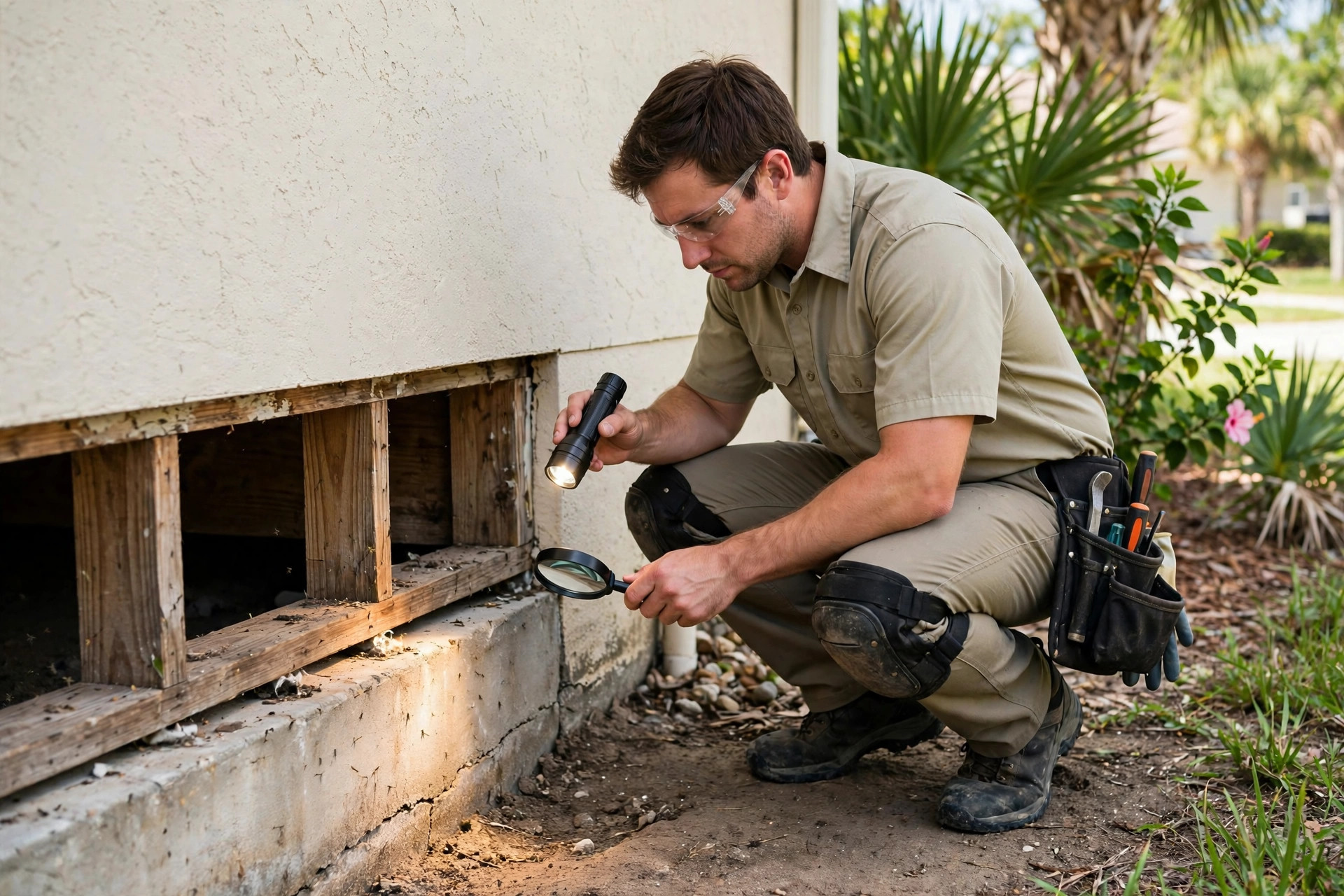
Termite inspections are mandatory statewide. Florida sits in the VA's "moderate to heavy" termite probability zone, so a wood-destroying insect inspection is required for every VA purchase loan and cash-out refinance in all 67 counties. The inspection is reported on the NPMA-33 form and is valid for 90 days. The seller traditionally pays, but since a June 2022 VA policy change, the veteran borrower may also pay for it in Florida (one of nine exception states) — typically $100 to $200. If damage is found, it has to be treated and repaired before closing.
Pre-1978 homes get the lead-paint rule. On a home built before 1978, any defective paint — chipped, peeling, flaking — must be presumed to be lead-based and remediated. The handbook is explicit that economic feasibility is not an acceptable reason for a waiver. This is the one that kills deals on Jacksonville's older beach cottages and bungalows: a few dollars of paint, left unaddressed, holds up a six-figure closing.
The 2026 loosening: four rules just went away
A revised Chapter 12 took effect May 1, 2026, and it removed four conditions that had been flagging deals unnecessarily. If your appraisal was ordered before that date, the old rules still applied to that file — but everything ordered since runs under the lighter version:
- Post-1978 peeling paint is now cosmetic. Defective paint on a dwelling built in 1978 or later is normally considered cosmetic — no automatic repair condition. The pre-1978 lead-paint rule is unchanged.
- Detached structures are out. Detached garages, sheds, and outbuildings no longer trigger MPR conditions unless they present a hazard to the main dwelling. No more flagged shed roofing or garage wiring that has nothing to do with the house itself.
- Non-vented fireplace certification is gone. The oxygen-depletion-sensor certification and veteran acknowledgment form for non-vented fireplaces and gas logs were removed entirely.
- Radon certification is gone. Builders no longer have to certify radon-resistant construction in Radon Zone 1 areas on new construction. Buyers can still order independent radon testing on their own.
Each of these was a deal-killer that had nothing to do with whether a veteran's home was safe. Their removal is exactly the kind of quiet improvement that never makes headlines but saves closings.
What the VA does NOT require — the overlay trap
Here's where Douglas's actual-guidelines angle matters most. Chapter 12, Topic 1f says the appraiser should not recommend repairs of cosmetic items, items involving minor deferred maintenance or normal wear and tear, or items that are inconsequential in relation to the overall condition of the property. Minor repairs get considered in the condition rating — they affect value, not eligibility.
In practice, some appraisers and some lenders layer their own stricter demands on top of the handbook. A lender overlay can turn a cosmetic scuff into a closing condition that the VA itself would never require. This is why the question to ask is always the same: "Are you holding this property to the VA's Minimum Property Requirements, or to your own overlay?" With 200 lenders to work with, one lender's inflated repair list is never the last word — another lender reading the same handbook can see the file completely differently.
When the home gets flagged: your options
An MPR flag is not an automatic dead deal. The appraisal comes back "subject to" the repairs, and you have a real playbook:
Seller completes the repairs before closing. The most common path. The seller fixes the flagged items, the appraiser re-inspects (a $150 reinspection fee on the current VA fee schedule), and the loan proceeds. In a market running about 60 days on market like Jacksonville, sellers have real incentive to cooperate.
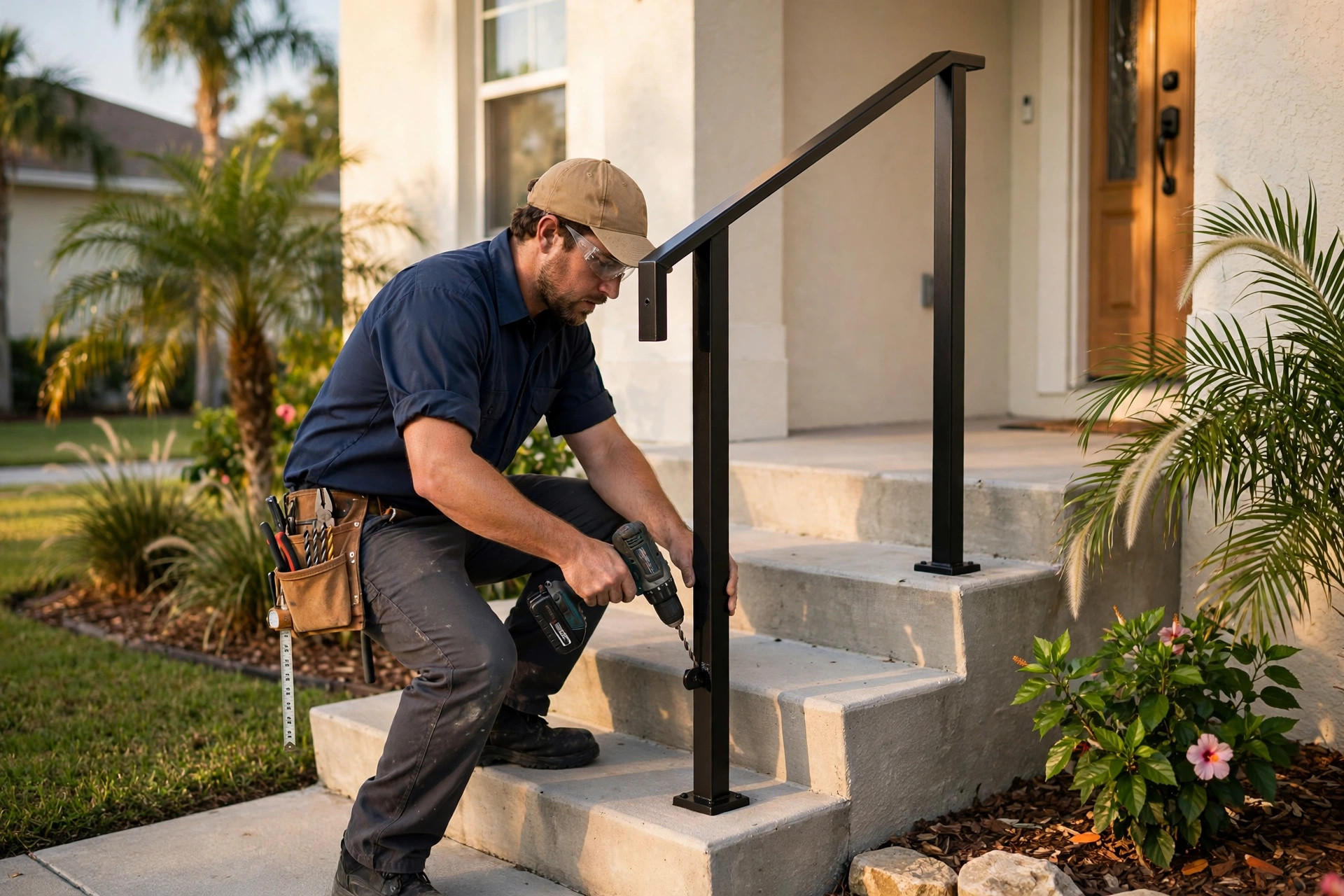
Buyer completes repairs before closing. Sometimes the buyer handles small items themselves — painting porch railings, installing a handrail — then requests re-appraisal. Get everything in writing first, and price the work with a contractor you trust.
Escrow holdback. When repairs can't reasonably be finished before closing, the lender can withhold 1.5 times the estimated repair cost from the seller's proceeds. The money is released when the work is done. The rules: the rest of the home must be move-in ready, the completion window runs roughly 90–120 days, the delay has to be beyond the seller's control, and no prior VA approval is needed.
Waiver request. After the Notice of Value is issued, the veteran can request a waiver of a repair condition if the lender agrees and the property remains habitable. It isn't guaranteed, but it exists — and most buyers never hear about it.
What a VA buyer should actually do
Get the home inspection anyway. The VA appraisal protects the loan; the home inspection protects you. The appraiser isn't running the HVAC through a full cycle or crawling every inch of the attic. The inspection catches what MPR compliance doesn't.
Price the repairs before you negotiate. When the appraisal conditions come back, get every required repair in writing, price it with a contractor, and decide what you'll handle versus what you'll push to the seller. A few hundred dollars of handrails and paint is a small price to protect a sale that's otherwise ready to close.
Work with someone who knows the actual handbook. The MPRs reward knowledge: which flags are real, which are cosmetic items the handbook says to leave alone, which 2026 changes removed old deal-killers, and when an escrow holdback beats a closing delay. A broker who reads Chapter 12 instead of a lender's overlay list sees a different file — and with 200 lenders behind you, the file deserves a second look when one lender says no.
VA financing doesn't demand a perfect house. It demands a safe, sound, sanitary one — and now that you know the difference, you can hold every party in the transaction to exactly that standard.
Here's the discussion: if you've bought with a VA loan, did the appraisal flag a repair that surprised you — and was it actually in the handbook, or was it someone's overlay? Drop your story in the comments.
Start Here
Thinking about buying with your VA benefit — or stuck on an appraisal condition right now? Check Your VA Eligibility — 60-Second Quiz and get a straight answer on where you stand. Ready to talk numbers? Apply Now and let's run your file against the actual guidelines.
Douglas Wilkerson — NMLS #1680719
Direct: (904) 517-4049 | Office: (904) 906-8869
[email protected] | [email protected]
1548 the Greens Way, Ste. 4, Jacksonville Beach, FL 32250
Freeman Douglas Corporation is a DBA of Edge Home Finance. This is not a promise to lend — all credit decisions are subject to approval. Douglas Wilkerson, NMLS #1680719 | Edge Home Finance, NMLS #891464. Verify licensing at nmlsconsumeraccess.org. Equal Housing Opportunity.
