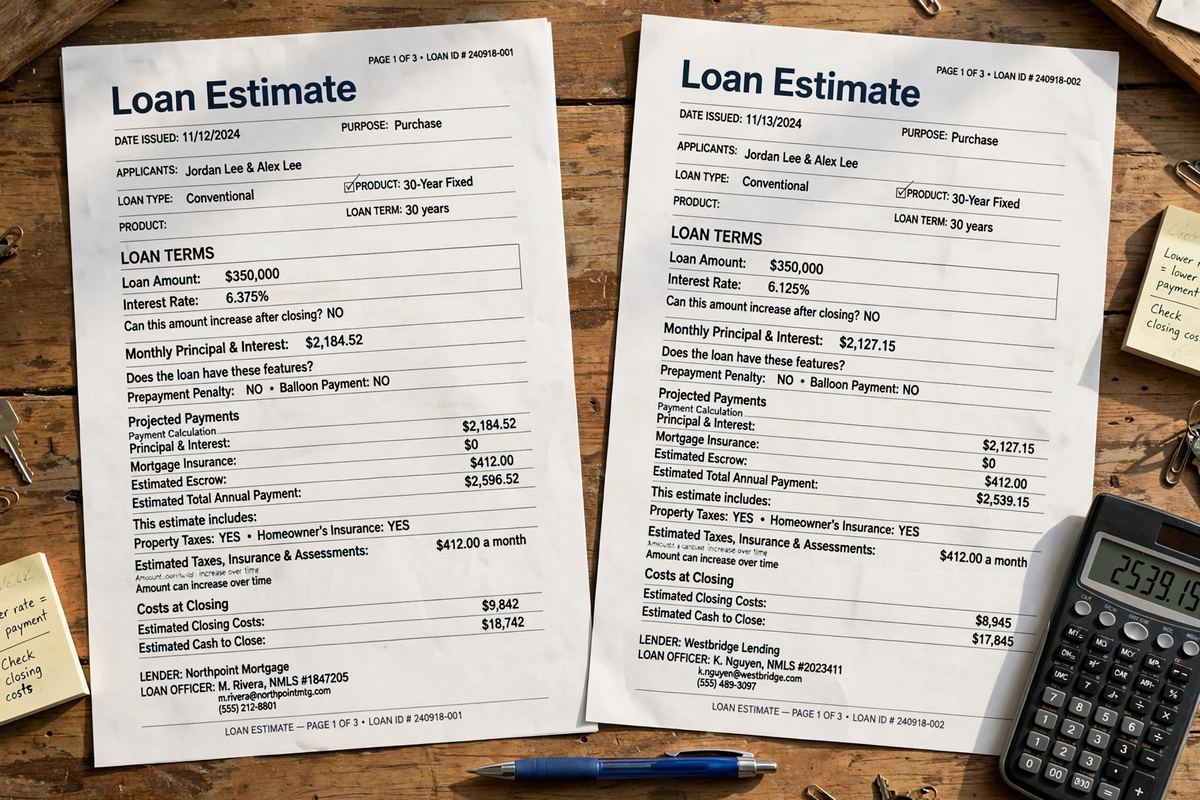
How Do I Get the Best Mortgage Rate? Compare the Same Loan, on the Same Day, the Right Way
The short answer: the best mortgage rate is not the lowest number in an advertisement or the lowest line on a quote — it is the lowest total cost on the same loan, with the same structure, quoted on the same day. Rate, points, and lender fees are one price wearing three labels, and lenders move money between the labels freely. Compare the whole price, on the same file, on the same day, and the "best rate" stops being a slogan and becomes arithmetic. (Rate environment referenced: Freddie Mac survey week ended November 19, 2026 — 30-year fixed averaged 7.28%. Douglas Wilkerson, NMLS #1680719.)
Why do lenders quote me different rates for the same loan?
Because they are not selling out of the same store. A retail bank quotes off its own shelf: one set of products, priced to cover its branches, its advertising, and its layers of management — the overhead is inside the rate whether you see it or not. A mortgage broker prices wholesale: your file goes out to competing lenders — in my case more than 200 of them — and each one bids its own margin for your business. Same borrower, same house, same day, different numbers, because each lender's cost structure, appetite for your loan type, and extra rules differ. Those extra rules have a name — "overlays," requirements a lender adds on top of the actual agency guidelines — and they change both who gets approved and what it costs. When two quotes differ, nobody is lying. You are looking at two different businesses pricing the same file two different ways.
What does the research say about shopping?
Freddie Mac studied it. Their research brief (February 16, 2023) found that borrowers who got two rate quotes saved up to $600 a year, and borrowers who got four or more quotes saved more than $1,200 a year. That is not a rounding error — on a 30-year loan, the habit of collecting quotes is worth more than most of the negotiating borrowers actually do. And it costs nothing but a few days of discipline: same file, same structure, same day, real Loan Estimates instead of verbal numbers.
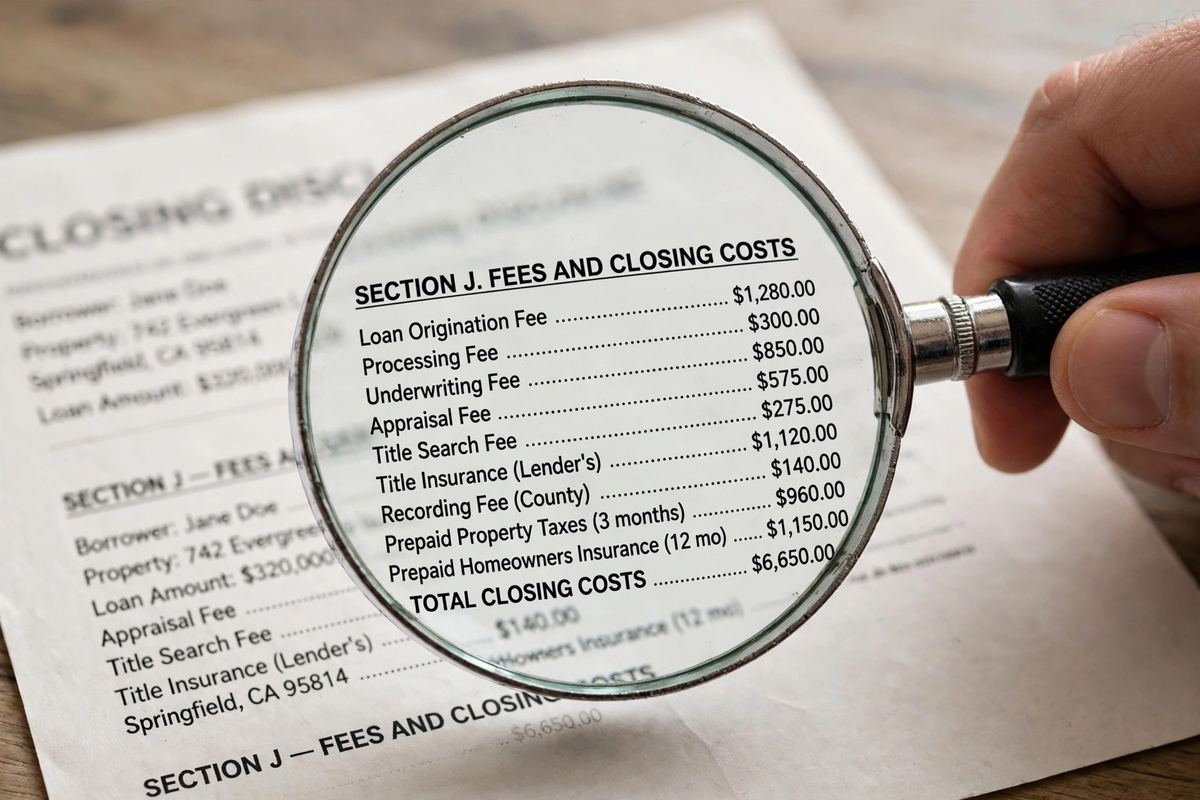
The rate gets the headline. The fees section is where the comparison is actually decided.
How do I compare two Loan Estimates apples-to-apples?
Line up three things and ignore the rest for the first pass: (1) the interest rate, (2) discount points, and (3) lender fees — the origination charges in Section A of the Loan Estimate. Title fees, taxes, insurance, and escrows are third-party or prepaid items; they mostly follow the house, not the lender. Here is a worked example on the same $400,000, 30-year fixed loan, quoted the same day:
Quote A — 7.25%, with 1 point ($4,000) plus $1,500 in lender fees. Upfront lender cost: $5,500. Principal and interest: $2,728.71 a month.
Quote B — 7.50%, zero points, zero lender fees. Upfront lender cost: $0. Principal and interest: $2,796.86 a month.
Quote A has the "better rate" — a quarter point lower. Now run the only math that matters. Quote B costs $68.15 more per month. Over five years that is $4,089 in extra payments — against $5,500 paid upfront for Quote A. Five-year total: Quote A $169,222; Quote B $167,811. The higher rate wins by $1,411. Quote A does not pull ahead until month 81 — nearly seven years in. If you expect to move, refinance, or pay the loan down inside that window, the lower headline rate was the more expensive loan. Best rate = lowest total cost on the same structure over the time you will actually hold it. Everything else is marketing.
Why must the quotes be from the same day?
Because rates reprice constantly, and a stale quote is a fiction. Freddie Mac's weekly average moved from 7.11% (week ended November 12, 2026) to 7.28% (week ended November 19, 2026) — 0.17% in a single week, on the average. A quote from last Tuesday compared against a quote from today does not tell you which lender is cheaper; it tells you which day was cheaper. Serious comparisons happen inside one pricing day, on identical inputs: same loan amount, same down payment, same credit score, same lock period. Change any input and you are comparing two different loans.
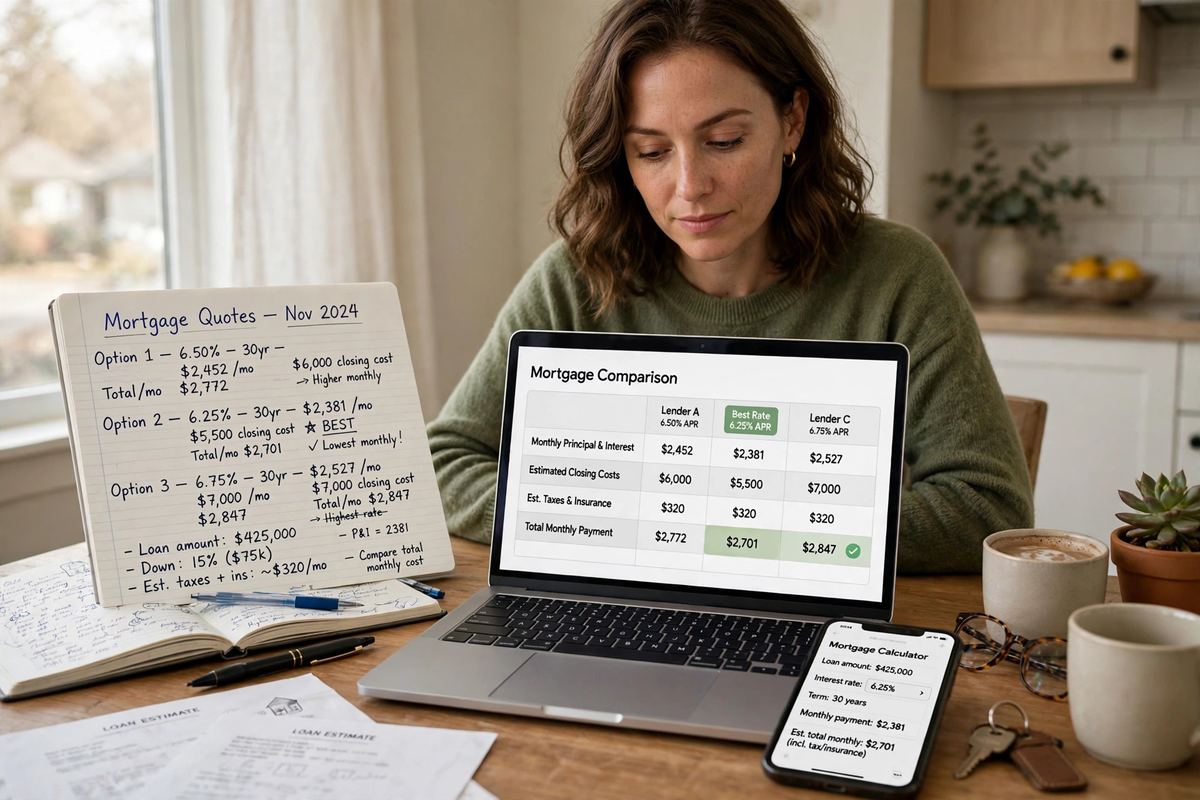
Same file, same structure, same day — that is the only comparison that means anything.
What does a broker actually do differently?
Structuring and shopping, in that order. First the file is structured — loan type, down payment, points posture, seller credits — because the best price on the wrong structure is still the wrong loan (that lever work is the subject of "How Do I Get a Better Mortgage Rate?"). Then the structured file is priced across the wholesale shelf — 200+ lenders bidding on the same file on the same day — and the comparison is run on total cost, not headline rate. A bank can only win that contest with the one price it has. A broker wins it by making 200 prices compete and showing you the division.
Why borrowers check in before they choose
Most borrowers compare two numbers and call it shopping: the rate their bank quoted and the rate an ad promised. The borrowers who land well compare total costs on identical structures — and they have someone run the division before they sign. In a client's own words, from a Google review:
"If you're a veteran looking to buy a home, I can't recommend Douglas highly enough. As a fellow Marine veteran, he truly understands every aspect of the VA home loan process and knows how to navigate it from start to finish. His knowledge, professionalism, and commitment to serving veterans are second to none. What really sets Douglas apart is that he's much more than just a mortgage loan officer. He works seamlessly with your real estate agent to make sure everyone is aligned and the entire process runs smoothly. You never feel like you're just another transaction. The best part is that once you become part of Douglas's ecosystem, you never really leave it. He continues to be a trusted resource long after closing, providing guidance, connections, and support whenever you need it. It's not just a mortgage—it's a lifelong relationship and an incredible asset to have in your corner. If you're looking for someone who genuinely cares about your success and has the expertise to get the job done right, Douglas is the person to call. Semper Fi!" — Jason Haglund, July 31, 2026 (Google review)

The goal is not the lowest number on a quote sheet — it is the lowest total cost at the closing table.
Frequently asked questions
How do I get the best mortgage rate?
Compare total cost — rate plus points plus lender fees — on the same loan amount, down payment, credit profile, and lock period, with quotes gathered on the same day. Then judge the winner over the time you will actually hold the loan. Freddie Mac's research found two quotes saved borrowers up to $600 a year, and four or more saved over $1,200 a year.
Why did two lenders quote me different rates?
Each lender prices with its own margin, cost structure, and overlays — extra rules added on top of the agency guidelines. A retail bank quotes the one price on its own shelf; a broker prices your file wholesale across many lenders, so the same file draws competing bids.
Should I pick the lowest rate or the lowest cost?
The lowest total cost over your real time horizon. In our worked example, the 7.25% quote with $5,500 in upfront costs lost to a 7.50% quote with zero lender costs by $1,411 over five years — the lower rate needed 81 months just to break even.
How many mortgage quotes should I get?
At least two, and the research says four or more is where the savings top $1,200 a year. A broker's wholesale pricing run is the fastest way to get many real prices on one file on one day — without four separate applications.
Sources
Freddie Mac research brief, February 16, 2023 — two rate quotes save up to $600 a year; four or more save more than $1,200 a year. Freddie Mac Primary Mortgage Market Survey — 30-year fixed averaged 7.11% for the week ended November 12, 2026 and 7.28% for the week ended November 19, 2026. Consumer Financial Protection Bureau — Loan Estimate explainer (Section A origination charges, discount points, lender credits). All comparison math in this post is original, computed on a $400,000, 30-year fixed loan.
Our Take
"Best rate" is the most abused phrase in this business, because it lets the seller define the contest: my number is lower than their number — never mind the $5,500 standing next to it. Refuse that contest. The only honest comparison is total cost on the same structure, same day, over your real horizon — and when you run it, the winner surprises people about half the time. My shelf has 200+ lenders on it precisely so that contest gets run properly: your file, structured once, priced everywhere, decided by arithmetic. If a lender will not show you rate, points, and fees as one price, they are hoping you will not add it up yourself.
When you compared quotes, did you compare the rate — or the rate plus points plus fees over the years you'll actually hold the loan? What did the division say?
Your Next Step
Check Your Rate — Free — see what rate you actually qualify for across 200+ lenders, free, no credit check, no pressure.
Run your own numbers with the Mortgage Calculators — payment and cost comparisons on your own figures.
Prefer to talk it through? Call Douglas direct: (904) 517-4049.
Douglas Wilkerson — NMLS #1680719
Direct: (904) 517-4049
[email protected] | [email protected]
1548 the Greens Way, Ste. 4, Jacksonville Beach, FL 32250
Freeman Douglas Corporation is a DBA of Edge Home Finance. This is not a promise to lend — all credit decisions are subject to approval. Douglas Wilkerson, NMLS #1680719 | Edge Home Finance, NMLS #891464. Verify licensing at nmlsconsumeraccess.org. Equal Housing Opportunity.
