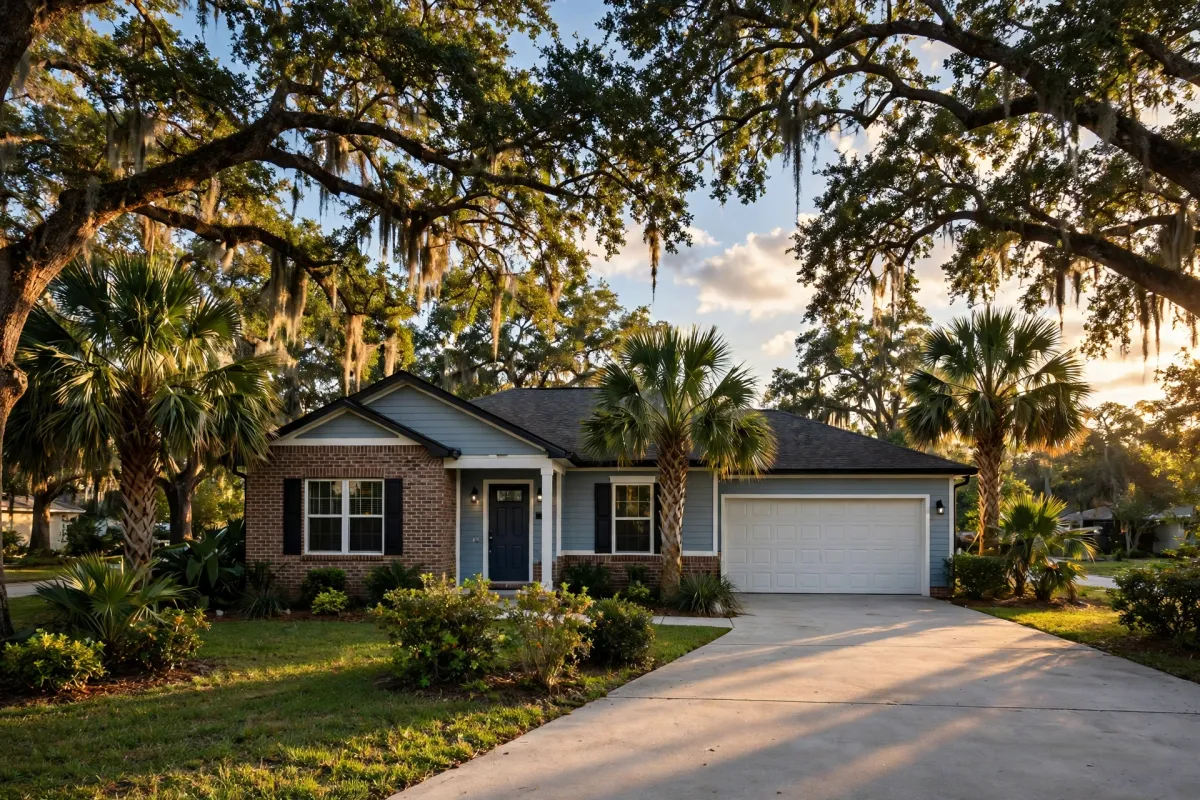
How Much House Can You Afford in Jacksonville on $75,000 a Year? The Payment Math, Line by Line
Short Answer: About $319,000 With No Money Down — or About $399,000 With 20% Down
On a $75,000 salary, you bring home $6,250 a month before taxes. At the 43% total debt-to-income ceiling most underwriters use as their comfort line, your whole housing payment — principal, interest, taxes, and insurance — can run up to $2,687.50 a month. After about $525 a month for Duval County property tax and Florida homeowners insurance, that leaves $2,162.50 for principal and interest, which at today's 7.18% 30-year fixed rate supports a loan of about $319,000. With a VA loan at $0 down, that is roughly a $319,000 home. With 3.5% down on an FHA loan, about $331,000. With 20% down, about $399,000. The number is not a guess — it is division, and this post shows every line of it.
How a Salary Becomes a Payment: The Debt-to-Income Rule
Every lender answers "how much house can I afford" the same way: by dividing your monthly debts by your gross monthly income. That ratio is called debt-to-income, or DTI, and it comes in two versions. The front-end ratio counts housing only. The back-end ratio — the one that decides your approval — counts housing plus every other monthly debt: car payments, student loans, credit cards, child support. Fannie Mae's automated underwriting allows a back-end DTI up to 50%. FHA's manual guideline is 43%, though its automated system approves higher with compensating factors. The VA does not set a hard DTI cap at all — it leans on residual income, the money left over after all your bills, instead.
Here is the part most affordability calculators skip: the ceiling is not the recommendation. A 50% DTI approval means half your gross pay goes to debt before groceries, gas, and everything else. The 43% line is where the payment still leaves room to live. This post runs the math at 43% first, then shows you what 50% would buy — so you can see the difference between what a lender will approve and what your life can carry. (Sources: Fannie Mae Selling Guide B3-6-02; HUD Handbook 4000.1; VA Lenders Handbook, VA Pamphlet 26-7, Chapter 4.)
The $75,000 Worked Example, Line by Line
Start with the salary and work down. Every figure below is calculated at Freddie Mac's Primary Mortgage Market Survey rate for the week ending November 5, 2026 — 7.18% on a 30-year fixed, 6.57% on a 15-year — down from 7.24% the week before and 6.22% a year ago.

Affordability is not a feeling. It is five lines of arithmetic — and the fifth line is the one most buyers never see.
Gross monthly income: $75,000 ÷ 12 = $6,250
Housing ceiling at 43% DTI: $6,250 × 0.43 = $2,687.50 a month for the full payment — principal, interest, taxes, and insurance
Property tax: Duval County's median annual tax bill in 2026 is $2,820, at an effective rate of about 1.14%, with a homestead exemption of up to $51,411 for a primary residence. On a $300,000 home that works out to roughly $225 a month
Homeowners insurance: Florida's 2026 statewide averages run $5,820 to $8,471 a year depending on the source, but inland Duval County runs far below the coastal figures — around $2,500 a year. Budget $300 a month as a planning figure and get a real quote on the actual address, because coastal ZIP codes can run double
Principal and interest budget: $2,687.50 − $225 − $300 = $2,162.50 a month
Maximum loan at 7.18%, 30 years: $2,162.50 a month supports a loan of $319,219
And that loan becomes a price depending on your down payment:
VA loan, $0 down: about a $319,000 home — veterans, this is your lane, and the funding fee can be financed on top
FHA loan, 3.5% down: about a $331,000 home, with roughly $11,600 down
Conventional, 20% down: about a $399,000 home, with roughly $79,800 down — and no private mortgage insurance
One check on the whole stack: a $300,000 loan at 7.18% costs $2,032.30 a month in principal and interest. Add the $525 for tax and insurance and the full payment is $2,557.30 — 40.9% of a $6,250 gross month. That sits inside the 43% line with a little air left over, which is exactly where you want to be.
The Salary Ladder: $60,000 to $100,000 in Jacksonville
The same five lines, run at four salaries, all at 7.18% on a 30-year fixed with the same $525 a month for tax and insurance and no other debts. Read your row, then read what changes it.
$60,000 a year — $5,000 a month gross: 43% ceiling $2,150 a month; maximum loan about $239,875; roughly a $240,000 home with $0 down, or about $300,000 with 20% down
$75,000 a year — $6,250 a month gross: 43% ceiling $2,687.50 a month; maximum loan about $319,219; roughly a $319,000 home with $0 down, or about $399,000 with 20% down
$90,000 a year — $7,500 a month gross: 43% ceiling $3,225 a month; maximum loan about $398,562; roughly a $399,000 home with $0 down, or about $498,000 with 20% down
$100,000 a year — $8,333 a month gross: 43% ceiling $3,583.33 a month; maximum loan about $451,458; roughly a $451,000 home with $0 down, or about $564,000 with 20% down
Two things jump out. First, every $15,000 of salary buys roughly $80,000 of house at the 43% line. Second, the down payment matters as much as the raise: on $75,000, going from $0 down to 20% down moves the ceiling by $80,000 — the same as a $15,000 raise. (Sources: Freddie Mac Primary Mortgage Market Survey, November 5, 2026; payment math calculated at 7.18%, 30-year fixed.)
What Jacksonville Actually Costs Right Now
Here is the good news for a $75,000 buyer: Jacksonville's median home is inside your number. Realtor.com's October 2026 data puts the city's median listing price at $294,750, the median sold price at $305,000, and the median monthly rent at $1,695. Run the median home through the same math:
The median Jacksonville home costs less than the $75,000 ceiling. The question is not whether you can afford Jacksonville — it is which loan gets you there cheapest.
VA loan, $0 down on the $294,750 median: principal and interest $1,996.74, full payment $2,521.74 a month — 40.3% of gross
FHA loan, 3.5% down on the $294,750 median: loan $284,434, principal and interest $1,926.85, full payment $2,451.85 a month — 39.2% of gross, with about $10,316 down
Conventional, 20% down on the $294,750 median: loan $235,800, principal and interest $1,597.39, full payment $2,122.39 a month — 34.0% of gross, with about $58,950 down
None of these run up against the loan limits. The 2026 FHA limit in Duval County is $580,750 for a one-unit home — well above the median — and the 2026 conforming limit is $832,750. The limit is not your constraint. Your income and your debts are. (Sources: Realtor.com Economic Research, October 2026; HUD Mortgagee Letter 2025-23, December 11, 2025; FHFA 2026 conforming loan limits.)
The Three Things That Move Your Number Most
1. Your down payment. We covered it above: on $75,000, 20% down buys $80,000 more house than $0 down. But do not drain your savings to get there — a buyer with 20% down and zero reserves is a buyer one broken air conditioner from a crisis. Veterans: the VA's $0-down option exists precisely so you keep your cash. First-time buyers: FHA's 3.5% down and Florida down-payment assistance programs exist for the same reason. The right down payment is the one that leaves you with reserves.
2. Your rate. On a $300,000 loan, the payment is $1,833.52 a month at 6.18%, $2,032.30 at 7.18%, and $2,239.05 at 8.18%. One full point is about $199 to $207 a month — roughly $2,400 to $2,500 a year, every year, for 30 years. That is why rate shopping matters more than most buyers think, and why the rate you actually qualify for — across 200 lenders, not one bank's posted number — is worth finding before you offer.
3. Your other debts. This is the silent killer. A $400-a-month car payment eats about $59,000 of loan capacity at 7.18%, because that $400 comes straight out of your DTI budget before housing gets a dollar. A $300 student loan payment eats about $44,000. Paying off a car before you apply can be worth more than a raise — and it is the one move entirely in your control.
The 50% Ceiling Is Not the Comfortable Payment
At the full 50% DTI Fannie Mae allows, the same $75,000 salary supports a $3,125-a-month payment and a loan of about $383,801 — roughly a $384,000 home with $0 down, or about $480,000 with 20% down. That is $437.50 more a month than the 43% line, and it is real money: $5,250 a year that no longer exists for savings, emergencies, or anything else.
Our take: an approval is not a budget. Lenders approve the maximum; your life has to carry it. The buyers who sleep well are the ones who bought at the 43% line — or below it — and kept the difference as margin. If the only way the house works is at 50% DTI, the house is too expensive, the timing is too early, or the loan structure is wrong. A broker who shops 200 lenders can usually find a structure that fits the comfortable number instead of forcing the maximum one.
Rent vs. Buy in Jacksonville on $75,000
The median Jacksonville rent is $1,695 a month. The full payment on the median home with a VA loan is $2,521.74 — a gap of about $827 a month. That gap is real, and nobody should pretend it is not. Here is what it buys: about $241 a month of principal in the first year, a payment that never rises with the rental market, and the homestead exemption that caps your assessed value growth at 3% a year. Rent buys flexibility and zero maintenance. Owning buys a fixed cost and an asset. On $75,000, the honest answer is that both are affordable — the question is which one your next five years need. If you are staying in Jacksonville, the math favors buying. If you might PCS or relocate in two years, it does not.
What About the VA and FHA Doors?
Two programs change the down-payment line entirely, and both are built for exactly this buyer. A VA loan needs $0 down, no monthly mortgage insurance, and the funding fee can be financed — on the median Jacksonville home, a veteran on $75,000 is at 40.3% DTI with nothing down. An FHA loan needs 3.5% down with a 580 credit score, and the 2026 Duval County limit of $580,750 covers nearly every home a $75,000 buyer would look at. The actual VA and FHA guidelines are the starting point — not any one bank's overlays. One lender's "you need a 620" or "we require 10% down" is that lender's rule, never the last word: with 200 lenders to choose from, the real guideline is what counts.
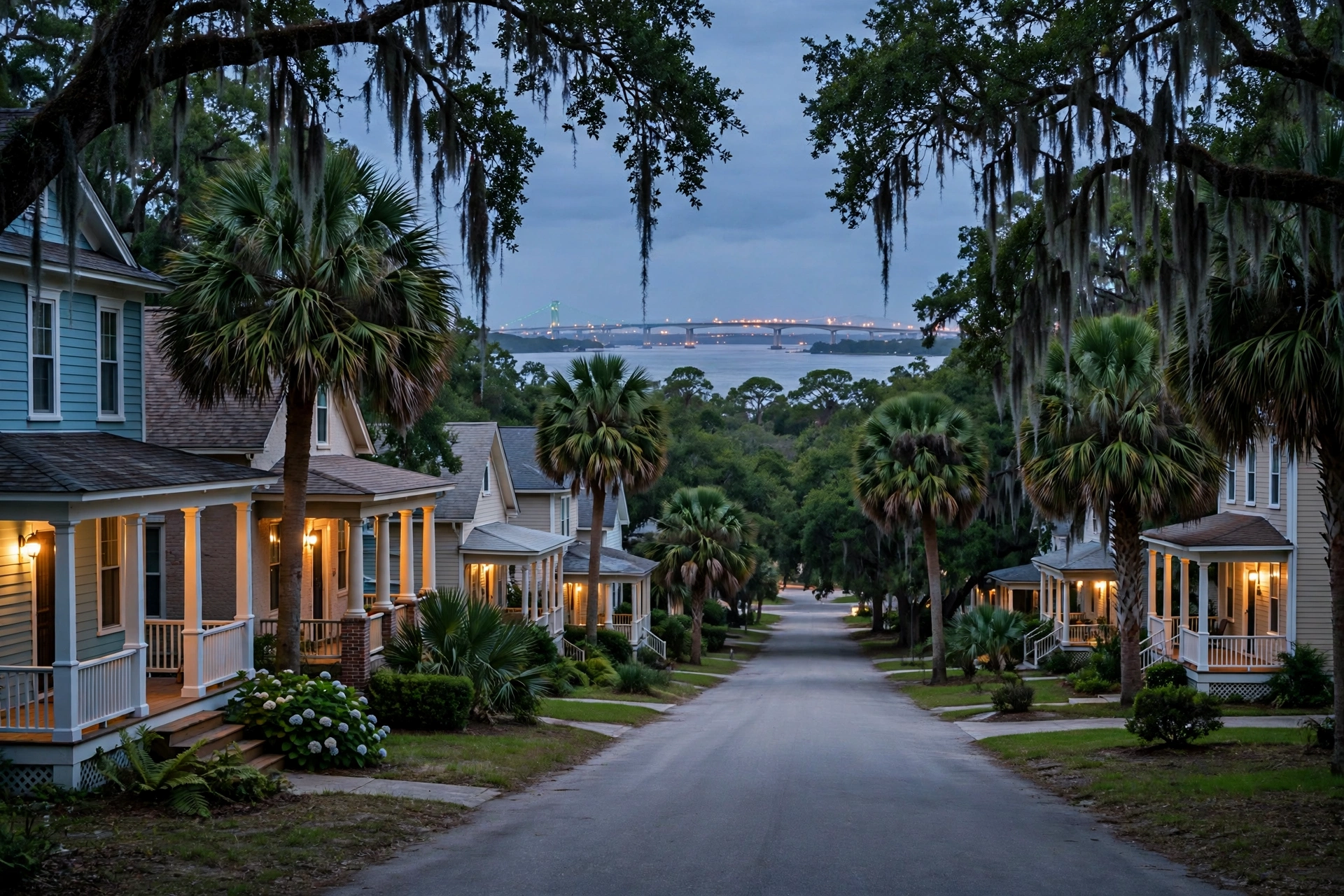
Jacksonville's median home is $294,750. On $75,000 a year, it is not a stretch goal — it is the middle of the market.
What salary do you think it actually takes to buy a home in Jacksonville — and has that number in your head been higher than the math says?
Your Next Step
1. Check Your Rate — Free: See what rate you actually qualify for across 200+ lenders — free, no credit check, no pressure.
2. Run your own number: Use the affordability calculator with your real salary, your real debts, and your real down payment — then compare it to the ladder above.
3. Prefer to talk it through? Call Douglas direct: (904) 517-4049.
Douglas Wilkerson — NMLS #1680719
Direct: (904) 517-4049
[email protected] | [email protected]
1548 the Greens Way, Ste. 4, Jacksonville Beach, FL 32250
Freeman Douglas Corporation is a DBA of Edge Home Finance. This is not a promise to lend — all credit decisions are subject to approval. Douglas Wilkerson, NMLS #1680719 | Edge Home Finance, NMLS #891464. Verify licensing at nmlsconsumeraccess.org. Equal Housing Opportunity.
