Can You Buy a Manufactured Home With a VA Loan? The Real Rules, the Foundation Trap, and the Math
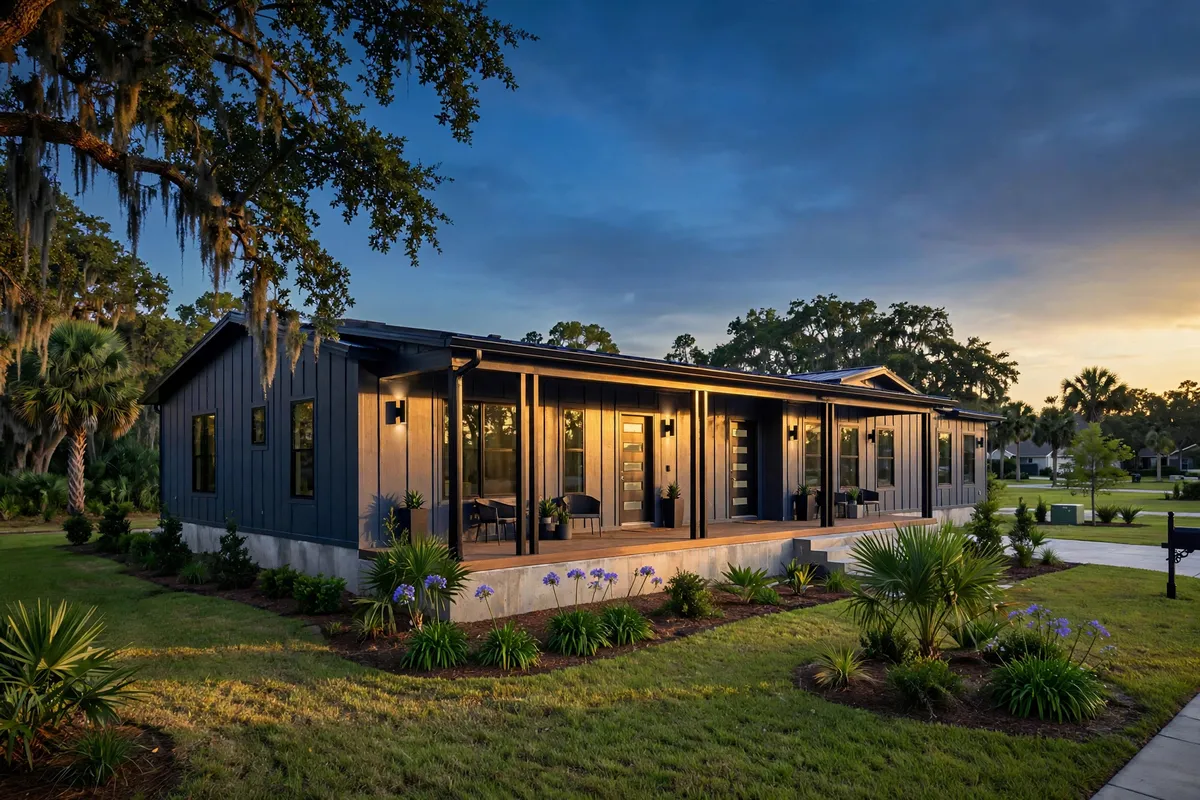
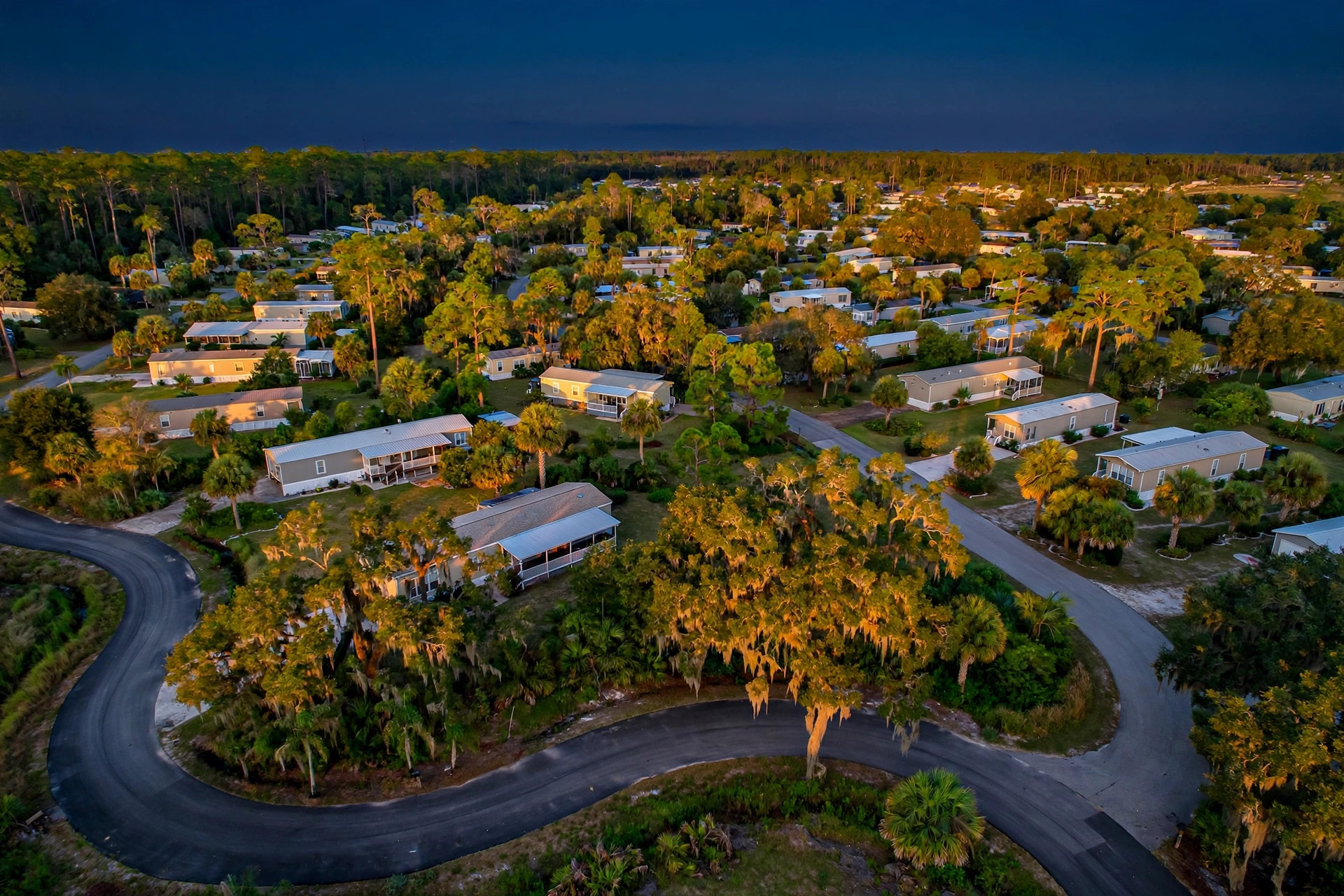
Drive out past the Jacksonville city line in any direction and you'll pass street after street of manufactured homes that look nothing like the "mobile home" stereotype. For the veteran buyer staring down a $300,000 median listing price, the question is unavoidable: can you buy one of these with a VA loan?
Yes — but the path runs through three gates that have nothing to do with your credit or your service: how the home was built, how it's anchored, and how it's legally classified. Miss one, and the file dies. This post explains the real rules.
The Short Answers
- Can you buy a manufactured home with a VA loan? Yes — a standard purchase loan ($0 down, no monthly MI) if the home meets the HUD Code, sits on a permanent foundation, and is classified as real property under state law.
- What funding fee applies? A flat 1.00% where the home is not permanently affixed — no first-use vs. repeat-use split. Permanently affixed as real estate = standard purchase schedule (2.15% first use / 3.3% after, under 5% down).
- How old can the home be? Built on or after June 15, 1976, when HUD's construction and safety standards took effect. Pre-1976 "mobile homes" are permanently ineligible.
- What's the biggest deal-killer? The foundation — the home must be attached to a permanent foundation built to withstand supporting loads and wind-overturning loads, with anchoring far more specific than most buyers expect.
What the VA Actually Allows
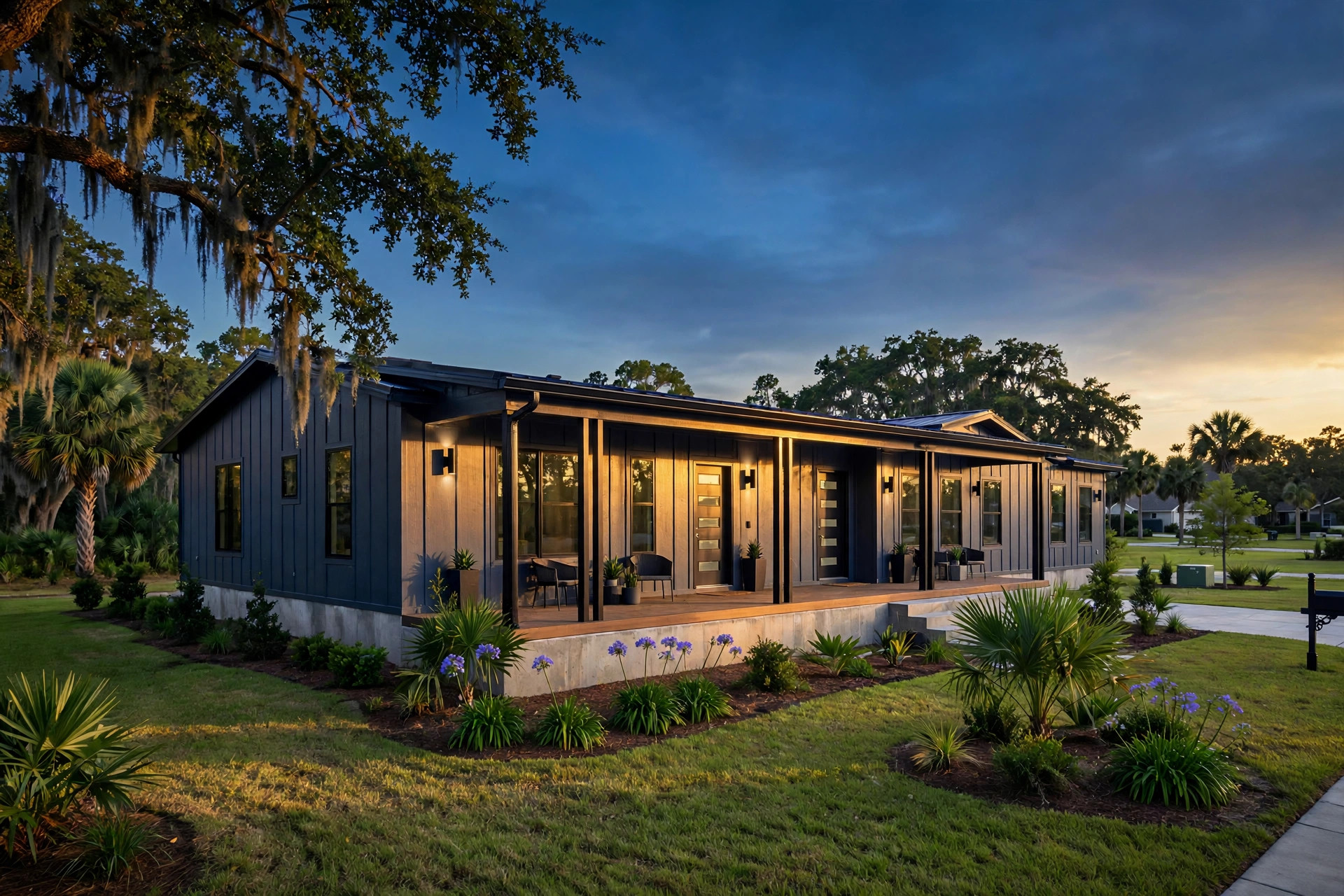
The VA guaranty program includes manufactured homes as a standard property type: home and lot as one purchase loan — $0 down, no monthly mortgage insurance.
It must be your primary residence — the standard 60-day occupancy rule, same as any VA purchase. No investment properties, no vacation homes.
The HUD-Code Line: June 15, 1976
Before June 15, 1976, factory-built homes were built to a patchwork of state standards — or none. Then the federal Manufactured Home Construction and Safety Standards took effect; every unit produced since must meet them.
This date is a hard line: a pre-HUD-code home can never qualify for VA financing, no matter how well-maintained — ineligible, permanently.
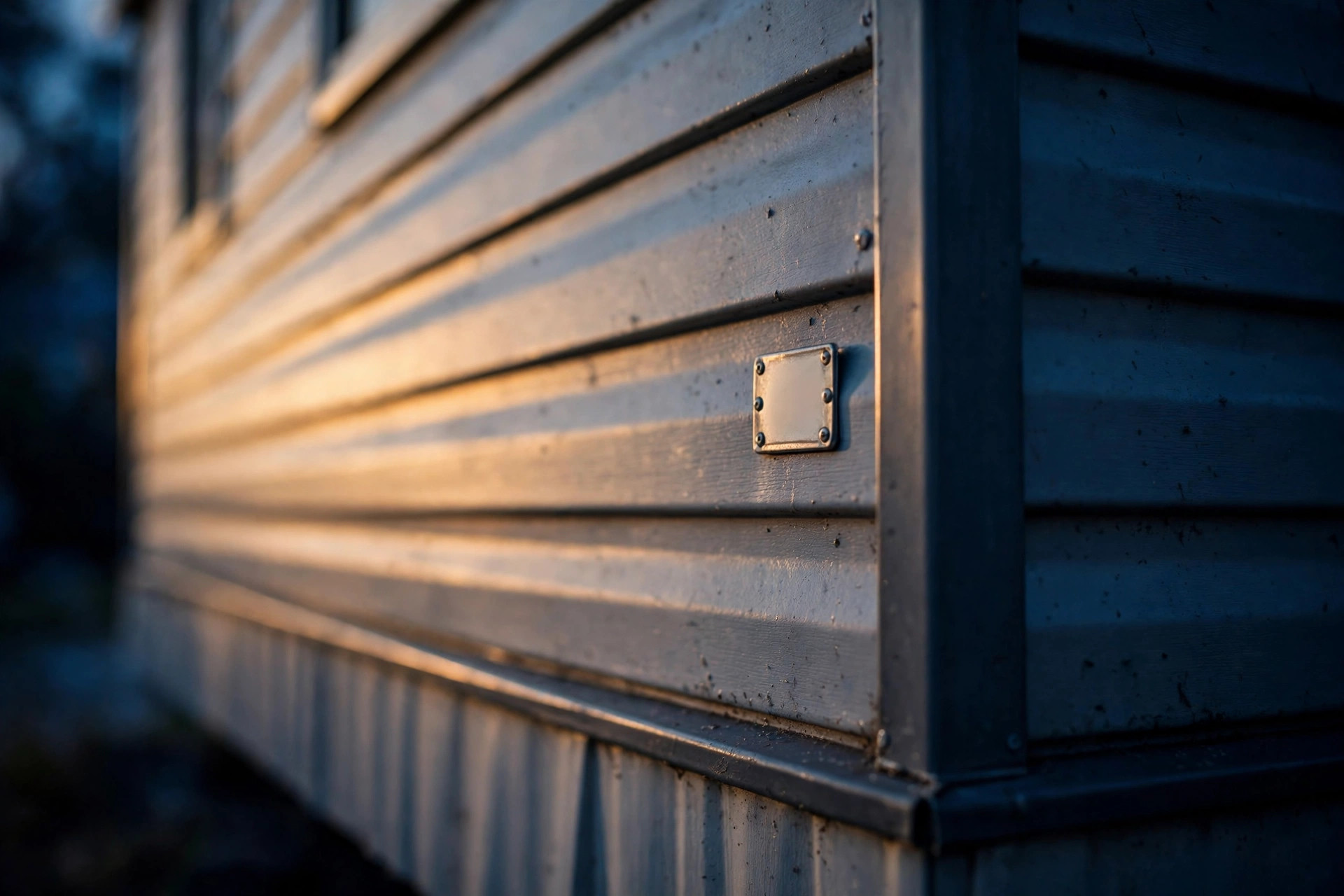
Proof comes from the factory: every HUD-code home leaves with a red HUD certification label (a small metal plate on the exterior of each section) and an interior data plate listing manufacturer, model, serial number, and wind and thermal zones. Lenders and VA reviewers check both. A pre-1976 unit has no labels at all — and that ends the conversation.
The mechanism: the HUD Code is the only uniform national standard telling the VA what it's lending against — structure, wind load, fire safety. That baseline makes a 2024 double-wide a financeable asset and a 1972 single-wide a cash-only proposition.
The Foundation Trap: Where Most Deals Die
The single most misunderstood rule in VA manufactured-home lending comes from VA Pamphlet 26-7, Chapter 12, Section 12.10:
"The manufactured home unit must be properly attached to a permanent foundation system which is constructed to withstand both supporting loads and wind-overturning loads, and is acceptable to the building authority having jurisdiction."
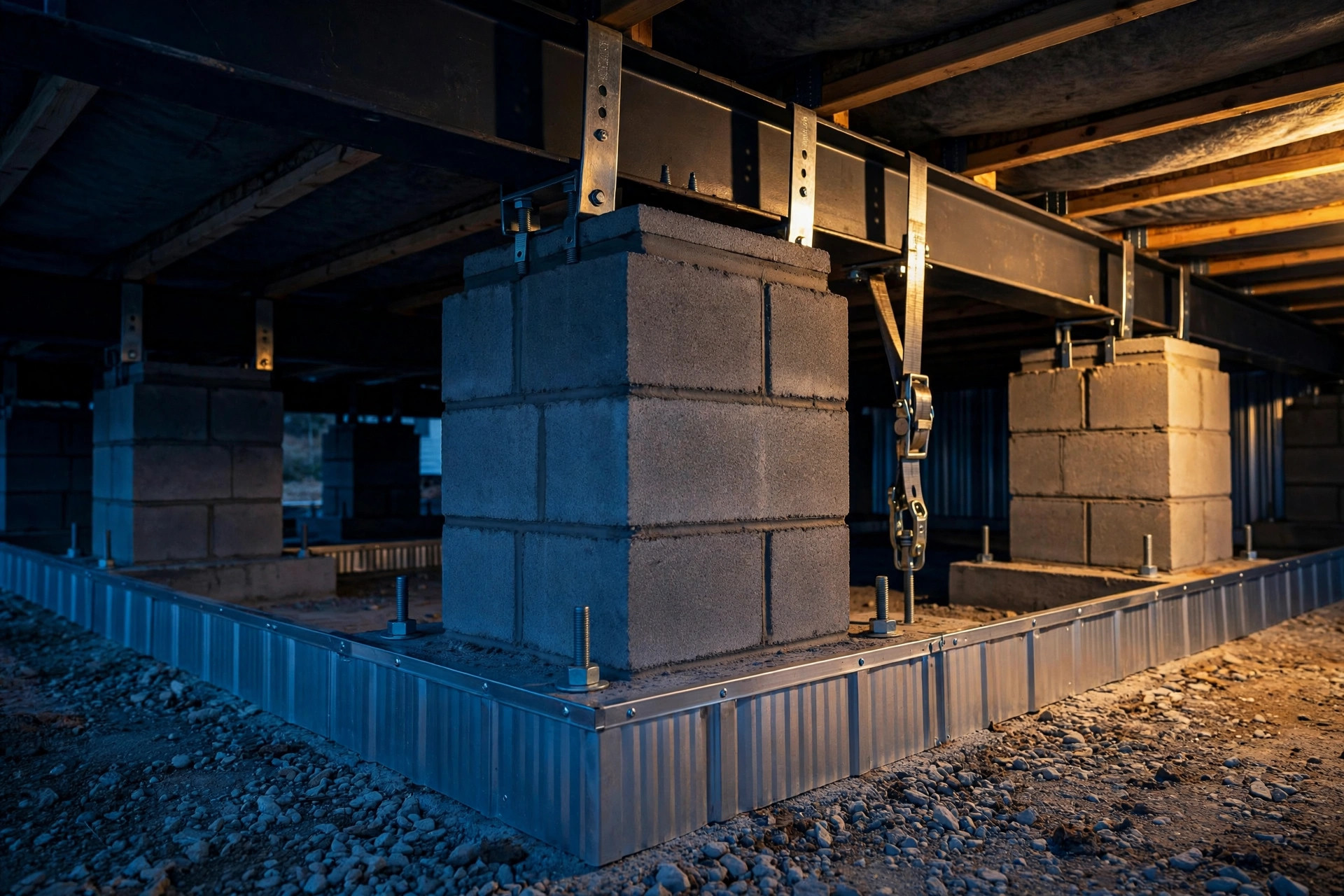
A home on cinder blocks with skirting — the setup that passes for "normal" in plenty of Florida communities — does not meet this. Skirting is decorative; the VA wants the steel frame bolted or welded to a foundation engineered to hold the home down in hurricane winds, not just hold it up.
The handbook gets specific about anchoring: devices must be attached to the main frame by a bolted, welded, or mechanical connector, placed at every supporting pier, and must extend into the pier footing. And it kills the common shortcut: "Anchoring straps or cables affixed to ground anchors, other than pier footings, will not meet this requirement."
For Jacksonville buyers: homes in Wind Zone II or III — Florida's high-wind country — must have diagonal hurricane ties engineered for the location. Tie-down documentation is where Northeast Florida deals quietly fall apart: everything looks fine until the reviewer asks for the evidence and it doesn't exist.
Two more §12.10 details that separate financeable homes from the rest:
- Perimeter enclosure vs. skirting: VA requires a "permanent perimeter enclosure (not 'skirting')" with a continuous foundation-type footing only when the local building authority specifically requires it. Skirting alone never satisfies the foundation rule.
- Moisture barrier: a continuous moisture barrier over the ground surface within the perimeter enclosure is required. Florida is not arid — this applies.
One overlay to watch: most lenders require an engineer's foundation certification on every file, but the handbook says such statements should be required "only when necessary" — the VA permits it rather than mandating it. The engineer's letter is usually the lender's requirement, not the VA's.
Florida Specifics: The RP Sticker
VA's second requirement is legal, not physical: federal regulations (38 CFR 36.4301) require the home to be permanently affixed to a lot and considered real property under state law.
Florida has a specific mechanism: under Fla. Stat. § 320.0815, a manufactured home that is permanently affixed and "qualified and taxed as real property" is issued an "RP" series sticker by the tax collector — once the property appraiser certifies the home is on the ad valorem assessment — replacing the standard mobile-home decal. The Duval County Property Appraiser's own guidance confirms the local process: own the land and the home, permanently set up, declare it, buy the sticker from the Tax Collector.
Buyer warning: in a leased-land community (you own the home, rent the lot), run the classification question before you fall in love with the property. The VA requires real-property classification, a land lease complicates it — and your insurance too. Front-of-the-process question, not week-before-closing.
The Funding-Fee Difference
For a manufactured-home loan where the home is not permanently affixed, the VA funding fee is a flat 1.00% — no first-use vs. repeat-use split.
The turn most articles get wrong: once the home is permanently affixed and classified as real estate — the Jacksonville home-plus-lot scenario — the standard purchase schedule applies: 2.15% first use (under 5% down), 3.3% after. The 1% row on the VA's fee table is specifically for loans not permanently affixed. Full funding-fee breakdown here.
Single-Wide vs. Double-Wide: Agency Rule vs. Lender Overlay
My favorite sentence in mortgage lending: what the lender told you was a VA rule probably wasn't.
The VA does not ban single-wides. Federal regulation (38 CFR 36.4207) sets minimums for both: single-wide at least 10 feet wide with 400 sq. ft.; double-wide at least 20 feet wide with 700 sq. ft. The rules even set separate loan terms for single-wide purchases.
So why does nearly every veteran with a single-wide hear "VA won't do it"? Because most lenders overlay their own multi-wide-only rule as company policy. That's a business decision — not a VA guideline. The actual agency guidelines are the law of the land; any single lender's overlay is just that lender's opinion. With 200 lenders, a "no" on a single-wide, a foundation configuration, or an older unit is the start of the conversation — not the end. One lender's overlay is never the last word. See what the MPRs actually require here.
The Term Trap
Under the manufactured-home-specific loan authority, federal rules cap terms below 30 years: 20 years and 32 days for a single-wide (home only or home + lot), 25 years and 32 days for a double-wide + lot, 15 years and 32 days for lot-only. Used homes get the lesser of the applicable term or the unit's remaining physical life.
But once the home is classified as real estate and financed as a regular VA purchase, the standard terms apply: up to 30 years and 32 days. That's the practical payoff of the foundation work and the RP sticker — they unlock the 30-year amortization that makes the monthly math work. A Duval County home-plus-lot purchase with RP classification is a 30-year VA loan.
The Math: ~$150K Manufactured Home vs. ~$300K Site-Built
Freddie Mac's Primary Mortgage Market Survey put the average 30-year fixed at 7.40% for the week ending October 15, 2026. NMLS #1680719. Both purchases below are $0 down, first-use, financed as regular VA purchases (permanently affixed as real estate — standard 2.15% funding fee, financed into the loan):
| Manufactured home + lot | Site-built home | |
|---|---|---|
| Purchase price | $150,000 | $300,000 |
| Down payment | $0 | $0 |
| Funding fee (2.15%, financed) | $3,225 | $6,450 |
| Loan amount | $153,225 | $306,450 |
| Rate / term | 7.40% / 30 yr | 7.40% / 30 yr |
| Monthly P&I | $1,061 | $2,122 |
That's $1,061 less per month in principal and interest — about $12,700 a year, roughly $382,000 over a 30-year term. Same rate, same VA benefits ($0 down, no mortgage insurance), over a thousand dollars a month of cash flow back in your pocket.
One more number the rules reveal. VA caps seller concessions at 4% of the home's reasonable value — the general VA rule, every purchase type. On $300,000 that's $12,000 of seller-paid buydown or closing-cost money; on $150,000 it's $6,000. Same percentage, half the dollars — so on a manufactured home, structure matters more. $6,000 aimed at a temporary buydown in years one and two moves a $1,061 payment far more than spread thin across permanent costs. Intelligent loan structuring beats anyone's posted pricing, and on a lower price point the structure is where the savings live.
What to Do: The Buyer's Checklist
- HUD label and data plate first. Built on or after June 15, 1976? Red exterior label, interior data plate intact? No to either = the VA path is closed.
- Ask about the foundation in the right words. Not "is it okay?" — ask: "Is the home attached to a permanent foundation engineered for supporting loads and wind-overturning loads, frame bolted or welded at every pier, with diagonal hurricane ties?"
- Confirm RP classification. Florida: the RP sticker under § 320.0815 and the home on the ad valorem roll. Still titled as a vehicle = not a VA purchase loan.
- Ask the overlay question — verbatim: "Are you underwriting this to the actual VA agency guidelines, or to your company's overlay?" Single-wide bans, mandatory engineer letters, no-manufactured-homes policies — all overlays.
- Get terms in writing. Home + lot as real estate should price as a 30-year VA purchase. Quoted 20- or 25-year terms? Ask whether that's the standalone manufactured-home authority or the lender's own product.
- Don't self-disqualify. Countless veterans assumed a manufactured home "doesn't qualify for VA" and never asked. A file that fails one lender's overlay can sail through another's actual-guidelines underwriting. Confirm your eligibility and COE here.
Start Here
On your list — or another lender already told you "VA doesn't do those"? Run your actual file against the actual guidelines.
Take the 2-minute VA readiness quiz: https://link.theradcrm.com/widget/quiz/NtcHny7i175cF69BoiAP
Ready to apply? Apply Now — https://link.theradcrm.com/widget/form/0Oe1oF6y5m9Z3X7N5n9
Discussion: would you buy a manufactured home with your VA benefit — or does the "mobile home" stigma still decide it for you? Drop your take in the comments.
Douglas Wilkerson — Mortgage Broker, NMLS #1680719
Direct: (904) 517-4049 | Office: (904) 906-8869
[email protected]
[email protected]
1548 the Greens Way, Ste. 4, Jacksonville Beach, FL 32250
Freeman Douglas Corporation is a DBA of Edge Home Finance. This is not a promise to lend — all credit decisions are subject to approval. Douglas Wilkerson, NMLS #1680719 | Edge Home Finance, NMLS #891464. Verify licensing at nmlsconsumeraccess.org. Equal Housing Opportunity.
