
Can You Buy a Condo With a VA Loan? The VA-Approved Condo List, Explained
Can You Buy a Condo With a VA Loan? The VA-Approved Condo List, Explained
Short answers:
Can you buy a condo with a VA loan? Yes — but the condominium project itself must be on the VA's approved-condo list. The VA says so plainly on its own purchase-loan page: with a VA-backed purchase loan you can "buy a condo in a VA-approved project."
What makes a condo project VA-approved? The HOA applies once and gets approved when the project meets the VA's Chapter 16 benchmarks — owner-occupancy ratios, delinquency caps, reserve funding, insurance, and single-owner limits. Approval is about the building, not your unit.
How do you check? Ask your lender, check the VA's approved-condo search tool, or have your listing agent verify before you write an offer.
What if your building isn't on the list? Your lender can request project approval — it usually takes weeks to a few months, and it requires documents from the HOA. This is the step that quietly kills condo deals when nobody starts it early.
Jacksonville angle: Northeast Florida has a deep condo bench — beach condos, Intracoastal units, golf-course communities near Mayport and NAS Jax. Many are already approved. The ones that aren't are usually one document package away.
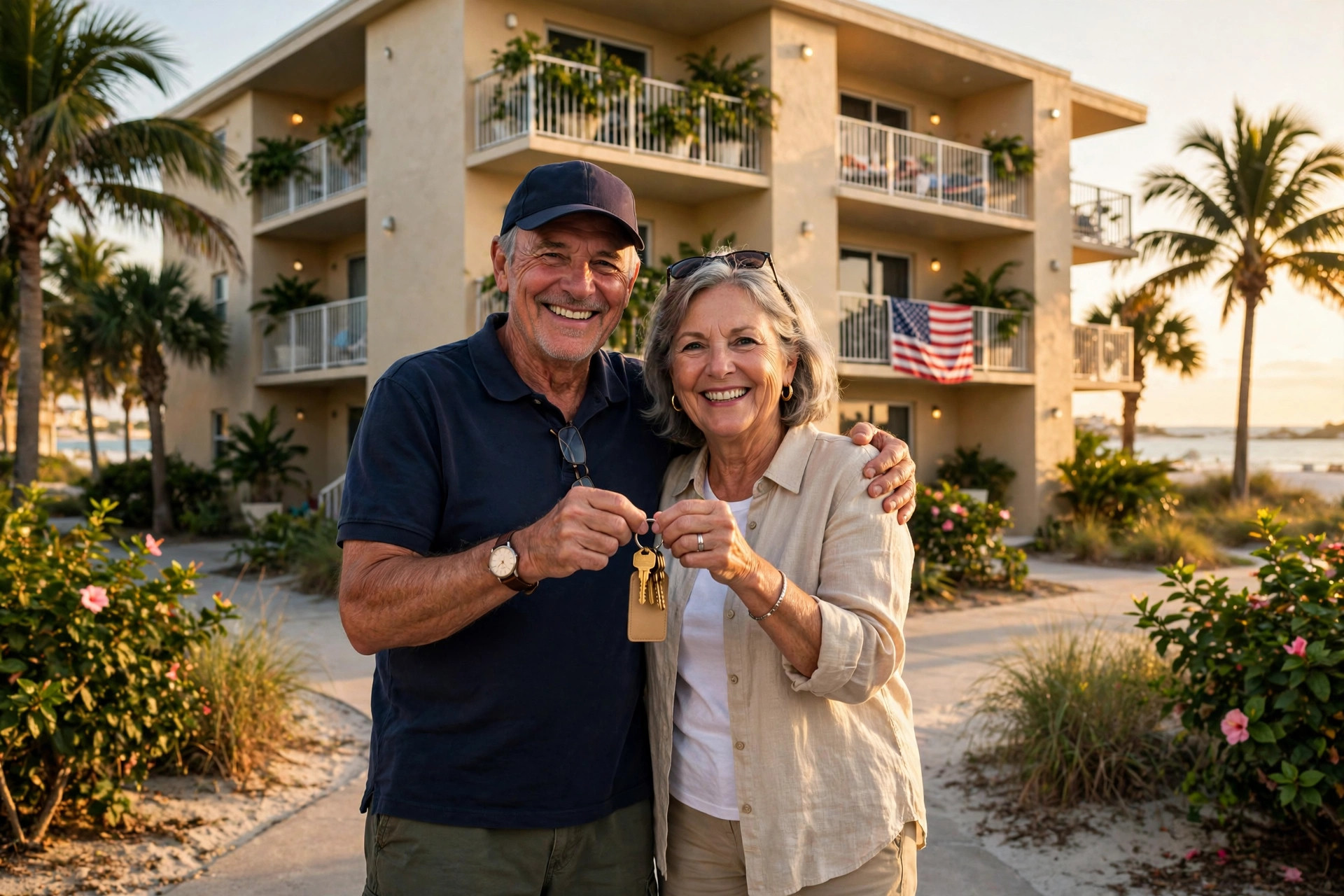
Here's the conversation I have over and over with military buyers around Mayport, NAS Jacksonville, and the beaches: they find the condo. Ocean breeze, low maintenance, perfect price. They fall in love with the unit. Then, somewhere between the offer and the underwriting, they learn the VA doesn't just underwrite them — it underwrites the building.
Single-family home with a VA loan? The VA underwrites your file and appraises your house. Condo with a VA loan? The VA underwrites your file, appraises your unit, and the entire project has to have passed the VA's review at some point. One approval on the building, then every eligible buyer in it can use the same benefit.
That difference surprises people — and it's the number-one reason VA condo deals stall. Not because condos are risky. Because nobody checked the list before the offer went in.
The one rule that changes everything
The VA's own purchase-loan page is blunt: a VA-backed purchase loan can be used to "buy a condo in a VA-approved project." That's the whole game. Your eligibility, your entitlement, your income — all of that still works exactly the way it does on a single-family home. Zero down. No monthly mortgage insurance. The same funding fee structure (see VA Funding Fee, Explained).
But the unit has to live inside a project the VA has already approved — or your lender has to get it approved as part of your purchase.
Why does the VA care about the building? Because the loan is secured by a unit inside a community whose financial health affects every owner. If the HOA is broke, the reserves are empty, half the units are delinquent on dues, or one investor owns a third of the building, the collateral picture is different than a standalone house. The VA's rulebook — Chapter 16 of the VA Lenders Handbook — sets the benchmarks a project has to clear. The approval protects you as much as it protects the government.
What the VA actually checks — the six benchmarks
Industry summaries of the VA Lenders Handbook's Chapter 16 criteria consistently point to the same six benchmarks. Here's what the building has to show:
Owner-occupancy. At least 50% of the units in an established project must be owner-occupied — people who actually live there, not renters. For new developments still in their initial sales phase, the floor is 75%. Heavy investor concentration makes an HOA financially fragile, and the VA prices that in.
Delinquency cap. No more than 15% of units can be 60 or more days past due on HOA assessments. This is the benchmark that quietly trips the most projects — buildings with chronic late payment patterns from investor-owned units often fail here.
Single-entity ownership limit. In projects with 20 or more units, no single investor or entity may own more than 10% of the units. In smaller projects, no single entity may own more than one unit. The logic: one large investor shouldn't control enough votes to reshape HOA rules in ways that harm everyone else's collateral.
Reserve funding. The HOA must allocate at least 10% of its total budgeted income to capital reserves — the account that pays for roofs, elevators, and parking structures without emergency special assessments. Consistently depleted reserves are a red flag on every review.
Fidelity bond. The association must carry a fidelity bond equal to three months of assessments plus the full reserve balance. That protects every owner against misappropriation of the association's money.
Insurance and budget adequacy. The HOA needs a current budget covering maintenance, insurance, professional management, and reserve contributions — and adequate hazard insurance over the building and common areas. You still carry your own HO-6 policy for everything inside your walls, but the master policy has to meet VA standards.
Read that list as a buyer, and it reads like a financial health screening for the building — because that's exactly what it is. A building that passes these benchmarks is a building whose HOA can handle a bad year without panicking every owner.

How to check whether your condo is already approved
Before anything else — before the inspection money, before the appraisal fee — check the building. Three ways:
Ask your lender. This is the fastest. Your loan officer can tell you whether a specific project is on the VA's approved list, and can pull the approval status in minutes.
Use the VA's approved-condo search. The VA maintains a searchable nationwide list of approved condominium projects. Punch in the project name and state.
Have the listing agent verify. A good listing agent in a military market knows this dance. "Is the project on the VA approved list?" is a question they should be able to answer — or find out — before you write.
Here's the thing most buyers don't realize: if the project is already approved, the condo part of the process is nearly invisible. The lender orders the appraisal on your unit, the file underwrites like any VA purchase, and the project status is a checkbox. Millions of VA loans have closed in already-approved buildings with the buyer never thinking about Chapter 16 at all.
The pain only starts when the building isn't on the list — and nobody discovered that until week three of the contract.
What if your building isn't on the list?
This is where condo deals go sideways, and it's almost always a timing problem rather than a real problem. Your lender can request VA project approval for the building — the process exists precisely for this situation. It works like this:
Your lender submits the request to the VA's office of jurisdiction (the Regional Loan Center) with the project's documents — declaration, plat, budget, insurance, the financials behind those six benchmarks.
The VA reviews the package. Industry experience puts the timeline at a few weeks when the paperwork arrives clean and the project meets the benchmarks — longer, up to a couple of months, when the Regional Loan Center is busy or documents trickle in.
Once approved, the project lands on the nationwide list. Your purchase proceeds, and every future VA buyer in that building benefits from the same approval.
The catch, and it's a real one: the condo association is under no obligation to provide the documents. If the property management company turns the package around quickly, the whole thing can move in weeks. If the HOA is slow, uncooperative, or can't produce financials that meet the benchmarks, the process stalls — and a 30-day contract doesn't have room for stall.
That is the single most important planning fact in this whole article: start the project-approval question on day one of the house hunt, not week three of the contract. If the building is already approved, you lost nothing. If it isn't, your lender's weeks-to-months head start is the difference between a closed loan and a blown contract.

What approval does NOT guarantee
Steady hand, because this matters: a VA-approved project is not a guarantee of a smooth closing. Three honest caveats.
First, the unit still has to appraise. Project approval is about the building; the appraisal is about your unit and its value. The VA appraisal process — the NOV, and the Tidewater process when values come in low (covered in The VA Tidewater Process, Explained) — applies to condos exactly the way it applies to single-family homes.
Second, the unit still has to meet minimum property requirements. The VA's MPR standards don't vanish because it's a condo — safe, sound, sanitary still applies to what you're buying (see VA Minimum Property Requirements, Explained). The HOA's common areas are the association's responsibility; everything inside your unit is on you and the seller.
Third, lender overlays still exist. Some lenders add their own stricter rules on top of the VA's — a minimum credit score for condos, extra reserve requirements, project-type restrictions. An overlay is the lender's rule, not the VA's. This is the same reason I broker through 200 lenders: when one lender's overlay says your condo file doesn't fit, the next lender's actual-guidelines underwriting might. The VA's benchmark is the floor. A lender can always build a higher ceiling.
And the Florida-specific reality: condo insurance costs and HOA budgets are under genuine pressure statewide. A building can be VA-approved and still carry rising dues or a looming special assessment that affects your monthly budget — which is your payment math, not the VA's checklist. Run the full HOA dues + insurance + payment picture before you fall in love.
The Jacksonville playbook
Northeast Florida is one of the better condo markets in the country for VA buyers, for one reason: military density. Buildings near Mayport, NAS Jax, Blount Island, and the beaches have been selling to service members for decades — and plenty of them are already on the VA's approved list because some veteran's lender did the paperwork years ago.
Your playbook, in order:
Before you tour: have your lender (or agent) check the VA approved list for the buildings you're targeting. Five minutes, zero cost.
At offer time: if the building isn't approved, write the contract with a realistic timeline — and tell your lender to start the project-approval request immediately, not after the inspection period.
During underwriting: read the HOA budget and reserve study like it's part of the file — because it is. Dues increases and special assessments are your affordability math.
Always: get your Certificate of Eligibility sorted early. If you haven't started there: Am I Eligible for a VA Loan? Service Requirements and Your COE, Explained.
The condo rule looks intimidating from the outside — a whole building underwriting alongside your file. In practice, it's one question asked early: is the project approved? Yes, and the condo closes like any VA loan. No, and your lender starts the paperwork while you shop. The only losing move is finding out in week three.

Discussion question: Have you ever had a condo deal stall — or die — over the VA approval question? Or did your building turn out to be approved all along and nobody told you? Drop your story in the comments; I read every one.
Start Here
Everything I know about mortgages lives on my website — freemandouglas.com. Go learn it all. DM me or text (904) 906-8869.
Want to see where you stand in about a minute? Take the VA-Ready Score Quiz.
Ready to talk numbers? Apply Now — I'll check your building's approval status and run your file on the actual VA guidelines, not a lender's overlay.
Douglas Wilkerson — NMLS #1680719
Mortgage Broker, Edge Home Finance (DBA Freeman Douglas Corporation)
Direct: (904) 517-4049 | Office: (904) 906-8869
[email protected] | [email protected]
1548 the Greens Way, Ste. 4, Jacksonville Beach, FL 32250
Freeman Douglas Corporation is a DBA of Edge Home Finance. This is not a promise to lend — all credit decisions are subject to approval. Douglas Wilkerson, NMLS #1680719 | Edge Home Finance, NMLS #891464. Verify licensing at nmlsconsumeraccess.org. Equal Housing Opportunity.
