The Mortgage Blog: Rates, VA Loans and Jacksonville Homebuying, Explained
Mortgage rate updates, VA loan guides and Jacksonville homebuyer playbooks from Douglas Wilkerson, Mortgage Broker at Edge Home Finance (NMLS #1680719) — current, researched and written in plain English. Call (904) 517-4049 with a question, and start with the guides below.
Home › Resources › Mortgage Blog
What this blog covers
The Freeman Douglas mortgage blog is where rate news meets real Jacksonville homebuying. Douglas Wilkerson, Mortgage Broker at Edge Home Finance (NMLS #1680719) and a Marine Corps veteran, writes it the way he talks to borrowers: current, researched, and with no bank-speak.
Here is what you will find, updated as the market moves:
- Mortgage rate updates — what changed, why it changed, and what it means for your payment. Check the current mortgage rates before you read the commentary.
- VA loan guides — the VA homeownership affordability angle in plain English: entitlement, the funding fee, and how to buy with $0 down. Start with VA home loans.
- Jacksonville homebuyer playbooks — step-by-step guides for first-time buyers, move-up buyers and relocating veterans, built around Northeast Florida neighborhoods. New buyers should also read the first-time homebuyer guide and the mortgage learning center.
Every post ends the same way: a clear next step. If a question is not answered here, the mortgage FAQs usually cover it — or call Douglas directly at (904) 517-4049. Below, the latest published posts appear first.
Latest posts

No Credit Score? You Can Still Get a Mortgage: How Thin-File Borrowers Qualify in Jacksonville
No Credit Score? You Can Still Get a Mortgage: How Thin-File Borrowers Qualify in Jacksonville
By Douglas Wilkerson, Mortgage Broker, NMLS #1680719

Cover photo: A Jacksonville home bought without a traditional credit score is not a loophole. It is a documented file, built the way the agencies actually allow.
Short answer
Having no credit score is not the same as having a bad credit score — and under the actual guidelines for VA and FHA loans, it does not automatically disqualify you. The VA sets no minimum credit score at all. FHA allows a lender to build a borrower's credit history from non-traditional sources, such as rent and utility payments, when no score exists. What stops most thin-file buyers is not the agency rulebook. It is a single lender's overlay: a minimum-score cutoff the lender added on top of the agency rules. That is why a "no" from one lender is never the last word, especially when a broker can shop the file across 200 lenders.
What does "no credit score" actually mean?
A credit score only exists when the bureaus — Equifax, Experian, and TransUnion — have enough reported tradelines to calculate one. If you have never had a credit card, a car loan, or a student loan in your name, the bureaus may simply have nothing to score. That is called a thin file, or insufficient credit. It is common among young buyers, recent immigrants, military members who lived on base and paid cash, and adults who deliberately avoided debt.
Thin file is the opposite problem from bad credit. Bad credit means the bureaus scored you and the history came back with late payments, collections, or defaults. No credit means there is no history to judge — good or bad. Underwriting handles those two situations completely differently, and confusing them is how good buyers talk themselves out of applying.
Ask yourself which one you actually are. If you pay rent on time every month, keep the lights on, and keep a phone plan current, you have a payment history. It just does not live on a traditional credit report yet. That history is exactly what non-traditional underwriting is built to read.
Why do lenders ask for a score if the agencies don't always require one?
Here is the mechanism most buyers never see. A mortgage score is a shortcut, not the decision itself. Lenders use automated underwriting systems to sort files quickly, and those systems love a three-digit score. When a score is missing, the file usually cannot pass through the automated shortcut, so it goes to manual underwriting — a human underwriter reading the actual documents.
Manual underwriting is slower and stricter in some ways, and many lenders simply do not want to do it. So they add an overlay: "we require a 620" or "we require a 580," even when the agency behind the loan requires no such number. The VA Lenders Handbook, Pamphlet 26-7, Chapter 4, states it plainly: "VA does not have a minimum credit score requirement." Instead, the lender must decide whether the veteran is a satisfactory credit risk based on the whole file. FHA's Handbook 4000.1 takes a parallel path for borrowers without a score: the lender must either obtain a Non-Traditional Mortgage Credit Report or independently develop the borrower's credit history.
The practical result: the same borrower, the same income, the same house — approved at one lender, declined at another — because the second lender's overlay, not the agency guideline, blocked the file. If you have ever been told "you need a score first," ask the follow-up question that changes the conversation: "Is that a VA or FHA rule, or is that your lender's overlay?"
What counts instead of a credit score?
Non-traditional credit is not a vibe. It is a paper trail of regular, verifiable payments, usually over 12 months. The sources underwriters look for include:
- Rent. The single most important reference. Twelve months of on-time rent, verified independently — not just your word for it — anchors the file.
- Utilities. Electric, gas, water, and sewer payments in your name.
- Phone and internet. A mobile or home phone bill and internet service, paid on time.
- Insurance. Auto or renters insurance premiums not deducted from payroll.
- Other recurring obligations. Childcare paid to a business provider, school tuition, and similar regular payments can supplement the file when the core references are covered.

For FHA files, lenders generally look for three qualifying credit references when non-traditional credit is used to establish history, with housing — rent — as the anchor. For VA files, the handbook goes further in the borrower's favor: the absence of a credit history is "not generally considered an adverse factor," and underwriters are directed to evaluate non-traditional credit such as rent and utility payments. Neither program lets a lender deny you simply because a score does not exist; the lender has to do the work of building the history.
One important limit: non-traditional credit cannot paper over derogatory credit that does show up on a report. If you have a score and it is low because of missed payments, that is a different file — a credit-repair and waiting-period conversation, not a thin-file conversation. Be honest about which file you are, and the right path gets much clearer.
How do you document a payment history a bureau never saw?
This is where thin-file buyers win or lose, and it is almost entirely preparation. Start gathering these now, before you apply:
- Twelve months of bank statements showing each payment leaving your account, with the payee visible. Highlight nothing; let the statements speak.
- A landlord verification. Your landlord, or a property-management company, confirming the rent amount, the dates, and that payments were on time. If you paid a private landlord in cash, bank withdrawals on a consistent schedule plus a written verification become even more important.
- Utility and phone bills in your name for the same 12-month window, with payment confirmations.
- Anything that proves stability around the payments: steady employment, reserves in the bank, and a housing payment that is not a huge jump from your current rent.

The underwriter's real question is simple: has this person paid their obligations, in full, on time, for a year? Twelve clean months of rent and utilities answer that question more convincingly than a thin score ever could. A file that arrives organized — statements, verifications, and bills in order — moves through manual underwriting far faster than one the underwriter has to chase.
What does the math look like on a real Jacksonville home?
Take a $300,000 home in the Jacksonville area — close to the market's recent median range — and run the two thin-file paths side by side. These are illustrations at the Freddie Mac Primary Mortgage Market Survey average, not a rate quote for any borrower: the 30-year fixed averaged 7.32% for the week ended October 22, 2026 (15-year: 6.68%; a year earlier the 30-year averaged 6.19%). Your actual rate depends on your file, the lender, and the day you lock. Douglas Wilkerson, NMLS #1680719.
VA path, eligible veteran, $0 down. A $300,000 purchase with no down payment carries a first-use VA funding fee of 2.15%, or $6,450, which is typically financed into the loan — making a $306,450 loan amount. At an illustrative 7.32% over 30 years, principal and interest run $2,105.10 per month. Veterans with a service-connected disability compensation exemption pay a $0 funding fee, which drops the loan amount back to $300,000 and principal and interest to $2,060.79 per month at the same illustrative rate.
FHA path, 3.5% down. The same $300,000 home with 3.5% down means a $289,500 base loan. FHA's upfront mortgage insurance premium of 1.75% adds $5,066.25, for a $294,566.25 loan amount. At an illustrative 7.32%, principal and interest run $2,023.47 per month, plus annual mortgage insurance of 0.55% — about $135.01 per month on this loan amount — for a combined $2,158.48 before taxes, insurance, and any HOA dues. FHA's published minimums are 580 for 3.5% down and 500–579 for 10% down, but remember: those floors apply when a score exists. A borrower with no score is underwritten on the non-traditional history above, not on a score floor.
The lesson in both columns is the same. The monthly payment is driven by price, down payment, and rate — not by whether a bureau could generate a number for you. A renter paying $1,700 a month in Jacksonville has already demonstrated they can carry a housing payment in this range; the file just has to prove it in the format underwriting accepts.
What thin-file underwriting does NOT fix
Steady hand, because this is where bad advice hurts people. Manual underwriting is more thorough, not more lenient. Expect the underwriter to verify income and employment carefully, to scrutinize large or irregular deposits, and to apply tighter debt-to-income review than an automated approval might. A housing payment that jumps far above your current rent will draw questions, and thin reserves make any file harder — so keep saving while you gather documents.
Also, not every lender offers manual underwriting or non-traditional credit at all, and those that do implement it at different speeds. That variation is the whole point of shopping the file. A broker working from actual agency guidelines, across 200 lenders, can place a thin file with a lender whose process actually handles it — instead of letting one lender's overlay end the conversation.
What should you do this week?
If you have no credit score and you rent in Northeast Florida, do not start by opening a stack of credit cards to "build credit." That can help over time, but it is not the fastest path to a mortgage, and new accounts right before an application can complicate the file. Instead:
- Pull your free credit reports and confirm what is actually there — sometimes a score exists that a lender never looked for, or an old account you forgot is reporting.
- Assemble the 12-month paper trail: bank statements, rent verification, utility and phone bills.
- Apply with a broker who will tell you honestly whether your file fits VA non-traditional underwriting, FHA non-traditional underwriting, or a credit-building timeline first — and who will show you the actual guideline, not just a lender's cutoff.
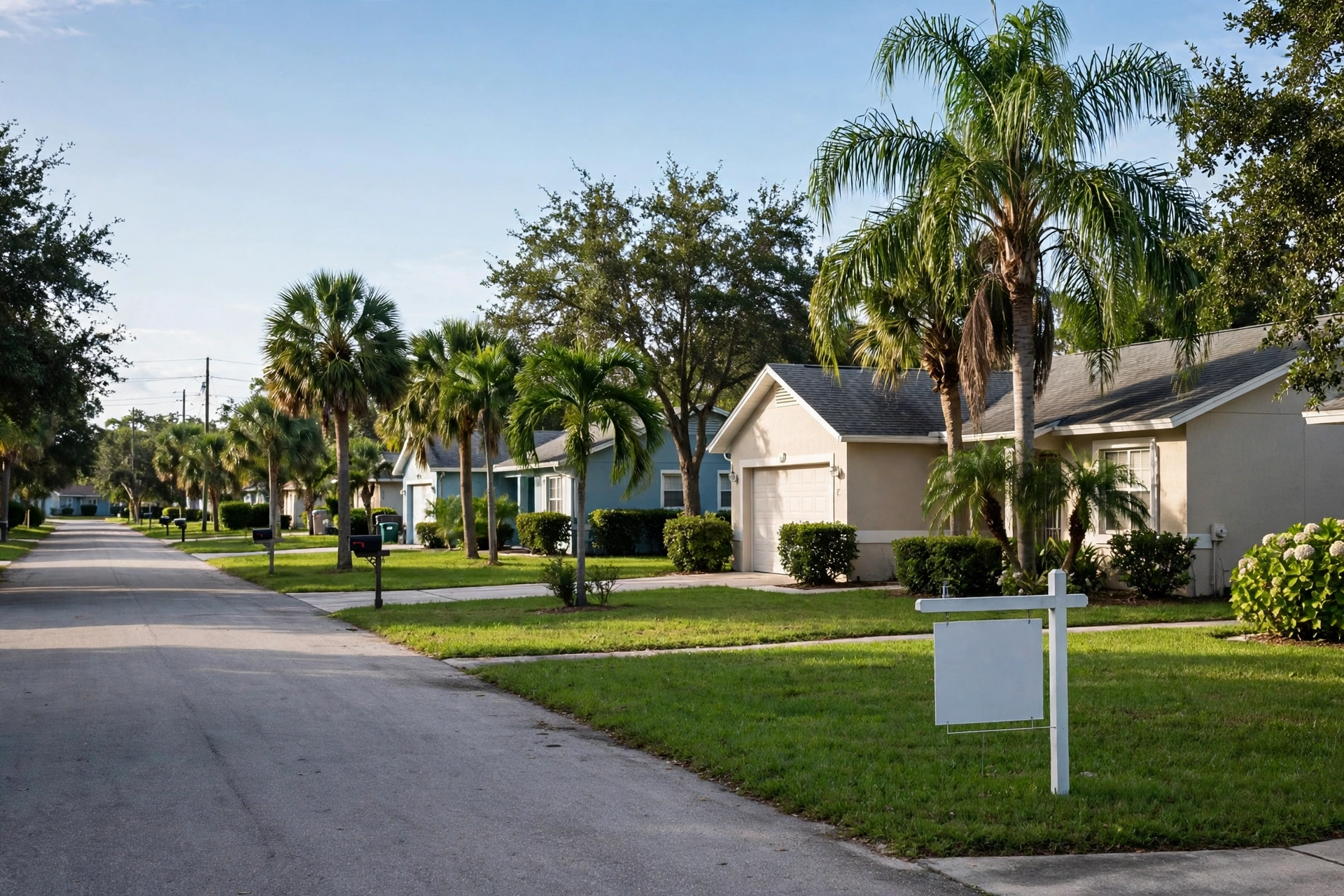
Jacksonville's rental market makes this especially relevant. Every month of on-time rent in Riverside, Mandarin, the Southside, or the Beaches is a month of mortgage-payment evidence that most renters never realize they are building. The question is not whether you have been responsible. It is whether your file presents that responsibility in a form underwriting can use.
Did a lender ever tell you that you couldn't buy a home because you had no credit score — and did you ever find out whether that was an agency rule or just that lender's overlay? What did you do next?
Start Here
If you rent in Northeast Florida and have little or no traditional credit history, let's look at your actual file — your rent record, your bills, and your income — against the real VA and FHA guidelines, not a single lender's cutoff. With 200 lenders to shop, one lender's overlay is never the last word. Call or text to start: we will tell you whether a thin-file application makes sense now, or what to build first if it doesn't. Every borrower gets an honest answer, and every application gets a real shot.
Douglas Wilkerson — NMLS #1680719
Direct: (904) 517-4049 | Office: (904) 906-8869
[email protected] | [email protected]
1548 the Greens Way, Ste. 4, Jacksonville Beach, FL 32250
Freeman Douglas Corporation is a DBA of Edge Home Finance. This is not a promise to lend — all credit decisions are subject to approval. Douglas Wilkerson, NMLS #1680719 | Edge Home Finance, NMLS #891464. Verify licensing at nmlsconsumeraccess.org. Equal Housing Opportunity.

Start with these guides
Not sure where to begin? These are the guides readers come back to most. Each one is written in plain language, with real Jacksonville numbers and no bank-speak.
VA home loans — $0 down, no monthly mortgage insurance, and the eligibility rules veterans and active-duty buyers actually need, explained step by step.
First-time homebuyers — From pre-approval to closing day, what to expect when you buy your first home in Jacksonville, including down payment help worth asking about.
Mortgage Learning Center — The deeper library: loan types, credit, appraisals, closing costs and the moving parts of a mortgage, all in one place.
Mortgage FAQs — Short, direct answers to the questions borrowers ask most, from rate locks to how much cash you really need to close.
Mortgage rates — What rates are doing now, what moves them, and how to think about locking versus floating while you shop.
Frequently asked questions
How often are new posts published?
New posts go up regularly, and rate updates appear whenever the market moves enough to matter. Check back often, or call (904) 517-4049 and Douglas will point you to the latest post on your topic.
Are the VA loan guides only for veterans?
They are written for veterans, active-duty service members and eligible surviving spouses, but anyone shopping for a home can learn from them — especially the posts on $0-down options and VA affordability.
Where should a first-time Jacksonville buyer start reading?
Start with the first-time homebuyer guide, then browse the Mortgage Learning Center for the topics that apply to your purchase.
Can I ask Douglas a question or suggest a topic?
Yes. Call (904) 517-4049 with your question or topic idea — reader questions are a regular source of new posts, and you will get a straight answer either way.
Does the blog replace personalized mortgage advice?
No. The blog is general education, not advice about your loan. For numbers based on your credit, income and home price, call (904) 517-4049 for a personalized review.
Ready to talk about your loan?
Reading is a great start — a conversation is better. Call Douglas Wilkerson at (904) 517-4049 to talk through your options, or start with the programs below.
Check Your OptionsExplore Mortgage Programs
Equal Housing Opportunity
Mortgage services are provided by Douglas Wilkerson, Branch Manager and Mortgage Broker with Edge Home Finance Corporation. Loan programs, rates, eligibility, underwriting guidelines and availability are subject to change. All applications are subject to credit review, verification, property eligibility, applicable underwriting requirements and final approval. This website does not constitute a commitment to lend or a guarantee of financing.